Films › Cinematography
2001: A Space Odyssey
Directed by Stanley Kubrick, 1968
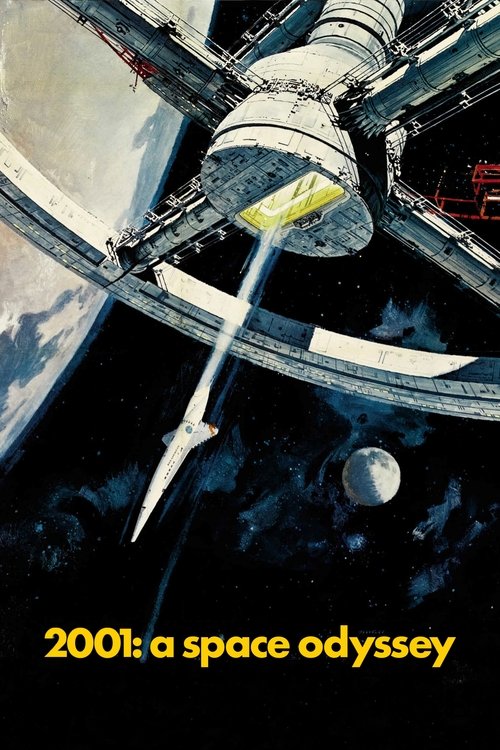
Geoffrey Unsworth and John Alcott shot enormous rotating sets that let actors walk up walls in camera, with lighting built into the set itself. Front projection created the African exteriors decades before digital compositing. Slit-scan photography produced the stargate, an entirely mechanical effect executed on an optical bench. Every effect is photographic, which is why the images have aged so well. Effects supervisor Douglas Trumbull developed the slit-scan process specifically for this production, building custom optical printing rigs that would influence effects work for decades afterward. Production designer Tony Masters coordinated the rotating centrifuge set with structural engineers to ensure it could safely carry actors and camera through a full rotation. Editor Ray Lovejoy cut the match on the bone-to-satellite transition to compress the entire span of human technology into a single frame, a choice studied in film schools ever since. Anyone planning practical in-camera effects work should study how much engineering discipline underlies every seemingly simple shot here.
What to watch for
Watch the centrifuge sequence and work out where the camera must be mounted for each shot.
This product uses the TMDB API but is not endorsed or certified by TMDB.
Affiliate disclosure. Links on this page are affiliate links. As an Amazon Associate, Occupy Cinema earns from qualifying purchases, at no extra cost to you. Read the full policy.