Films › Production design
A Trip to the Moon
Directed by Georges Melies, 1902
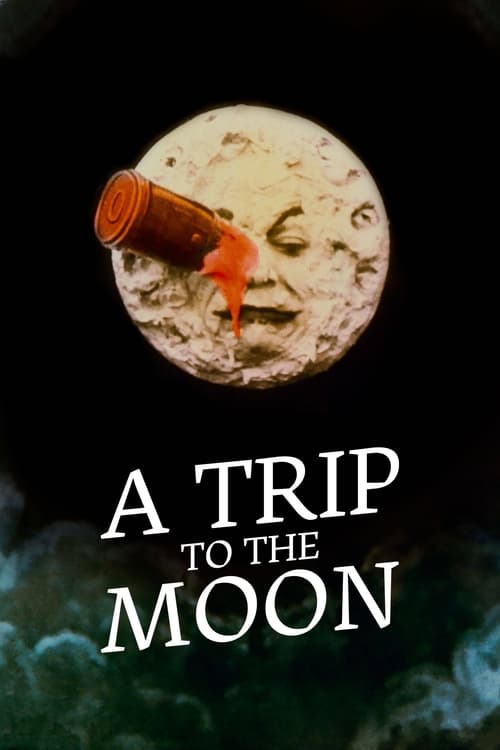
Georges Melies designed and built this film's sets and effects himself, drawing on his background as a stage magician and theater owner to combine painted backdrops, trapdoors and stop-substitution splices, stopping the camera mid-shot to swap an object or actor and create instantaneous transformations that read as magic rather than editing. The iconic image of the rocket lodged in the moon's eye was achieved through a simple painted matte and a static camera, proving that a strong central image can outlast decades of more technically complex effects work. Melies hand tinted select prints frame by frame using stencils, an early color process that predates any mechanical tinting system, adding another layer of handmade craft to an already handmade production. Production designers and effects artists should study how Melies treats the frame as a proscenium stage, blocking action to read clearly from a fixed front-on camera position, and how in-camera trickery executed with total confidence can still outperform more literal representation. The film's enduring power comes entirely from imaginative design discipline, not photographic realism.
What to watch for
Watch the moon's face for the exact frame where the stop-substitution splice lodges the rocket in its eye.
This product uses the TMDB API but is not endorsed or certified by TMDB.
Affiliate disclosure. Links on this page are affiliate links. As an Amazon Associate, Occupy Cinema earns from qualifying purchases, at no extra cost to you. Read the full policy.