Films › Cinematography
Ashes and Diamonds
Directed by Andrzej Wajda, 1958
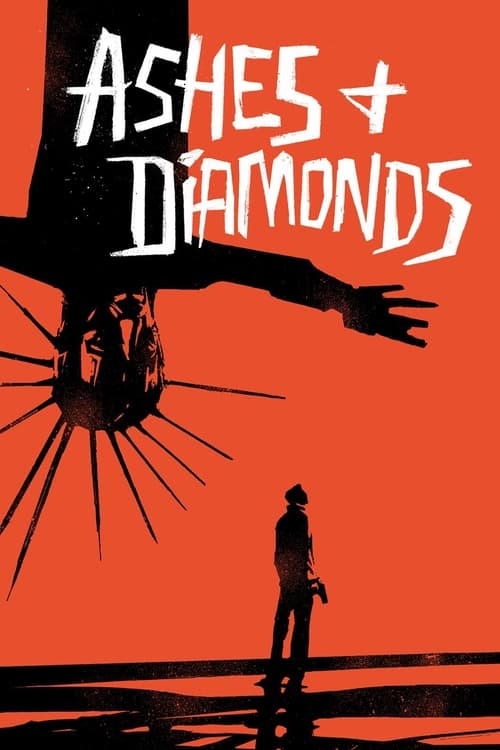
Cinematographer Jerzy Wojcik and director Andrzej Wajda used stark high contrast black and white and severe compositional framing, faces cut by doorways, chandeliers hanging over shoulders, to visualize a Poland caught between two ideologies at the end of World War II. The upside down crucifix and the famous scene of vodka lit on fire in shot glasses are staged as compositional set pieces first, symbolic content second, meaning Wojcik built lighting and blocking to make the image striking before the metaphor even registers. That ordering matters for cinematographers: a symbol only lands if the shot works purely as composition and light, independent of what it means. Wojcik shot with stark contrast between deep shadow and blown highlight, giving the film a theatrical, almost expressionist texture distinct from the era's prevailing Polish School realism. The tracking shots through crowded, smoke-filled interiors demonstrate camera movement used to reveal social claustrophobia rather than simply follow action. Cinematographers should trace how Wojcik's chiaroscuro influenced later political thrillers shot in comparable low-budget conditions.
What to watch for
Study the framing of the final death scene on the rubbish heap and how the composition inverts the film's earlier romantic imagery.
This product uses the TMDB API but is not endorsed or certified by TMDB.
Affiliate disclosure. Links on this page are affiliate links. As an Amazon Associate, Occupy Cinema earns from qualifying purchases, at no extra cost to you. Read the full policy.