Films › Editing
Battleship Potemkin
Directed by Sergei Eisenstein, 1925
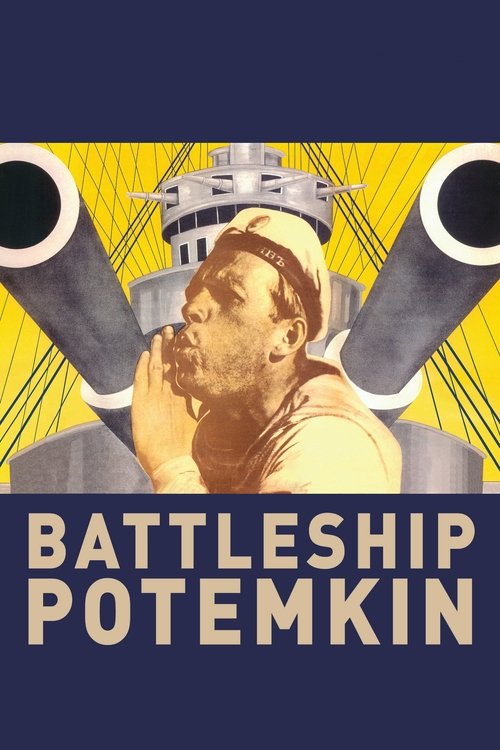
Eisenstein built the Odessa Steps sequence out of collision rather than continuity, cutting for conceptual impact instead of spatial logic. Time is deliberately expanded so the descent takes far longer on screen than it could in life. Repeated graphic elements, boots, wheels, faces, function as rhythmic beats. The three stone lions rising in three cuts remain the clearest demonstration of montage as argument. Eisenstein's own theory of intellectual montage grew directly out of assembling this footage, treating each shot as a unit of meaning multiplied against its neighbor rather than simply joined for flow. Editors still study the sequence because it proves duration and rhythm can be authored independently of the physical event being filmed, a lesson that applies as much to a modern chase scene as to a silent era street massacre. The baby carriage descending the steps remains the single most quoted image in editing pedagogy for exactly this reason, a pure invention of the cutting room rather than something staged for a single camera position.
What to watch for
Watch the steps sequence for expanded time and the lion cut as a pure idea assembled from static objects.
This product uses the TMDB API but is not endorsed or certified by TMDB.
Affiliate disclosure. Links on this page are affiliate links. As an Amazon Associate, Occupy Cinema earns from qualifying purchases, at no extra cost to you. Read the full policy.