Films › Cinematography
Blade Runner
Directed by Ridley Scott, 1982
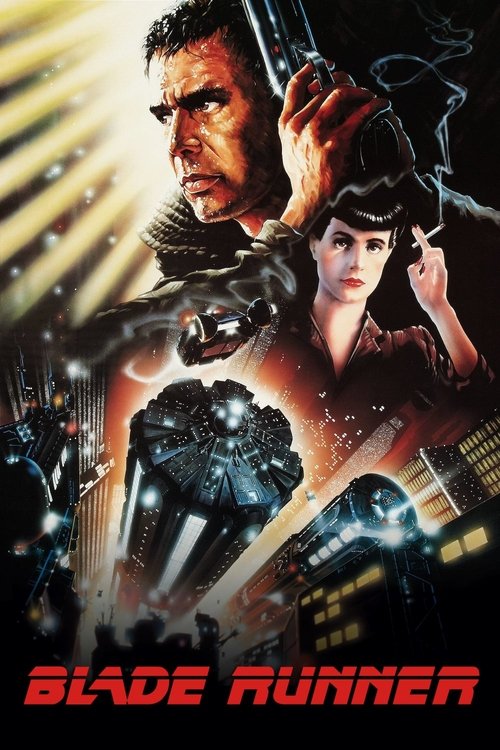
Jordan Cronenweth built the look out of hard backlight, atmospheric smoke and practical sources inside the frame, so the light always appears to come from the world rather than from a rig. Shafts cut through interiors because the air itself is a visible medium, a technique that demands relentless smoke continuity on set. The Deckard apartment scenes are a masterclass in motivated shafts, venetian shadow and colour separation between foreground and background. Douglas Trumbull's miniature and optical work matches that lighting logic rather than fighting it. Production designer Lawrence G. Paull and visual futurist Syd Mead built environments dense enough with texture, neon and grime that Cronenweth could rely on the set itself to motivate almost every source, reducing the number of artificial rigs needed to sell scale. The smoke was mixed and metered scene by scene so density stayed consistent across separate shooting days, a logistics problem any commercial or feature crew working with atmosphere will recognize immediately.
What to watch for
Watch the interplay of moving light through blinds and the discipline of keeping every source justified by something you can see.
This product uses the TMDB API but is not endorsed or certified by TMDB.
Affiliate disclosure. Links on this page are affiliate links. As an Amazon Associate, Occupy Cinema earns from qualifying purchases, at no extra cost to you. Read the full policy.