Films › Editing
Bonnie and Clyde
Directed by Arthur Penn, 1967
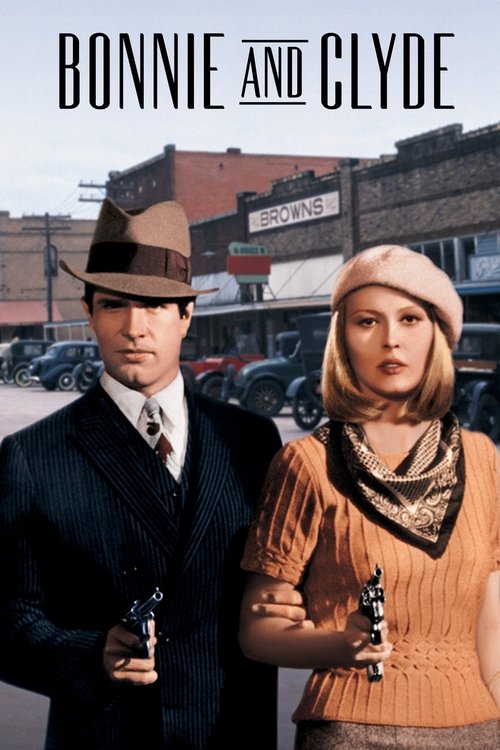
Dede Allen brought French New Wave cutting into an American studio picture, overlapping sound across cuts and starting scenes late. The ambush finale intercuts multiple frame rates, which imports Peckinpah-adjacent slow motion into a rapid montage. Tonal whiplash between comedy and violence is achieved almost entirely in the cutting room. It reset the pace of mainstream American editing. Allen had cut for television and low budget features before this, and she used that background to justify jump cuts and unmatched angles that a more conservative studio editor would have smoothed over, arguing that the discontinuity mirrored the characters' own recklessness. The film's influence on New Hollywood editors, several of whom trained under or alongside her, is direct rather than diffuse, and her handling of the ambush is still taught as the reference point for combining variable frame rates within a single continuous action.
What to watch for
Watch the final ambush for mixed frame rates inside a single burst of cuts.
This product uses the TMDB API but is not endorsed or certified by TMDB.
Affiliate disclosure. Links on this page are affiliate links. As an Amazon Associate, Occupy Cinema earns from qualifying purchases, at no extra cost to you. Read the full policy.