Films › Cinematography
Citizen Kane
Directed by Orson Welles, 1941
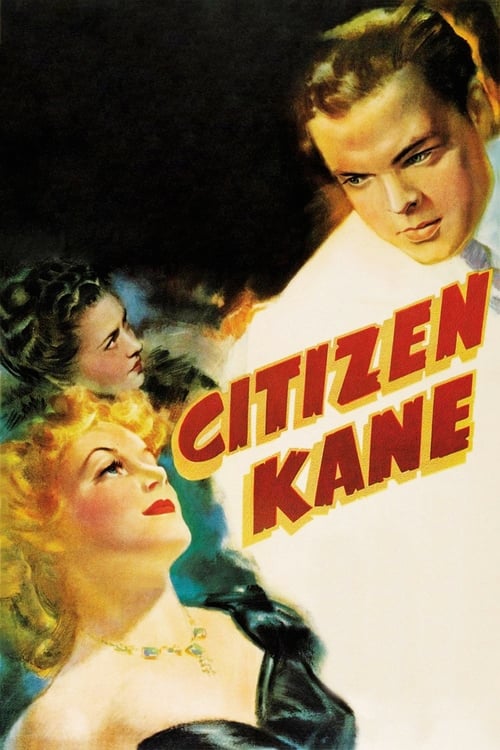
Gregg Toland's deep focus keeps foreground, middle and background sharp at once, allowing Welles to stage in depth instead of cutting between planes. Ceilings appear in shot because the sets were built with them, forcing low angles that make characters loom or shrink. Optical printing, matte work and in-camera transitions carry exposition that a modern film would hand to dialogue. Almost every technique in the standard studio grammar is either invented or consolidated here. Art director Perry Ferguson built ceilinged sets specifically so Toland's low angles would read as architecturally real rather than as a trick, coordinating construction directly with camera placement before a foot of film rolled. Editor Robert Wise, later a director himself, cut the newsreel and breakfast montage sequences with a rhythm borrowed from documentary editing, compressing years into minutes without confusing the audience. Anyone studying staging in depth should trace how camera, set construction and editorial pacing were solved as one problem, not three.
What to watch for
Watch the boarding-house scene where three separate dramatic actions play in three focal planes at once.
This product uses the TMDB API but is not endorsed or certified by TMDB.
Affiliate disclosure. Links on this page are affiliate links. As an Amazon Associate, Occupy Cinema earns from qualifying purchases, at no extra cost to you. Read the full policy.