Films › Directing
City Lights
Directed by Charlie Chaplin, 1931
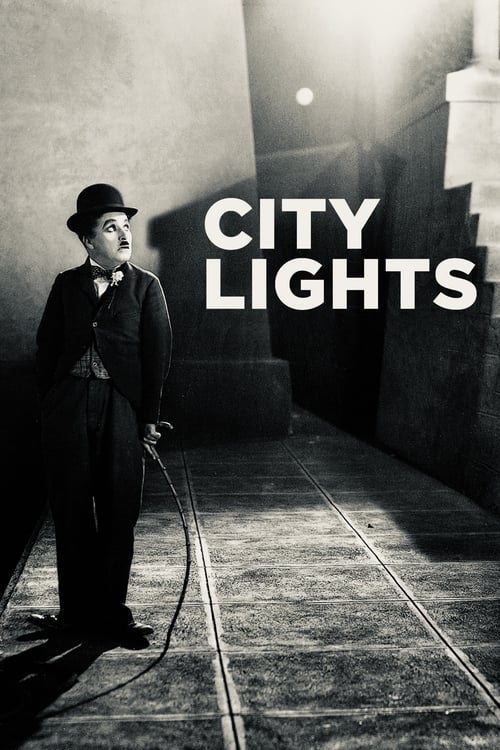
Chaplin directed, scored and edited City Lights himself, shooting the flower girl's mistaken-identity setup hundreds of times over more than a year until the blocking produced the illusion without a single line of dialogue explaining it, a testament to solving story problems through staging rather than intertitles. He also refused to convert to synchronized dialogue even as the industry had already moved to sound, instead building an original orchestral score that he composed by humming melodies to an arranger, using music as the emotional narrator where words would have been used elsewhere. The famous closing close up was reportedly achieved by asking Virginia Cherrill to underplay drastically against Chaplin's full performance, creating an asymmetry that reads as devastating restraint. Filmmakers working in visual comedy or silent-adjacent forms should study how physical staging alone, tested obsessively through repetition, can carry narrative information that feels effortless on screen.
What to watch for
Watch the final scene closely for how little Cherrill's face actually does compared to how much the audience feels.
This product uses the TMDB API but is not endorsed or certified by TMDB.
Affiliate disclosure. Links on this page are affiliate links. As an Amazon Associate, Occupy Cinema earns from qualifying purchases, at no extra cost to you. Read the full policy.