Films › Cinematography
Days of Heaven
Directed by Terrence Malick, 1978
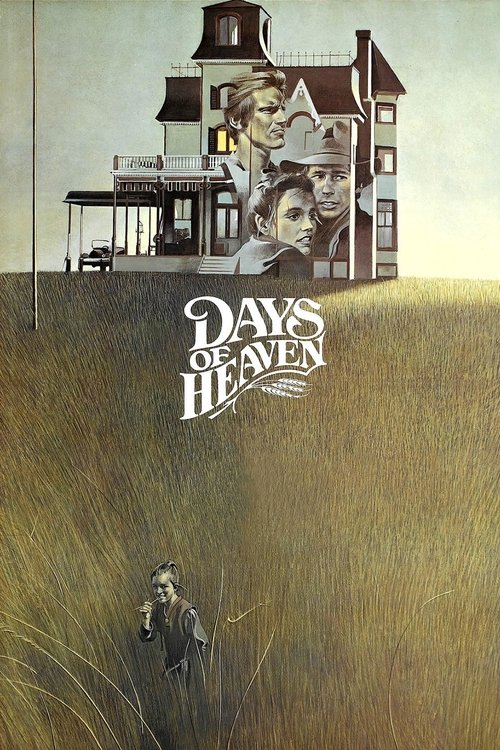
Nestor Almendros shot almost the entire picture in the twenty minutes after sunset, using the magic hour as a production constraint rather than a flourish, and Haskell Wexler finished the schedule when Almendros left. The result is a film lit almost exclusively by sky, with faces held in soft ambient bounce and skylines burning behind them. It is the clearest available argument that light is a scheduling decision before it is an aesthetic one. Study the way the wheat and locust sequences carry story information purely through exposure and silhouette. Production designer Jack Fisk built structures to withstand the harsh Texas plains schedule so the crew could chase weather rather than fight it, and the wheat itself was planted and burned on a farming timetable that no studio calendar could compress. Editor Billy Weisz and later editors assembled the film largely around available shots rather than a rigid plan, since so much coverage depended on what the sky offered that night. A working cinematographer should study this as proof that a limiting production constraint, embraced rather than resisted, can generate a signature look no lighting package could replicate.
What to watch for
Watch how few artificial sources appear and how the camera blocks actors against the horizon to keep them readable at low light levels.
This product uses the TMDB API but is not endorsed or certified by TMDB.
Affiliate disclosure. Links on this page are affiliate links. As an Amazon Associate, Occupy Cinema earns from qualifying purchases, at no extra cost to you. Read the full policy.