Films › Screenwriting
Duck Soup
Directed by Leo McCarey, 1933
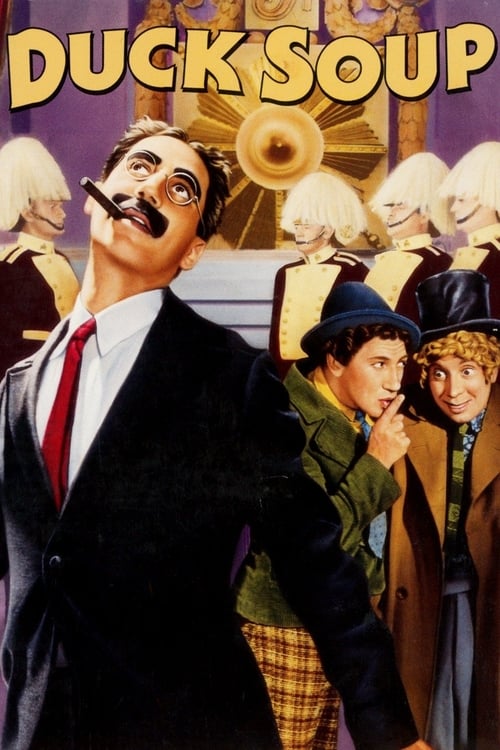
Leo McCarey and writers Bert Kalmar and Harry Ruby structured this film as a series of self-contained comedic set pieces, the mirror routine and the war finale chief among them, that can be lifted almost whole from the plot because the script prioritizes gag architecture over narrative causality. McCarey's key decision was pacing: he shot with minimal coverage and let physical routines play in continuous wide takes so the mechanics of the joke, like the mirror bit's exact mimicry, remain visible and unbroken by cutting. The screenplay also weaponizes non sequitur dialogue, Groucho's lines often ignoring the previous line entirely, which trains the audience to stop expecting logical conversation and accept pure verbal rhythm. This structural looseness lets satire of nationalism and diplomacy land as absurdist collage rather than message-driven plotting. Comedy writers and directors should study how a loose, sketch-based structure can outlast plot-driven comedy specifically because the gags are engineered to be independently funny, not because the story around them is strong.
What to watch for
Watch the mirror scene in a single sustained wide shot to see physical comedy timed without a single cut.
This product uses the TMDB API but is not endorsed or certified by TMDB.
Affiliate disclosure. Links on this page are affiliate links. As an Amazon Associate, Occupy Cinema earns from qualifying purchases, at no extra cost to you. Read the full policy.