Films › Editing
Dunkirk
Directed by Christopher Nolan, 2017
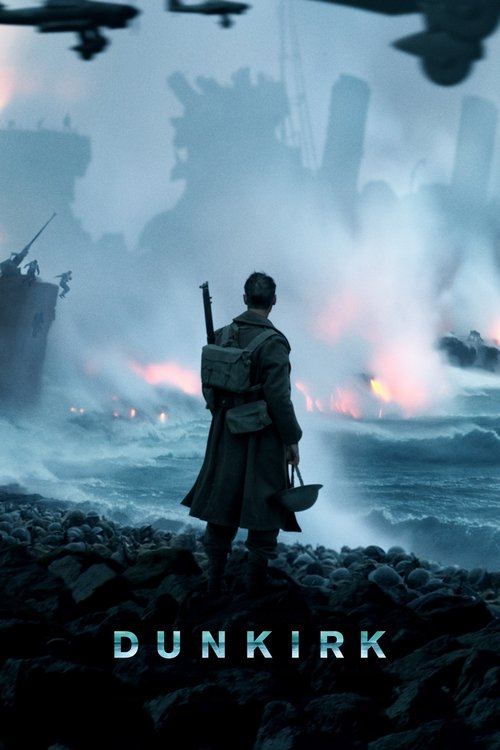
Three timelines running at one week, one day and one hour are intercut as if simultaneous, which only works because Lee Smith aligned them to a rising musical structure. Hans Zimmer's Shepard tone gives the cut a sense of constant ascent with no resolution. Dialogue is minimal, so the edit carries nearly all narrative information. It is the boldest recent structural gamble in a mainstream release. Smith built the assembly against a temp version of Zimmer's score from very early in post, which meant picture and music evolved together rather than music being applied afterward, an unusual production order for a film of this scale. Because the three timelines converge only near the climax, the edit has to constantly recalibrate the audience's sense of urgency without dialogue cues, relying instead on close framing, practical scale and the tightening pulse of the score to signal how close each strand is to disaster.
What to watch for
Watch for the moments the three timelines converge and how the sound bridges the seams.
This product uses the TMDB API but is not endorsed or certified by TMDB.
Affiliate disclosure. Links on this page are affiliate links. As an Amazon Associate, Occupy Cinema earns from qualifying purchases, at no extra cost to you. Read the full policy.