Films › Directing
Grave of the Fireflies
Directed by Isao Takahata, 1988
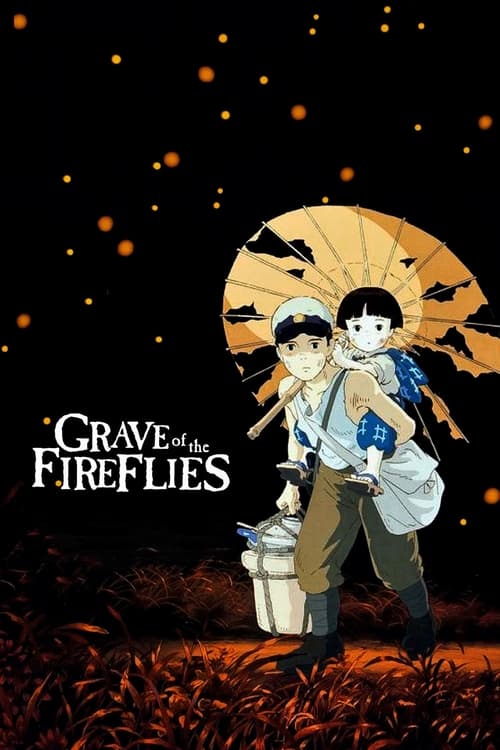
Isao Takahata refused to let animation soften wartime suffering, directing his layout artists to draw figures with anatomically honest malnutrition rather than stylized pathos. He opens with the ending stated outright, then structures the entire film as memory, which strips melodrama from every subsequent scene because the audience already knows survival is not the point. Takahata used firebombing sequences built from muted orange and black palettes, with animation timed to real combustion physics rather than dramatic slow motion, so the destruction feels procedural and indifferent instead of theatrical. Background painter Nizo Yamamoto grounded the fantasy studio's house style in observed rural Kobe architecture, which matters because the tragedy depends on specificity of place, not generic wartime imagery. Filmmakers handling child protagonists in atrocity narratives should study how Takahata avoids score manipulation at devastating beats, letting ambient sound and silence carry scenes a lesser production would underline with music. The restraint is the lesson: trust built by removing manipulative tools one at a time.
What to watch for
Notice how the firefly light motif is animated with consistent, unsentimental physics rather than glowing for emotional effect.
This product uses the TMDB API but is not endorsed or certified by TMDB.
Affiliate disclosure. Links on this page are affiliate links. As an Amazon Associate, Occupy Cinema earns from qualifying purchases, at no extra cost to you. Read the full policy.