Films › Genre craft
King Kong
Directed by Merian C. Cooper, Ernest B. Schoedsack, 1933
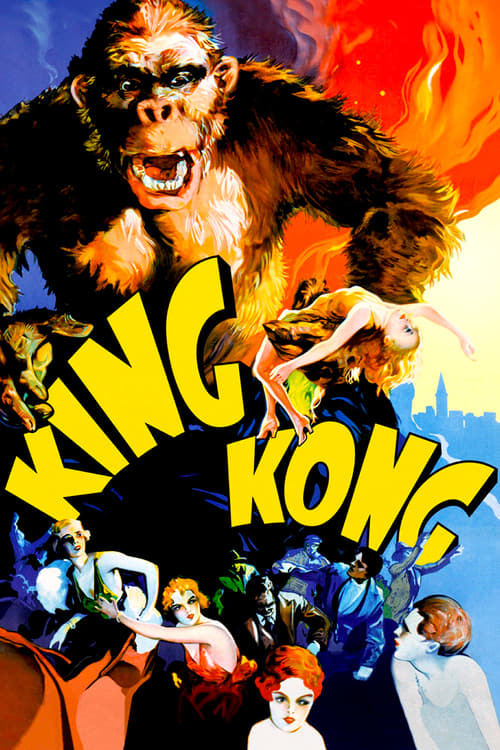
Merian C. Cooper and Willis O'Brien built this film's persuasive power entirely on stop motion animation combined with rear projection and glass matte paintings, techniques O'Brien had refined from his earlier silent-era animal pictures and pushed here to feature length with an eighteen inch armature model animated one frame at a time. Cooper's direction integrates miniature work with live action through careful eyeline matching and consistent lighting direction across composited elements, so Kong's scale reads as physically present rather than pasted in. Max Steiner's score, one of the first fully symphonic scores written to underscore a sound film's action beats precisely, gives the animated creature emotional interiority the puppet alone could not convey through expression. Filmmakers working in visual effects today should study how pre-digital compositing succeeds through discipline in light matching and camera consistency rather than technological sophistication, and how a score can carry performance weight for a character incapable of facial nuance, a lesson directly relevant to any modern creature or animated lead.
What to watch for
Watch Kong's first full reveal for how lighting direction on the model matches the live action plate exactly.
This product uses the TMDB API but is not endorsed or certified by TMDB.
Affiliate disclosure. Links on this page are affiliate links. As an Amazon Associate, Occupy Cinema earns from qualifying purchases, at no extra cost to you. Read the full policy.