Films › Sound and score
M
Directed by Fritz Lang, 1931
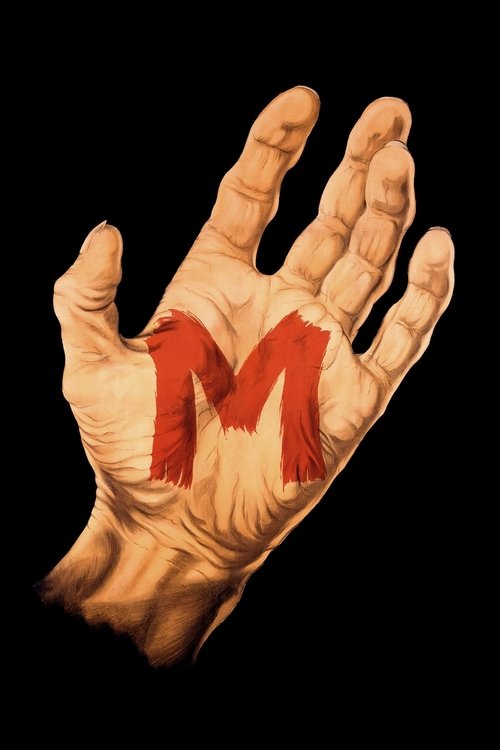
Fritz Lang used sound not as a novelty but as a structural device, most notably Peter Lorre's killer whistling Grieg's In the Hall of the Mountain King off screen, a motif that lets the audience identify a murderer without ever showing the act itself. Lang frequently cuts sound out entirely, holding scenes in near silence so that when a scream, whistle or gunshot arrives it carries disproportionate weight, a discipline many early sound films abandoned in favor of continuous dialogue. He also intercuts between the police manhunt and the criminal underworld's parallel manhunt using match cuts on dialogue, a line spoken by one group finished visually by the other, compressing procedural exposition into a few efficient minutes. Lorre's performance was built around physical tics, sweating, and the whistle motif rather than dialogue to signal psychological breakdown. Sound designers and editors should study how selective silence, not constant scoring, is what gives M's sound design its power.
What to watch for
Listen for how long the film withholds any sound at all before the whistle motif reappears.
This product uses the TMDB API but is not endorsed or certified by TMDB.
Affiliate disclosure. Links on this page are affiliate links. As an Amazon Associate, Occupy Cinema earns from qualifying purchases, at no extra cost to you. Read the full policy.