Films › Editing
Modern Times
Directed by Charlie Chaplin, 1936
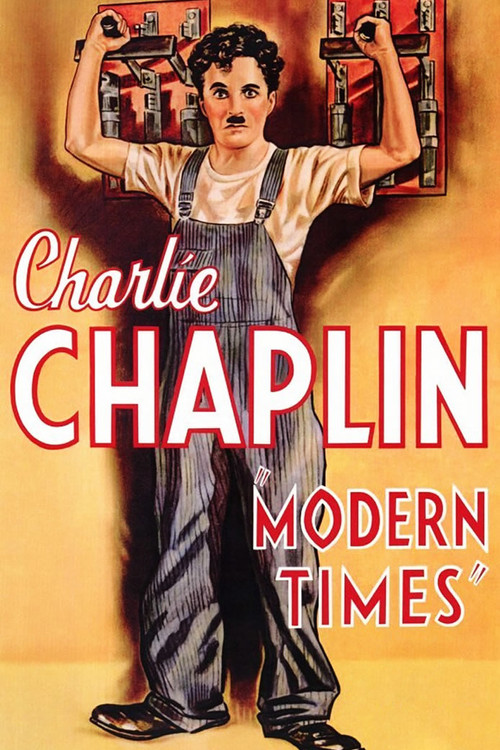
Chaplin cut Modern Times with a rhythm dictated almost entirely by the factory machinery's mechanical pace, letting the editing itself mimic industrial repetition so gags land on beats synced to conveyor belts and gears rather than conventional comic timing. He also used sound sparingly and selectively, allowing his own voice to be heard only through a gibberish song and confining most dialogue to machines, radios and loudspeakers, which lets Chaplin control exactly when the audience hears a human voice versus a mechanical one. The satirical intercutting between factory workers and a chart of livestock at the film's opening establishes a montage argument in seconds, a technique borrowed from Eisenstein but repurposed for comedy rather than propaganda. Editors studying comedic pacing should note how Chaplin varies cutting speed to mirror the content of the scene itself, industrial urgency versus pastoral stillness, rather than applying one uniform rhythm throughout.
What to watch for
Watch how the cutting speed changes the instant the setting shifts from factory floor to open road.
This product uses the TMDB API but is not endorsed or certified by TMDB.
Affiliate disclosure. Links on this page are affiliate links. As an Amazon Associate, Occupy Cinema earns from qualifying purchases, at no extra cost to you. Read the full policy.