Films › Production design
My Neighbor Totoro
Directed by Hayao Miyazaki, 1988
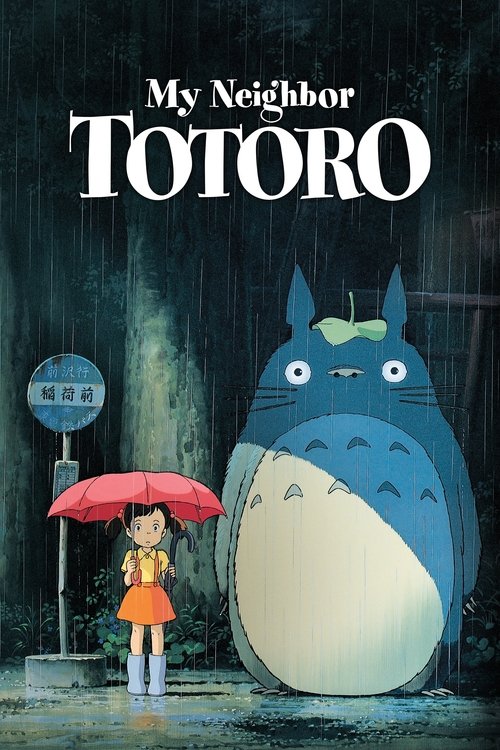
Hayao Miyazaki designed Totoro's world around negative space, insisting his background artists leave rooms, fields and rooflines uncluttered so a child's eye has somewhere to rest. Production designer and background supervisor Kazuo Oga painted the countryside from real Saitama locations, using saturated but naturalistic greens that avoid the candy-color palette typical of children's animation, which is why the film still reads as believable rather than whimsical decades later. Miyazaki also choreographed the camera as if handheld even in a fully drawn medium, holding on long static shots of grass moving in wind or rain falling on a bus stop, forcing the animation to justify its own patience. The catbus and Totoro designs work because they are grounded in plausible anatomy scaled up, not invented from nothing, which keeps the fantastical creatures inside the same physical logic as the human characters. Anyone building a family or fantasy film should study how little incident occurs in any given scene here, and how that emptiness is what makes the eventual wonder land. Restraint in pacing is the actual special effect.
What to watch for
Watch the bus stop rain scene for how long Miyazaki holds before Totoro appears, and count how little happens in that time.
This product uses the TMDB API but is not endorsed or certified by TMDB.
Affiliate disclosure. Links on this page are affiliate links. As an Amazon Associate, Occupy Cinema earns from qualifying purchases, at no extra cost to you. Read the full policy.