Films › Genre craft
Nosferatu
Directed by F. W. Murnau, 1922
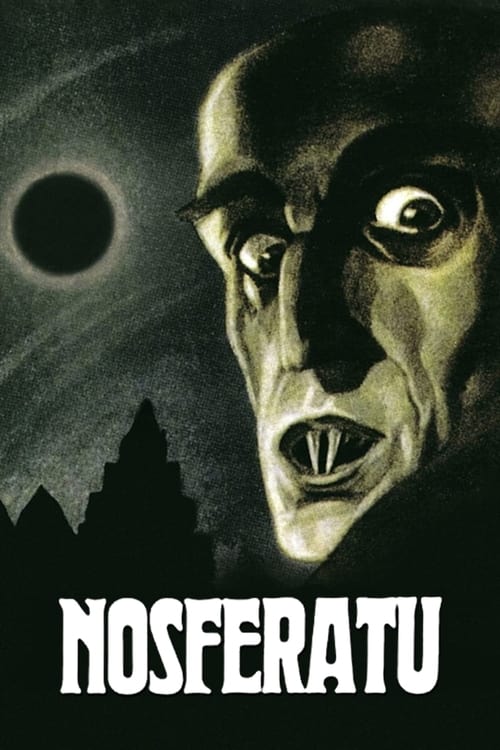
Murnau and cinematographer Fritz Arno Wagner used negative exposure, stop motion and undercranking to make Max Schreck's Orlok move and appear inhumanly, most famously reversing footage of a horse-drawn carriage so it seems to speed up unnaturally as it approaches the castle. Shooting largely on real locations in the Carpathians and along the Baltic coast rather than studio sets gave the vampire's intrusion into ordinary daylight spaces, ships, streets, bedrooms, a documentary plausibility that studio-built expressionist horror never achieved. Schreck's makeup, rat like teeth, elongated fingers and hairless skull, was designed to silhouette clearly against light rather than rely on facial expression, since Murnau shoots him primarily in profile and shadow. Genre filmmakers should study how horror here is generated through disruption of ordinary photographed reality rather than through stylized sets, proving that dread often reads stronger on location than on a soundstage.
What to watch for
Watch how Orlok is almost never shown in a normal medium shot, always in silhouette, shadow or extreme composition.
This product uses the TMDB API but is not endorsed or certified by TMDB.
Affiliate disclosure. Links on this page are affiliate links. As an Amazon Associate, Occupy Cinema earns from qualifying purchases, at no extra cost to you. Read the full policy.