Films › Production design
Playtime
Directed by Jacques Tati, 1967
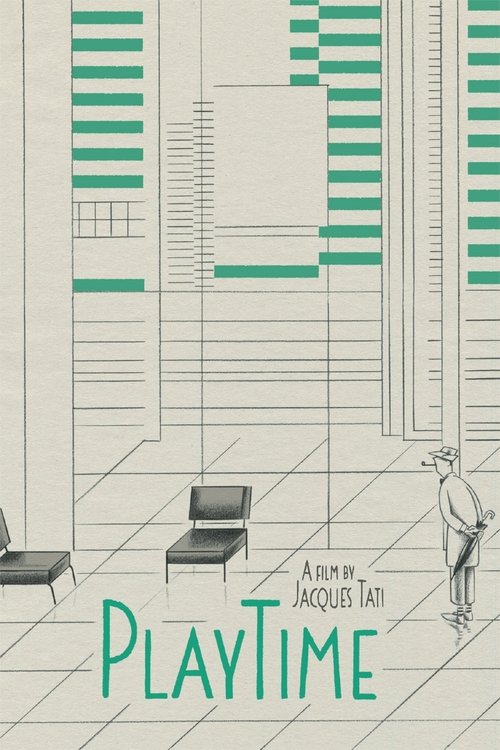
Jacques Tati spent years and most of his own money constructing Tativille, a full-scale modernist city built on a lot outside Paris, because no existing location offered the glass-and-steel uniformity his satire required. Production designer Eugene Roman worked from Tati's insistence that the sets be functional architecture, with real plumbing and electricity, so actors moved through spaces rather than in front of them. The choice to shoot in 70mm deepened this: wide, deep-focus frames let multiple sight gags run simultaneously across the width of the image, from a cubicle maze to a restaurant collapsing in real time, and audiences choose where to look rather than being directed by cutting. That refusal to use close-ups or reaction shots for emphasis is itself a design statement about how anonymous corporate space flattens individuality. For a filmmaker, the note is about commitment to environment as argument: Tati bankrupted himself proving that satire of glass towers needed a real glass tower, not a matte painting or a rented lobby.
What to watch for
Watch how reflections in the glass office walls create sight gags that exist only because the sets were built as real, walkable structures.
This product uses the TMDB API but is not endorsed or certified by TMDB.
Affiliate disclosure. Links on this page are affiliate links. As an Amazon Associate, Occupy Cinema earns from qualifying purchases, at no extra cost to you. Read the full policy.