Films › Editing
Sherlock Jr.
Directed by Buster Keaton, 1924
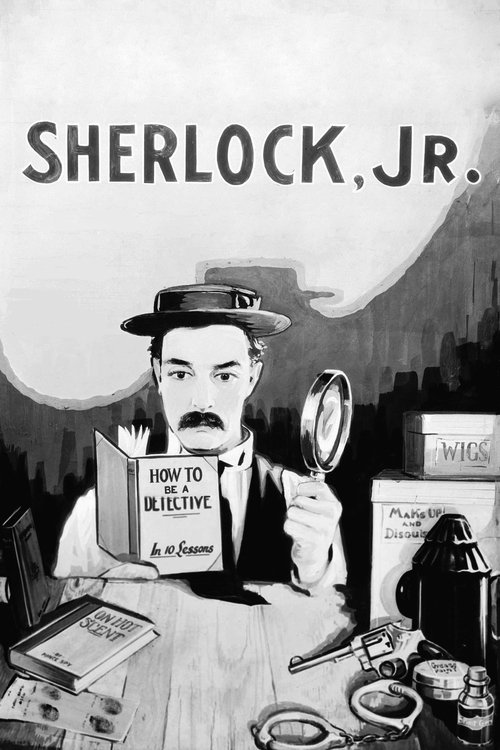
Buster Keaton edited a sequence in which he appears to walk into a movie screen and is then whipped between changing locations by cuts alone, a special effect achieved entirely through precise editing and matched camera positions rather than trick photography as commonly assumed. Study how each cut lands exactly as Keaton completes a physical action, so the environment changes around him mid-motion, a level of frame-accurate timing that required the set and camera to be rebuilt and remeasured for every new background. This sequence remains a foundational reference for understanding that editing is not just assembly but a tool for altering physical reality within a shot's logic, using the audience's trust in continuity against itself. Notice too how the rest of the film's chase sequences are cut for clarity of physical space even at high speed, ensuring that every gag reads instantly despite rapid cutting, a discipline silent comedy required because there was no dialogue to clarify confusion. Keaton's insistence on doing the stunts himself meant the edit could hold on wide, unbroken shots that a modern film might cut around, and that patience is itself a lesson.
What to watch for
Watch how each cut in the screen sequence lands precisely on a completed physical action by Keaton.
This product uses the TMDB API but is not endorsed or certified by TMDB.
Affiliate disclosure. Links on this page are affiliate links. As an Amazon Associate, Occupy Cinema earns from qualifying purchases, at no extra cost to you. Read the full policy.