Films › Production design
The Cabinet of Dr. Caligari
Directed by Robert Wiene, 1920
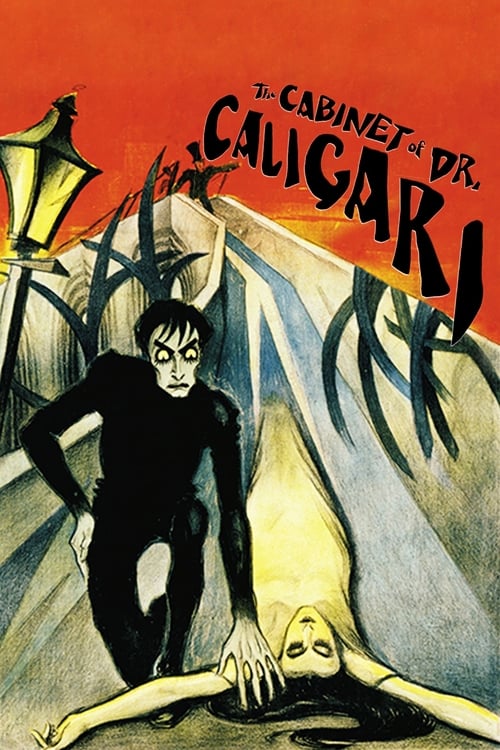
Production designers Hermann Warm, Walter Rohrig and Walter Reimann painted distorted perspective, jagged rooftops and warped doorways directly onto flat canvas backdrops and floors, so the expressionist geometry exists entirely in the art department rather than through lensing or lighting tricks. Actors were directed to move in angular, deliberate patterns that matched the painted lines of the sets, meaning blocking was choreographed to the design rather than the reverse, an inversion of how most productions work. Lighting was largely flat and shadows were painted onto the sets themselves rather than cast by practical instruments, a budget-driven choice that became the film's signature aesthetic. For production designers and directors alike, the lesson is that a coherent visual world can be built through paint and blocking discipline when lighting and location resources are limited, provided every department commits fully to the same distorted logic.
What to watch for
Notice how shadows are painted flat onto walls rather than cast by actual light sources throughout the film.
This product uses the TMDB API but is not endorsed or certified by TMDB.
Affiliate disclosure. Links on this page are affiliate links. As an Amazon Associate, Occupy Cinema earns from qualifying purchases, at no extra cost to you. Read the full policy.