Films › Production design
The Grand Budapest Hotel
Directed by Wes Anderson, 2014
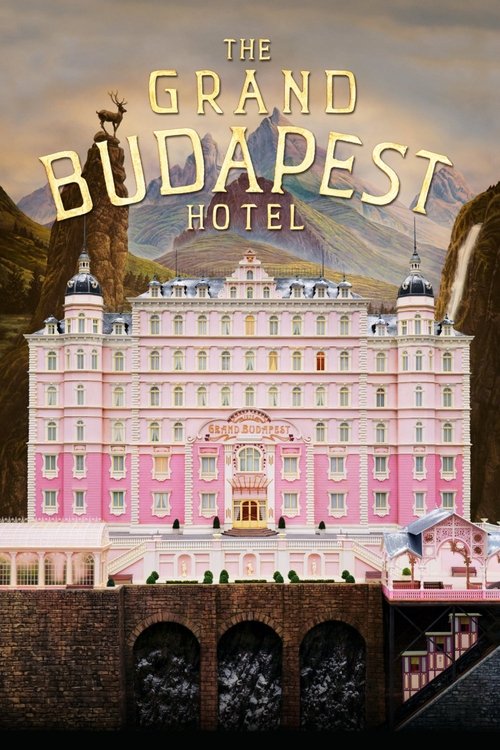
Adam Stockhausen used three aspect ratios for three time periods, with set design, colour and even miniature style shifting accordingly. The hotel exterior is a hand-built miniature, deliberately readable as such. Symmetrical staging means the design is doing the composition work directly. Colour palettes are assigned per era and held without exception. Robert Yeoman shot much of the film in near-perfect symmetry with a wide spherical lens, favouring locked-off frames and rapid whip pans over coverage, which forces every prop placement to be exact. Alexandre Desplat's score is cued almost like clockwork machinery, matching the design's obsessive order. A filmmaker studying this should note how constraint, one ratio and palette per era, actually accelerates production choices rather than limiting them. The production's colour-coding extends even to the pastry boxes and uniforms, a level of graphic consistency that few features attempt across an entire shoot.
What to watch for
Watch the aspect ratio changes and how the set dressing changes with them.
This product uses the TMDB API but is not endorsed or certified by TMDB.
Affiliate disclosure. Links on this page are affiliate links. As an Amazon Associate, Occupy Cinema earns from qualifying purchases, at no extra cost to you. Read the full policy.