Films › Sound and score
Tropical Malady
Directed by Apichatpong Weerasethakul, 2004
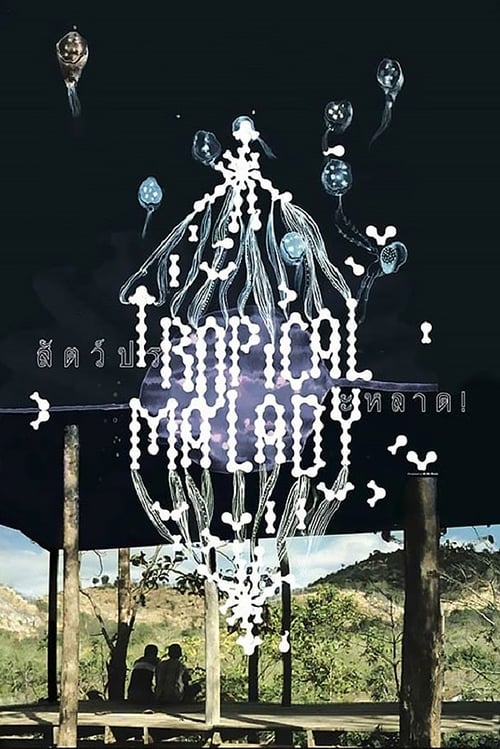
Apichatpong Weerasethakul splits Tropical Malady into two ostensibly unrelated halves, a village romance and a jungle myth, and refuses any bridging device beyond a black screen, forcing the sound design to become the connective structure the narrative declines to provide. Sound designer Akritchalerm Kalayanamitr builds the jungle half almost entirely from layered location recordings, insect density, distant animal calls, wind through canopy, mixed without a conventional score, so tension is generated by an unrelenting sonic environment rather than musical cues. This matters because Apichatpong treats the forest as a character with its own audible presence, and the sparse human dialogue in that half is deliberately underserved by the mix, pushed low so the environment dominates. The tiger stalking sequences use near total darkness with sound doing the work light cannot, a technique that demands trust from both director and sound team that atmosphere alone can sustain suspense. Sound designers working with dual-narrative structures should study how a shared sonic palette, rather than plot logic, unifies the film's two halves.
What to watch for
Listen for how the jungle sound mix grows denser and less naturalistic as the second half progresses toward the tiger encounter.
This product uses the TMDB API but is not endorsed or certified by TMDB.
Affiliate disclosure. Links on this page are affiliate links. As an Amazon Associate, Occupy Cinema earns from qualifying purchases, at no extra cost to you. Read the full policy.