Films › Cinematography
Ugetsu
Directed by Kenji Mizoguchi, 1953
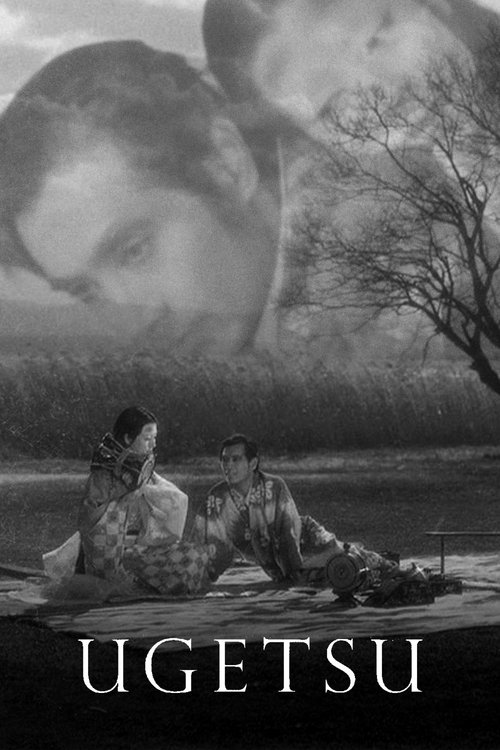
Kenji Mizoguchi and cinematographer Kazuo Miyagawa built the film around long unbroken crane and dolly takes that glide across water, mist and interior space without cutting, forcing blocking and choreography to do the work montage usually performs. The boat crossing and the ghost mansion sequence use continuous camera movement to dissolve the line between the living and the dead, since nothing announces a supernatural cut. Miyagawa favored a low, often static horizon within these moving shots, keeping figures small against landscape to emphasize fate over individual will. Mizoguchi rehearsed extensively before rolling because a single blown take meant losing an entire scene's blocking, lighting and sound in one continuous pass. For a working filmmaker this is essential study in staging depth: actors move toward and away from the lens rather than the camera cutting to them, and geography stays legible without a single reverse angle. Anyone attempting a oner today should study how Miyagawa hides rig moves inside diegetic motion like drifting fog or a boat's slow glide.
What to watch for
Watch the unbroken camera move through the mansion garden where the tone shifts from domestic to ghostly without a single cut.
This product uses the TMDB API but is not endorsed or certified by TMDB.
Affiliate disclosure. Links on this page are affiliate links. As an Amazon Associate, Occupy Cinema earns from qualifying purchases, at no extra cost to you. Read the full policy.