Films › Cinematography
Yellow Earth
Directed by Chen Kaige, 1984
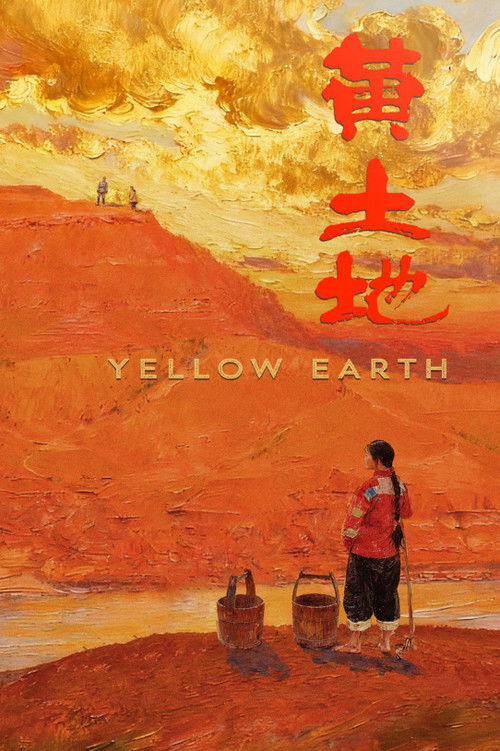
Cinematographer Zhang Yimou, working before his own directing career, shot this film with compositions that place the horizon line at the very top of the frame, burying human figures under an overwhelming mass of loess plateau earth. That framing choice, sustained across nearly the entire film, is a direct visual argument about the weight of tradition and land on the peasant characters below. Zhang favors static wide shots held far longer than contemporary Chinese cinema allowed, letting negative space do dramatic work instead of camera movement or cutting. Color is desaturated to near-monochrome ochre and blue, with red used sparingly and only for ritual or celebration, so its appearances register as jolts against an otherwise muted palette. Group scenes, particularly the drought-prayer ceremony, are shot from a distance that treats the crowd as texture within the landscape rather than as individuals to identify with. This is foundational viewing for any cinematographer interested in landscape as characterization: the film proves that withholding close-ups and burying subjects in frame can generate more political meaning than conventional coverage ever could.
What to watch for
Watch how consistently the horizon sits near the top edge of the frame, crushing the human figures into a thin strip below it.
This product uses the TMDB API but is not endorsed or certified by TMDB.
Affiliate disclosure. Links on this page are affiliate links. As an Amazon Associate, Occupy Cinema earns from qualifying purchases, at no extra cost to you. Read the full policy.