Occupy Cinema › FEATURED
The Quiet Revolution of Green Film Sets
From the sprawling soundstages to the far-flung locations, film productions are embracing a new ethos, transforming the transient world of filmmaking into a force for sustainable change.
By Occupy Cinema ·
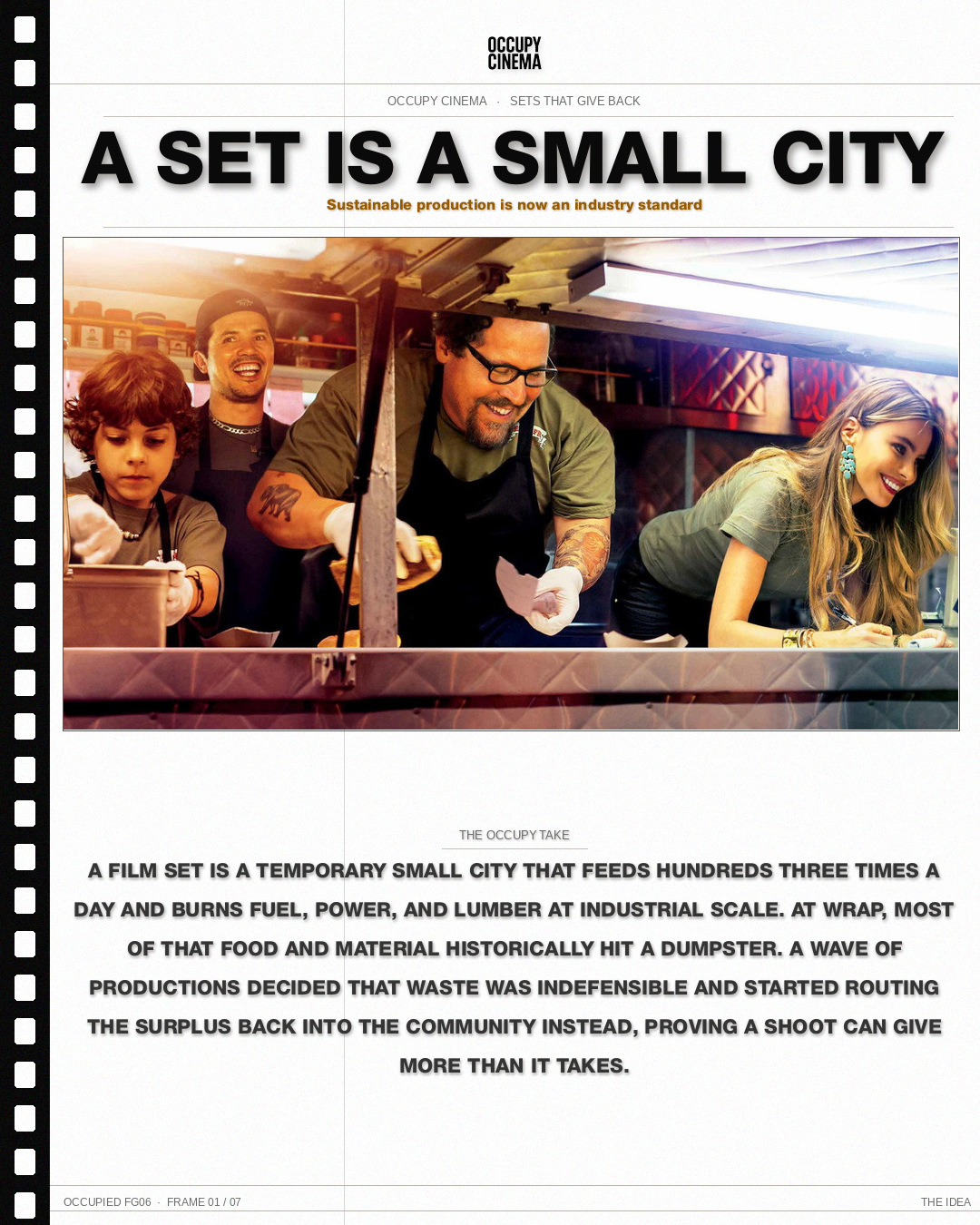
A filmmaker’s gaze often lingers on the ephemeral: the fleeting light of magic hour, the delicate nuance of an actor's expression, the passing seasons captured on film. Yet, the physical spaces where these visions come to life, the film sets themselves, have historically been anything but ephemeral, leaving behind a tangible footprint of waste. For decades, the end of a shoot meant not only the dispersal of cast and crew but also the inevitable journey of countless tons of materials, from elaborate sets to untouched meals, straight to the landfill. The grandeur of cinema, it seemed, came with a hidden cost.
However, a quiet revolution has been unfolding behind the scenes, transforming this practice. A growing number of productions are now looking beyond the final cut, recognizing their responsibility to the communities and environments they briefly inhabit. This new consciousness is not merely a trend, it is a thoughtful re-evaluation of how film is made, from the first word on the page to the final frame projected onto a screen.
Building a Greener Future, One Production at a Time
Major studios are beginning to formalize these efforts, acknowledging the substantial impact their operations can have. Universal Pictures, for instance, launched its GreenerLight program in 2023, a comprehensive initiative designed to weave sustainability into every stage of filmmaking. This program encompasses a wide spectrum of practices, from utilizing renewable energy sources on set and implementing rigorous waste reduction strategies to ensuring that surplus food and materials are thoughtfully donated rather than discarded. Recent productions like 'Hamnet' and the upcoming 'Him' have already operated under this new framework, demonstrating its practical application.
The impact of such programs is both profound and deeply local. On the set of 'Him', for example, the catering department, instead of discarding uneaten meals, partnered with local charities, providing over 800 nourishing meals to those in need. Beyond sustenance, the physical remnants of the film world found new life. Elaborate set walls, which would once have been destined for a dumpster, were repurposed and donated to a community college theater program, offering aspiring artists the resources to build their own stages. Costumes, meticulously crafted and often worn for only a few fleeting scenes, found new homes with New Mexico nonprofits, extending their utility and contributing to local communities.
This commitment to giving back, however, is not exclusive to large-scale studio initiatives. The beauty of this movement lies in its accessibility. Any film production, regardless of its budget or backing, can adopt these sustainable practices. It simply requires a mindful approach and a willingness to forge connections within the local community. A quick search can reveal local food rescue organizations eager to receive surplus catering. Lumber, often a significant component of set construction, can be donated to schools, community workshops, or even individual artists in need of materials. Wardrobe departments can partner with local shelters or charitable organizations, ensuring that clothing finds a second life and benefits those who need it most.
A Call to Action for Every Filmmaker
The responsibility, ultimately, rests with every individual involved in the filmmaking process. Production managers, in particular, hold a pivotal role. By integrating these sustainable practices into the wrap plan, from the very earliest stages of pre-production, they can ensure a seamless transition from set to community. It is a testament to the industry's evolving conscience, a recognition that the stories we tell on screen are only part of our narrative. The way we tell them, and the impact we leave behind, is equally important. Films by Chloé Zhao or Kelly Reichardt, for example, often foreground the natural world in their narratives, and it feels fitting that the creation of those films should also honor the environment. The tools for action are readily available, from electric grip equipment to reusable water bottles, but the most crucial element is intention. This is not just about reducing waste; it is about enriching communities, fostering goodwill, and ensuring that the magic of cinema continues to thrive, responsibly and sustainably.