Occupy Cinema › FEATURED
The Invisible Crisis: How Absent Expertise Undermines Theatrical Presentation
A recent investigation has brought to light systemic failures in cinema projection, highlighting the critical absence of trained professionals in ensuring the quality of the theatrical experience. This issue extends beyond mere technical glitches, revealing a deeper industry problem.
By Occupy Cinema ·
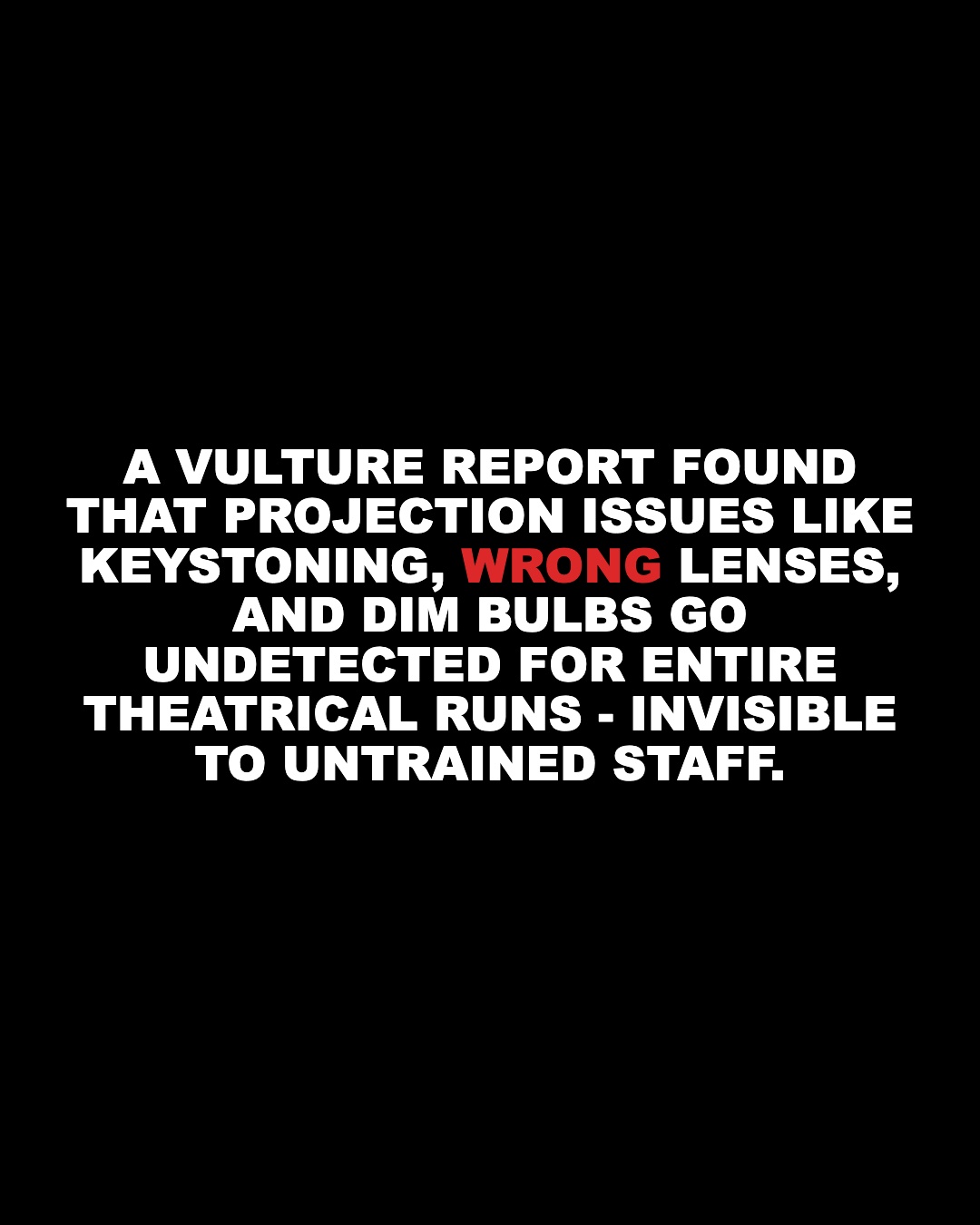
A recent, comprehensive investigation by Vulture has documented a pervasive decline in theatrical projection standards. The findings are sobering: films are routinely screened with significant technical flaws, ranging from improper masking and resolution loss to keystoning and insufficient brightness. What makes these issues particularly alarming is not just their existence, but their undetected persistence throughout entire theatrical runs. This situation underscores a critical void in modern cinema operations, one that trained professionals once filled.
The report details numerous instances where projection anomalies, such as an incorrect lens selection leading to keystoning, or images extending beyond the screen's boundaries, went unnoticed by theater management. These are not subtle imperfections that require highly specialized equipment to detect. They are fundamental errors in presentation that compromise the filmmaker's artistic intent and the audience's viewing experience. Yet, without dedicated, knowledgeable personnel, these problems become invisible to the very institutions responsible for exhibiting the films.
The core of the problem, as the investigation meticulously outlines, lies in the elimination of skilled projectionists. Historically, these individuals were the custodians of the theatrical experience, possessing the expertise to identify and rectify such technical discrepancies immediately. Their routine monitoring was a crucial safeguard against the degradation of film presentation. In their absence, a vacuum has formed, allowing these issues to fester unnoticed until they are either severe enough for audiences to occasionally comment on, or, more likely, remain an unacknowledged detraction from the cinematic event.
This situation is not merely a nostalgic plea for a bygone era of film exhibition. It is a pragmatic assessment of the consequences of expertise elimination. The problems have not disappeared; they have simply become an unaddressed undercurrent, eroding the quality of theatrical screenings. The industry, in its pursuit of efficiency and cost reduction, has inadvertently dismantled the very mechanisms that ensured a high standard of presentation. This trend echoes broader concerns within the film industry regarding the preservation of craft and specialized labor, a conversation frequently explored at festivals like the Telluride Film Festival, where the importance of technical mastery is often emphasized.
The Argument for Reinvestment
The call to bring back projectionists is not rooted in sentimentality, but in a clear recognition of operational necessity. The alternative, as the Vulture investigation starkly illustrates, is a systematic incompetence that diminishes the value proposition of the theatrical experience. As audiences increasingly seek premium experiences that justify leaving their homes, a reliably excellent presentation becomes paramount. Filmmakers like Christopher Nolan and Martin Scorsese have long championed the integrity of the big screen presentation, and their efforts are fundamentally undermined when the technical execution falls short.
Beyond the Screen: A Broader Industry Trend
This issue extends beyond the projection booth itself. It reflects a broader trend of devaluing specialized labor across various sectors of the film industry. From the intricacies of cinematography to the meticulous craft of editing, the elimination of experienced personnel to cut costs often results in a subtle, yet significant, reduction in overall quality. The Vulture report serves as a stark reminder that true quality control requires human expertise, not just automated systems or untrained eyes. Reinvesting in skilled labor is not an expenditure to be avoided, but an essential component of maintaining the artistic and commercial viability of cinema.