Occupy Cinema › Box Office
How a $750,000 Horror Pickup Became the Highest-Grossing Festival Acquisition in History
Curry Barker turned an $800 YouTube project into Obsession, a $459 million global box office phenomenon that shattered record books.
By Occupy Cinema ·
The traditional studio playbook just took another direct hit. Curry Barker, a filmmaker who built his initial audience on YouTube with the $800 micro budget sensation Milk & Serial, has orchestrated one of the most astonishing financial runs in modern cinema history. His full length theatrical feature debut, Obsession, has completely obliterated expectations across every market quadrant. What began as a buzzworthy acquisition title at the Toronto International Film Festival has transformed into an unprecedented box office juggernaut, forcing legacy distributors and studio executives to radically rethink how digital native talent translates to global multiplex success.
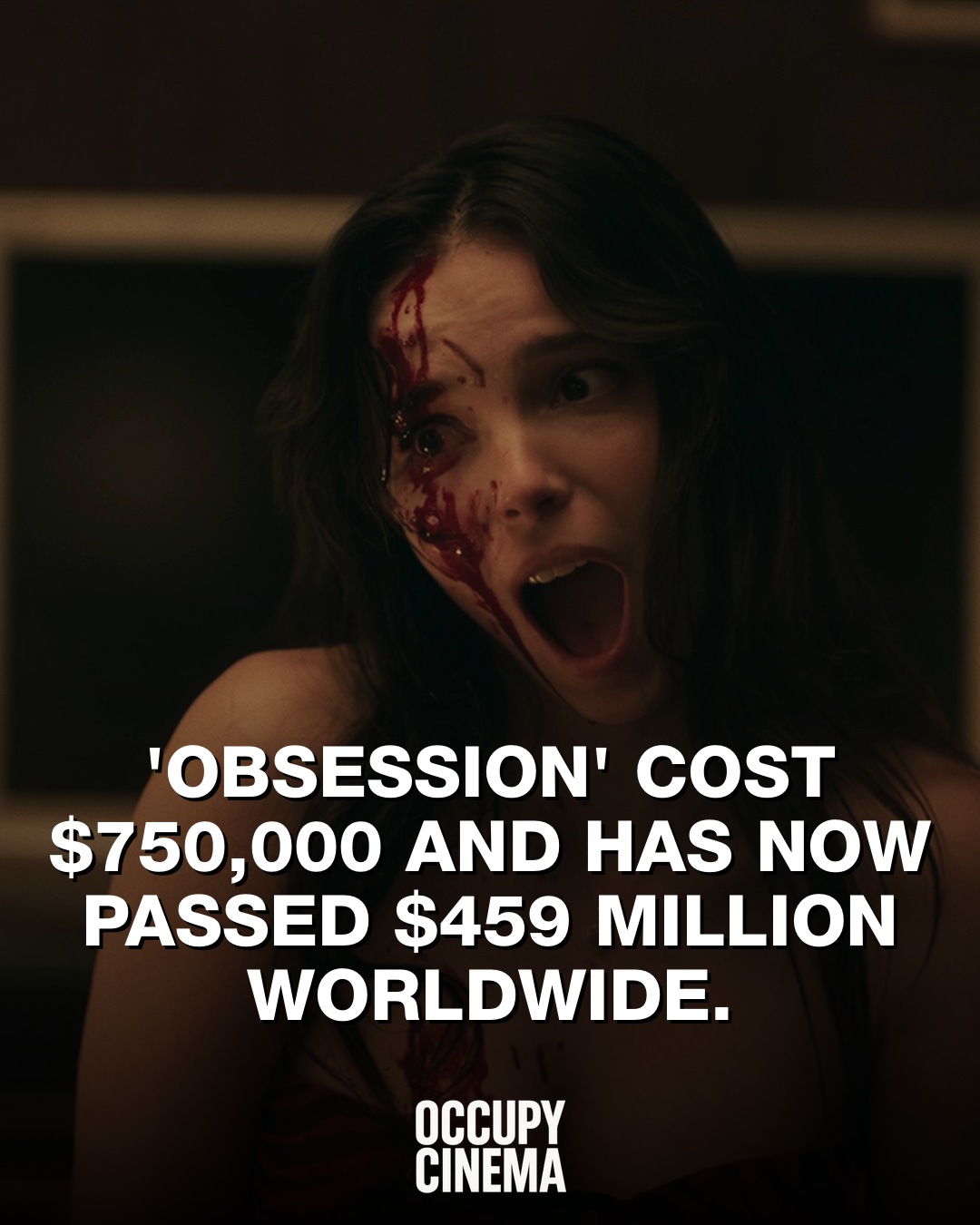
Focus Features secured global rights to the film following its packed midnight premiere at the Toronto International Film Festival in 2026. The initial production price tag sat at a lean, remarkably controlled $750,000. Since entering general release, the picture has generated $261.9 million domestically and an eye watering $459.2 million worldwide. As reported by TheWrap, these massive figures formally elevate Obsession past legendary landmark titles like Fahrenheit 9/11 and The Blair Witch Project to become the highest grossing festival pickup of all time. The resulting return on investment is staggering, yielding the kind of net profitability that major studio accounting departments rarely experience in the current theatrical environment.
From Micro Budget Roots to Multiplex Dominance
Barker first captured widespread industry notice by writing, directing, and editing Milk & Serial on a self funded budget of under a thousand dollars before posting it directly online. That raw, guerrilla production environment directly informed the atmospheric visual language of Obsession. Rather than relying on costly digital visual effects or inflated movie star salaries, the narrative relies on tight, claustrophobic camera work, deliberate audio design, and relentless psychological tension. The rigor required to hold viewers attention on digital platforms proved to be an invaluable asset when expanded onto a premium widescreen canvas.
The commercial rollout executed by Focus Features demonstrated how targeted marketing can amplify organic community excitement. Industry reporting from Variety highlights how high concept genre titles continue to serve as the primary engine for theatrical profitability, frequently outperforming bloated studio tentpoles that carry massive marketing commitments. While traditional franchise properties struggle to achieve breakeven status under $200 million production budgets, Obsession capitalized on grassroots social buzz and genuine audience recommendations. The film proved that theatrical moviegoers are eager for original storytelling when the central hook is delivered with discipline and style.
A Structural Shift for Independent Acquisitions
The broader implications of this run extend far beyond a single record breaking box office tracking report. Festival coverage from Deadline notes that acquisition teams at major distributors are shifting their focus toward creators who have built proven direct to audience relationships online. Barker demonstrated that short form pacing and digital audience awareness can seamlessly translate into sustained feature length storytelling without surrendering creative vision or cinematic texture. Buyers are no longer evaluating online talent purely as social media influencers, but rather as resourceful storytellers who understand visual efficiency better than many traditional film school graduates.
Hollywood has spent over a decade trying to figure out how to bridge the gap between online video creators and traditional cinema. Obsession offers the clearest proof yet that the barrier was never about medium, but about storytelling discipline and market trust. The monumental success of Barker's film does not guarantee that every internet creator can easily helm a theatrical success, but it establishes beyond doubt that self taught directors working outside the legacy studio system can outgross major releases when given a clear pathway to wide distribution.
Related reading: Sound Design (Sonnenschein).