Occupy Cinema › People
Why Akira Kurosawa Believed the Screenplay Was the Only Stage That Mattered
Long before he commanded armies on set, Akira Kurosawa conquered the blank page. Inside the legendary Japanese director's disciplined screenwriting process.
By Occupy Cinema ·
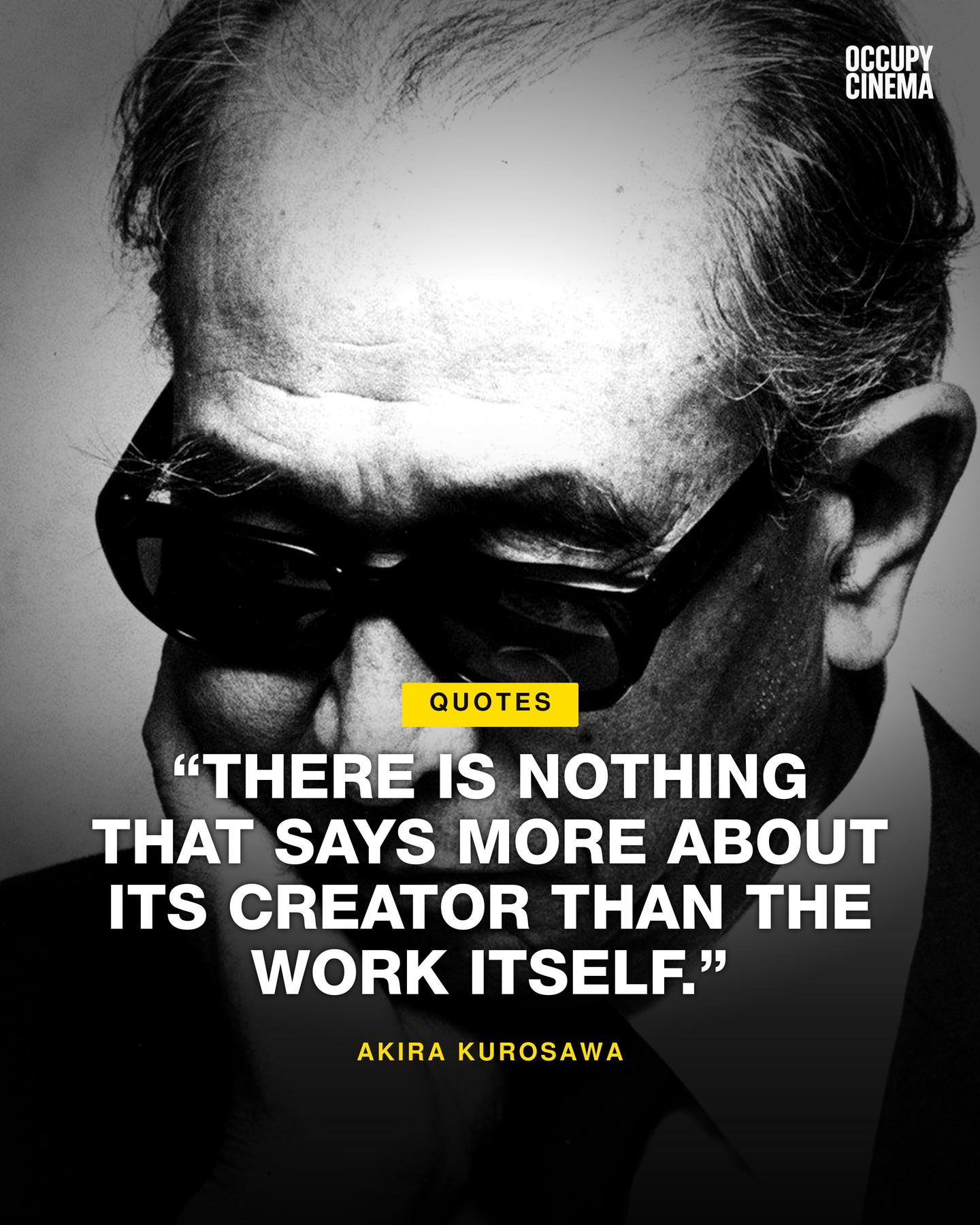
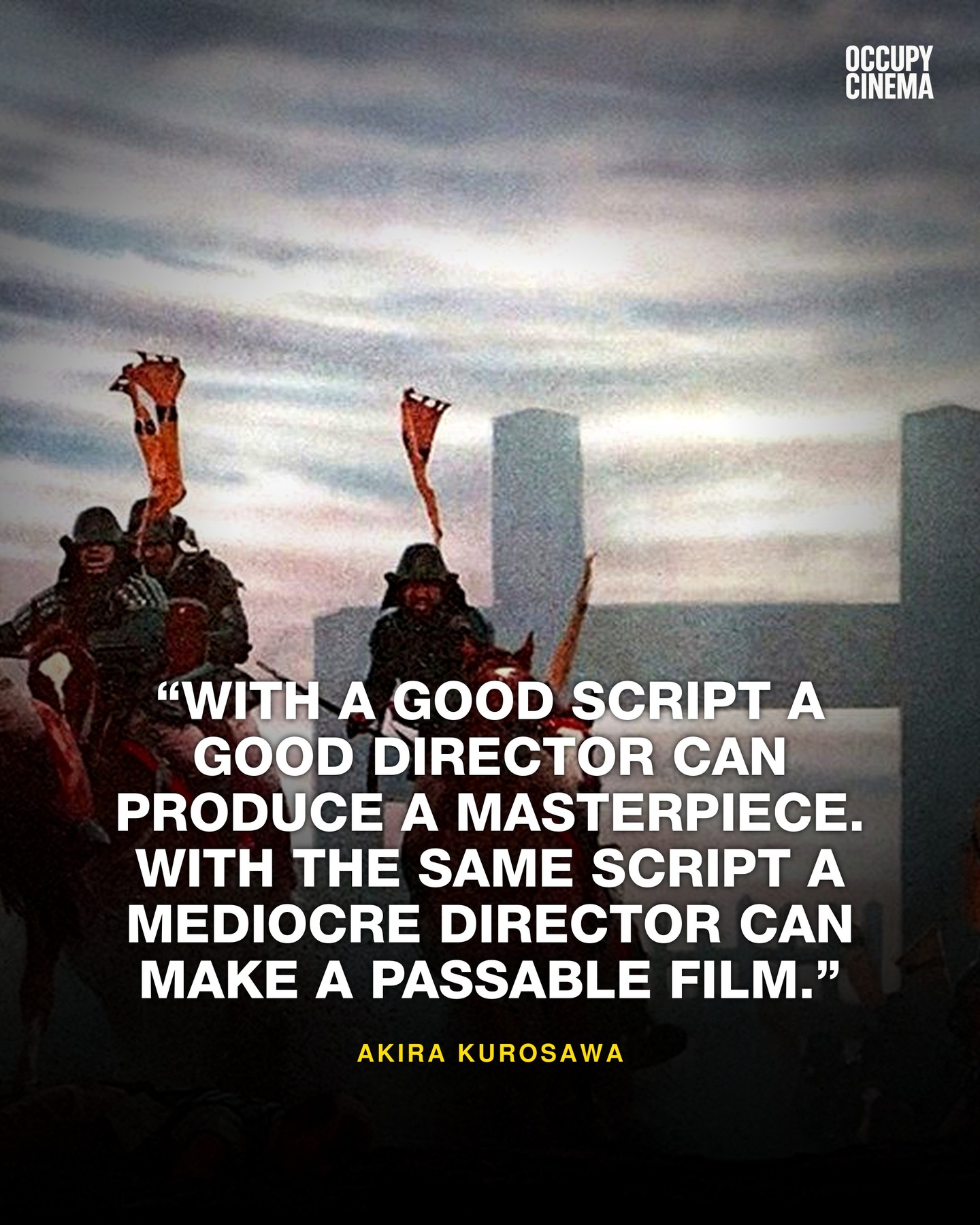
Directing gets the glory, but screenwriting builds the house. Modern film production frequently treats the script as an elastic blueprint to be rewritten in pre-visualization software or fixed in post-production. Akira Kurosawa viewed that approach as pure amateurism. For the Japanese master, the director was merely an executor, and the writer was the true architect. Long before he commanded armies of extras on the slopes of Mount Fuji, Kurosawa conquered the white page through brutal, unrelenting daily discipline.
The numbers behind his career validate his obsession. Kurosawa directed 30 feature films across five decades, and he held a writing credit on virtually every single one. He did not work in isolation. His legendary writing room, which frequently included collaborators Shinobu Hashimoto, Ryūzō Kikushima, and Hideo Oguni, operated like an endurance trial. The writers would retreat to isolated inns, lock themselves in rooms, and draft identical scenes simultaneously. They would then compare pages, debate every line, and select only the absolute strongest narrative choices for the final shooting draft.
The Architecture of the Page
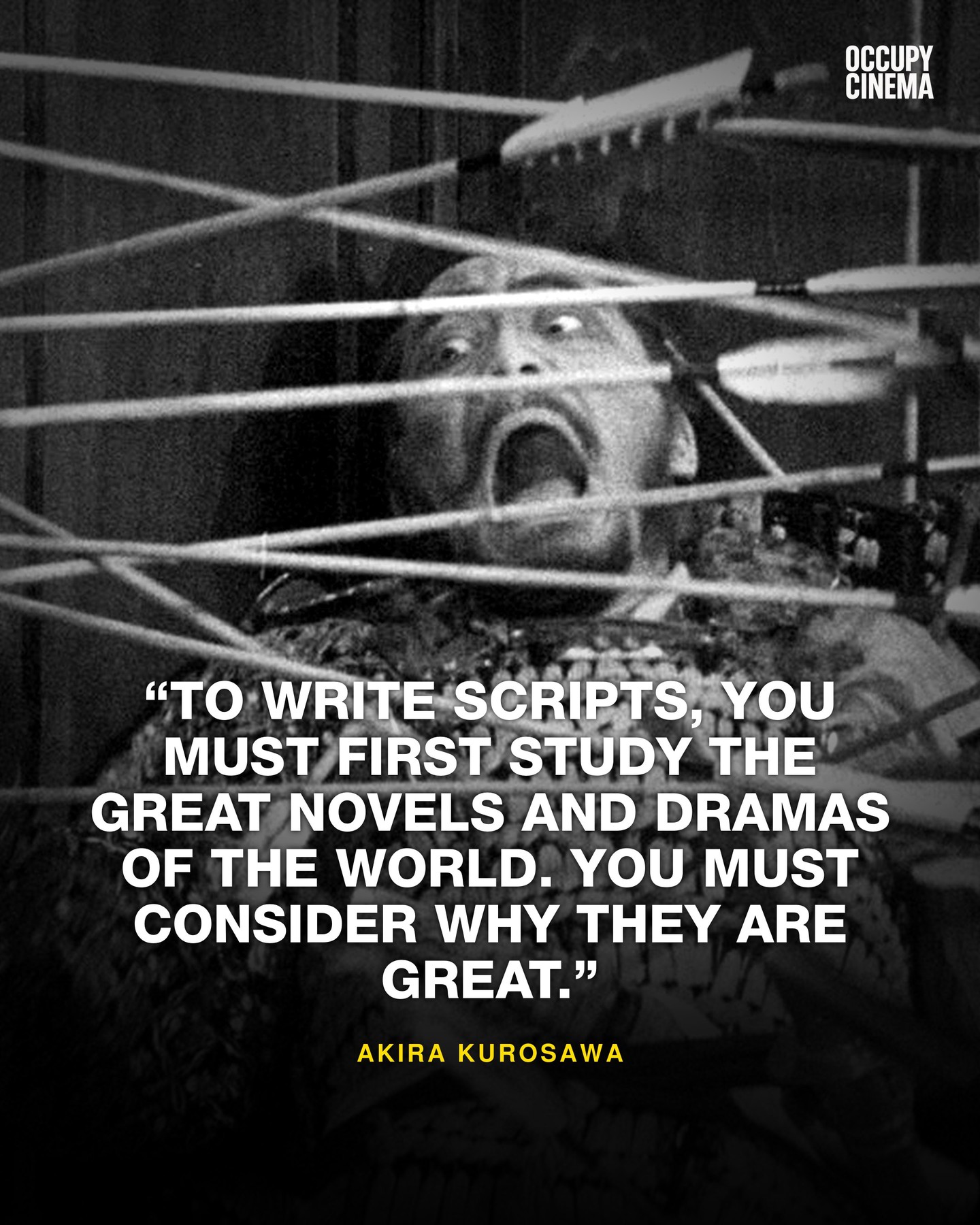
In his memoir Something Like an Autobiography, Kurosawa laid out his fundamental principle for aspiring directors. He insisted that anyone who wants to direct movies must first master screenwriting. Writing costs only paper and ink. It requires no crew, no studio backing, and no multi-million dollar budget. Yet it demands complete mastery of character, pacing, and visual structure. Film scholar Donald Richie documented this methodology in his landmark study of Kurosawa's cinema, noting that the director treated the script as a complete piece of literature that had to stand entirely on its own feet before a single lens was mounted.
This relentless discipline produced narrative structures that fundamentally altered global cinema. When Rashomon won the Golden Lion at the Venice Film Festival in 1951 and later received an Honorary Academy Award, international critics celebrated its striking photography and dynamic editing. But those visual achievements were entirely dependent on its revolutionary, multi-perspective screenplay. As noted in historical retrospectives by the BFI, the non-linear narrative structure was built meticulously at the writing table, proving that complex structural innovation is born on paper rather than in the editing bay.
The Economics of Discipline
There is also a hard production reality to Kurosawa's approach that modern studio executives often forget. Comprehensive screenwriting is the cheapest form of risk management in feature film production. When Kurosawa mounted massive historical epics like Seven Samurai in 1954 or Ran in 1985, the physical scope was staggering. Production budgets soared, sets were burned to the ground, and hundreds of horses were brought onto location. Yet those productions maintained their discipline because every camera angle, narrative beat, and character arc had been solved months before principal photography began.
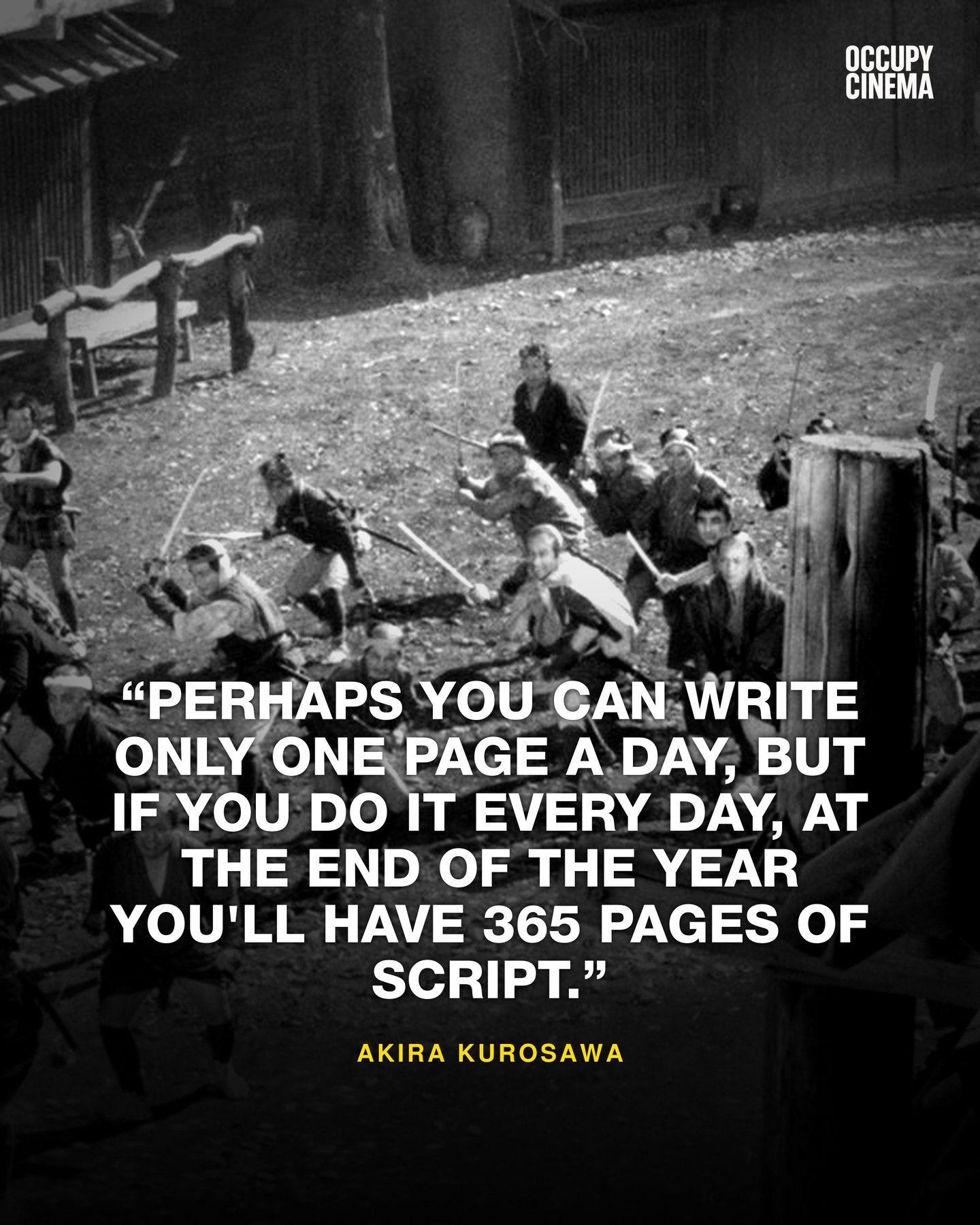
Industry analysis from The Hollywood Reporter routinely highlights how modern blockbuster budgets explode due to mid-production script rewrites and sprawling reshoots. Kurosawa avoided this trap by treating the page as sacred space where mistakes were corrected cheaply. His advice to young filmmakers was simple and uncompromising. Write one page a day. Build the muscle. Treat memory and observation as raw fuel for narrative friction. If you cannot make a scene work on paper, no amount of camera movement or visual effects will save it on screen.
For today's film industry, where development hell and bloated post-production schedules have become standard operating procedure, Kurosawa's working method remains a harsh reality check. Cinema is visual art, but visual art without structural writing is just expensive wallpaper. The work does not begin when the camera rolls. The work is already finished before the first call sheet is printed.
Related reading: Seven Samurai (Criterion Blu-ray).