Occupy Cinema › Film News
Gyllenhaal Declares Cinema Inescapably Political at Venice
At Venezia 83, director Maggie Gyllenhaal asserted that all films are fundamentally political, challenging the notion of apolitical art amidst global crises.
By Occupy Cinema ·
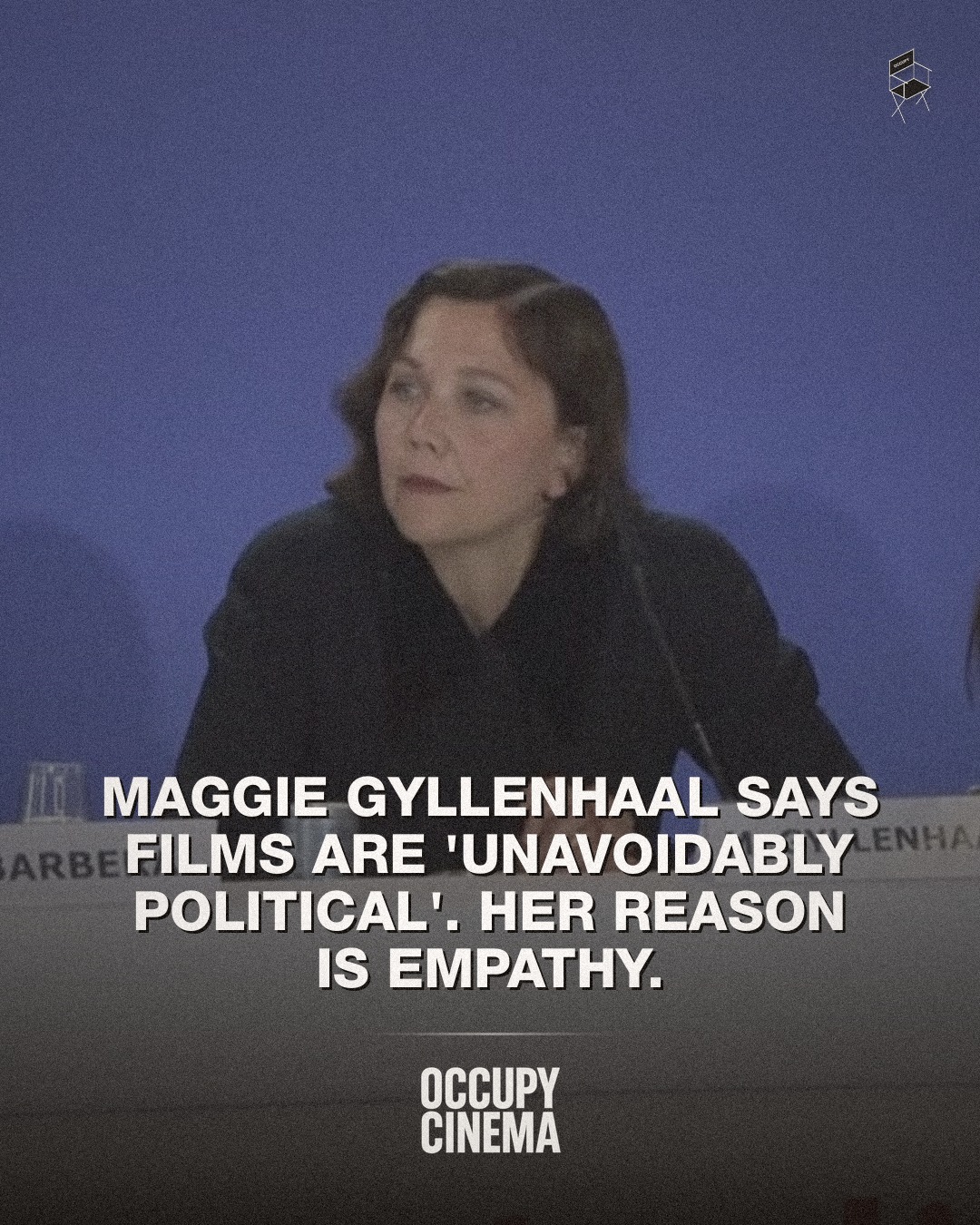
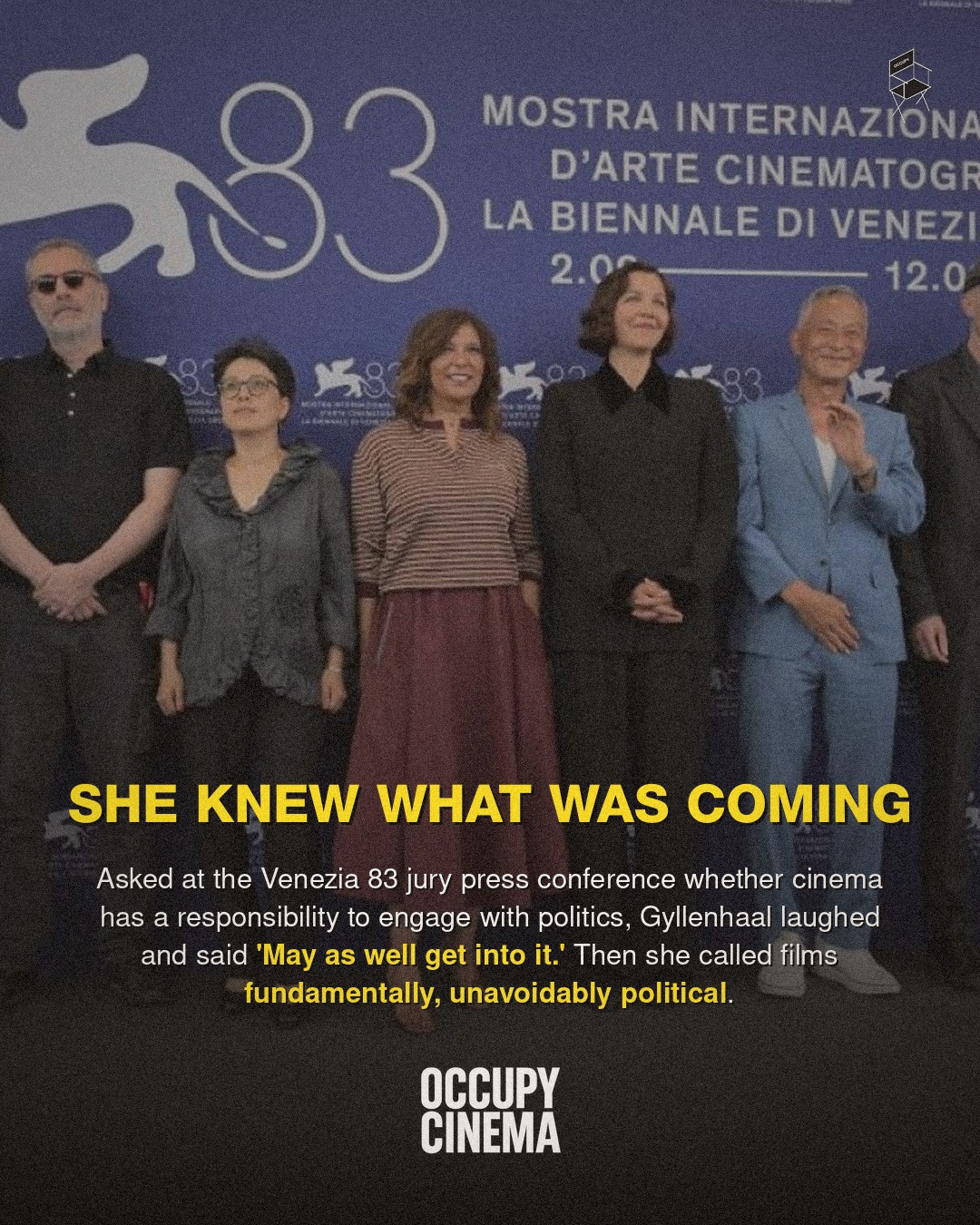
Venice, Italy, The 83rd Venice International Film Festival saw a pointed declaration from Maggie Gyllenhaal, who, during a press conference on September 2nd, firmly stated that cinema is an inherently political medium. Her remarks came in response to a direct question regarding film's responsibility to engage with politics, a topic she met with a wry laugh and the decisive statement, "may as well get into it." Gyllenhaal's stance cuts through the often-debated line between art and activism, positioning storytelling as an unavoidable reflection and shaper of societal realities. This assertion resonates particularly in an era where film festivals themselves often become platforms for broader cultural and political discourse, extending far beyond premieres and awards.
Gyllenhaal, whose directorial debut The Lost Daughter garnered critical acclaim and an Oscar nomination for Olivia Colman, spoke with a gravity fitting the current global climate. She challenged reporters and attendees to consider how one can discuss films in isolation when the world faces myriad emergencies. This perspective underscores a growing sentiment among filmmakers and critics alike: that the luxury of apolitical art is increasingly untenable. Her work, both as an actor and director, has consistently explored complex human psychology and societal pressures, often through female-centric narratives, making her a poignant voice in this discussion.
The Business of Empathy and Influence
The economic stakes behind such artistic declarations are significant. Major festivals like Venice are crucial launchpads, not just for artistic merit, but for securing distribution deals, building awards season momentum, and ultimately, influencing box office potential. A film that is perceived as "political" can be a double-edged sword: it can galvanize audiences and critics, leading to strong word-of-mouth and cultural relevance, or it can alienate segments of the market. Yet, Gyllenhaal argues for the former, suggesting that cinema's political nature is not a burden but an inherent power source. The industry's perennial struggle to balance artistic integrity with commercial viability often hinges on how these political undercurrents are navigated.
Gyllenhaal’s answer to the pressing question of cinema's political role was simple yet profound: empathy. She articulated that film offers a unique opportunity to cultivate empathy within audiences, even for the most morally compromised characters portrayed on screen. This mechanism, where viewers are invited into the subjective experience of others, regardless of their actions, forms the bedrock of narrative cinema's enduring power. It speaks to film's capacity to transcend mere entertainment and operate as a tool for understanding, a concept that underpins much of what Occupy Cinema champions. The ability to foster connection across divides through storytelling is arguably one of the most potent political acts a film can achieve.
The craft of filmmaking itself, from directorial choices to performance nuances, plays a critical role in this empathetic exchange. A director like Gyllenhaal, attuned to the subtle shifts in human emotion and motivation, can guide an audience through difficult subject matter with precision. Consider the layered performances she has elicited, or the deliberate pacing and visual language of her directed work, which compel viewers to confront uncomfortable truths about their own perspectives. This is not about overt messaging but about immersive experience, allowing the audience to inhabit a character's world, fostering a deeper, often uncomfortable, understanding.
Beyond the Screen: Festival as Forum
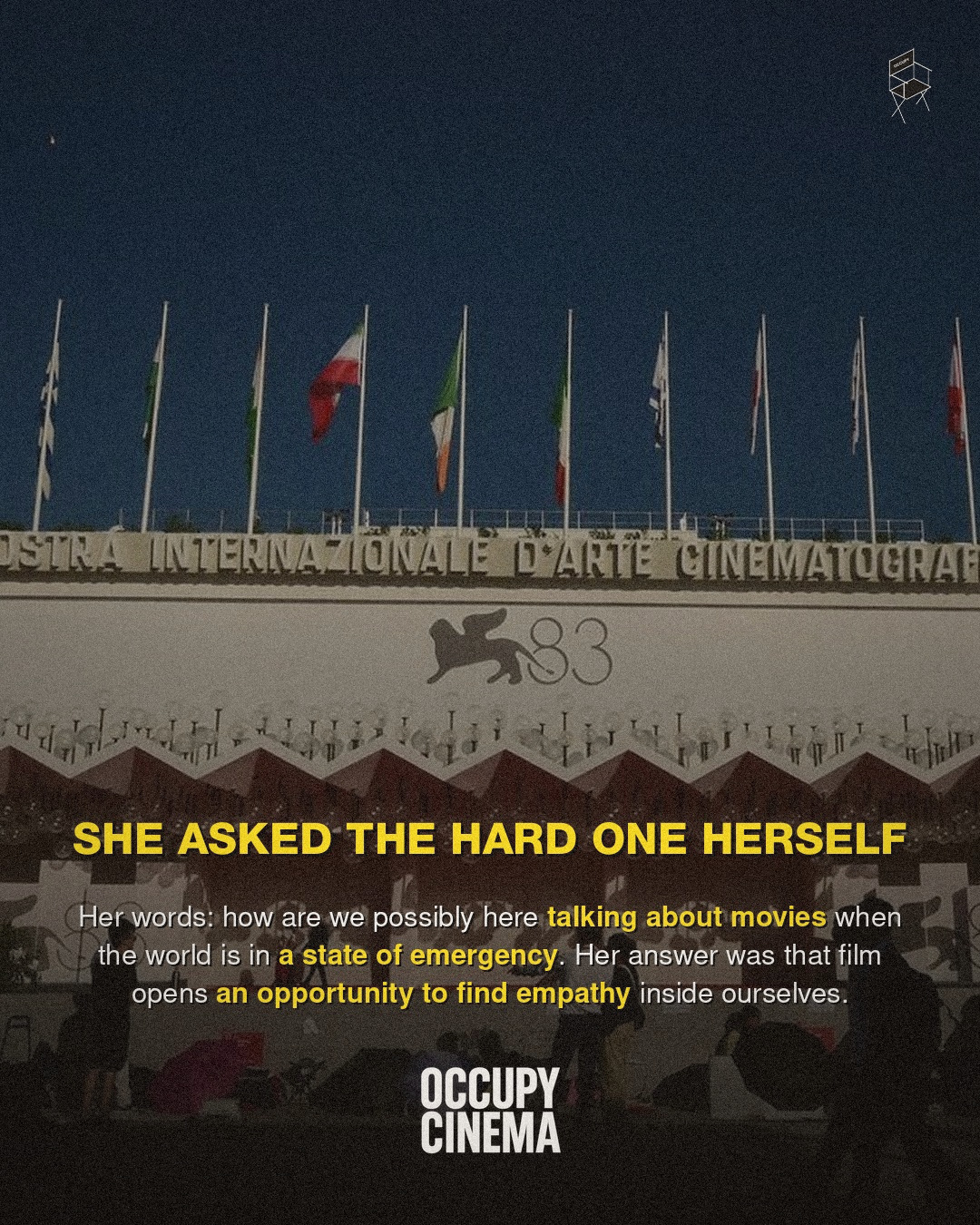
Venice is a prime example of how these discussions unfold. The festival, alongside Cannes and Berlin, serves as a global stage where artistic visions intersect with industry realities and societal debates. When a filmmaker of Gyllenhaal's stature makes such a definitive statement, it reverberates across the industry, influencing how projects are greenlit, how marketing campaigns are crafted, and how critics frame their analyses. The Hollywood Reporter's coverage of major festivals frequently highlights these moments where cultural commentary from talent overshadows mere film reviews, signaling a broader industry trend. This year's festival slate, much like those before it, features numerous films grappling with contemporary social and political issues, from climate change to geopolitical conflicts, further reinforcing Gyllenhaal's perspective.
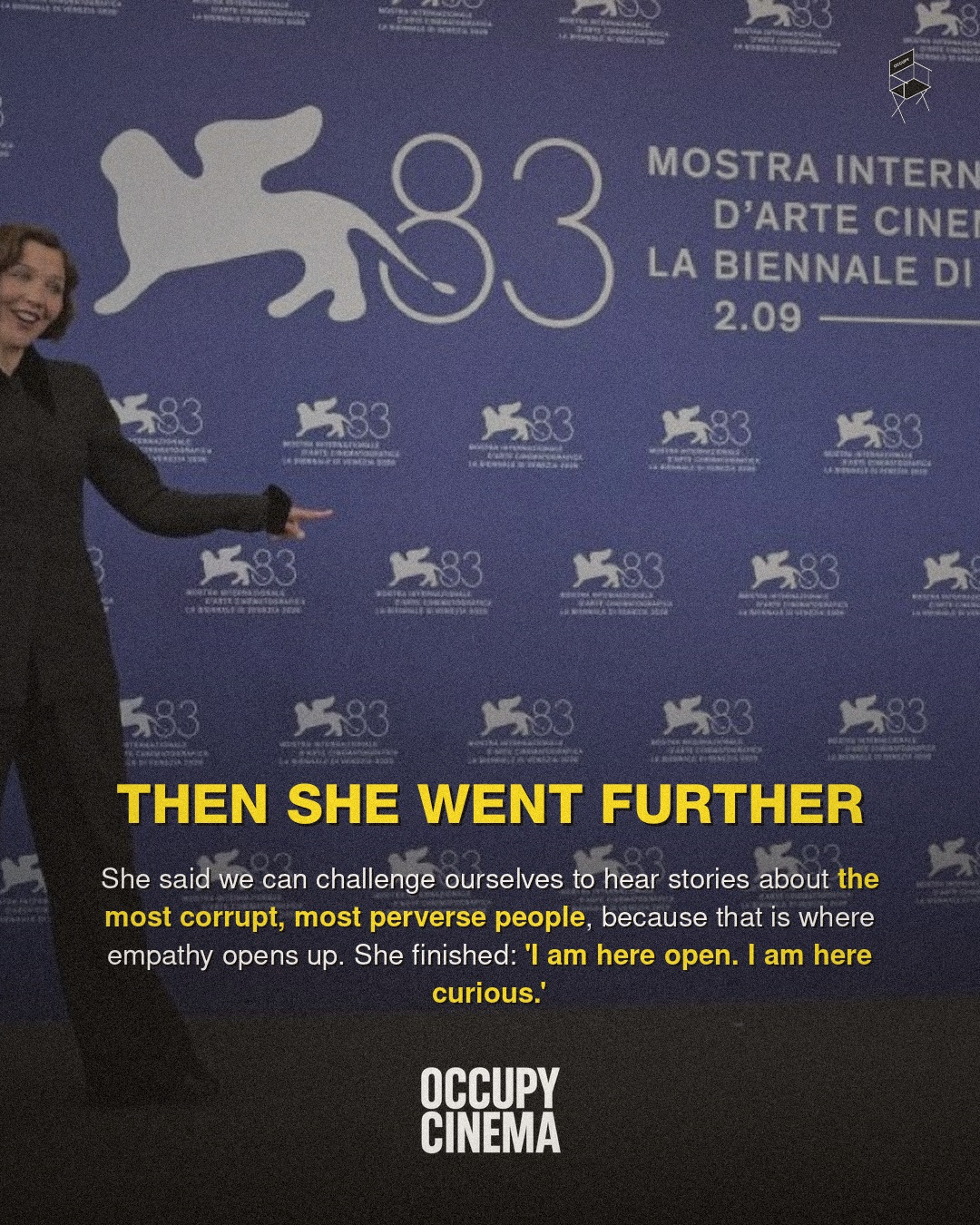
Her final sentiment at the press conference, "I am here open. I am here curious", encapsulates an approach that many believe is essential for modern cinema. It is a call for engagement, not disengagement, from the complexities of the world. For Occupy Cinema, this aligns perfectly with our mandate to explore the deeper implications of film beyond surface-level entertainment. Gyllenhaal's declaration is a potent reminder that cinema, far from being a passive escape, is a vibrant, active participant in the ongoing human dialogue, continuously shaping and reflecting our collective political landscape. Deadline's extensive reporting on festival activity often underscores this dynamic interplay between art and industry, and Gyllenhaal's remarks undoubtedly added significant weight to that narrative.
Related reading: Respect for Acting.