Occupy Cinema › FEATURED
When the Screen Went Dark: How an Unexpected Outage Revived the Oral Roots of Cinema
A blackout during a screening of Christopher Nolan's epic yielded something unexpected: an impromptu oral retelling that reminded us why we gather in dark rooms.
By Occupy Cinema ·
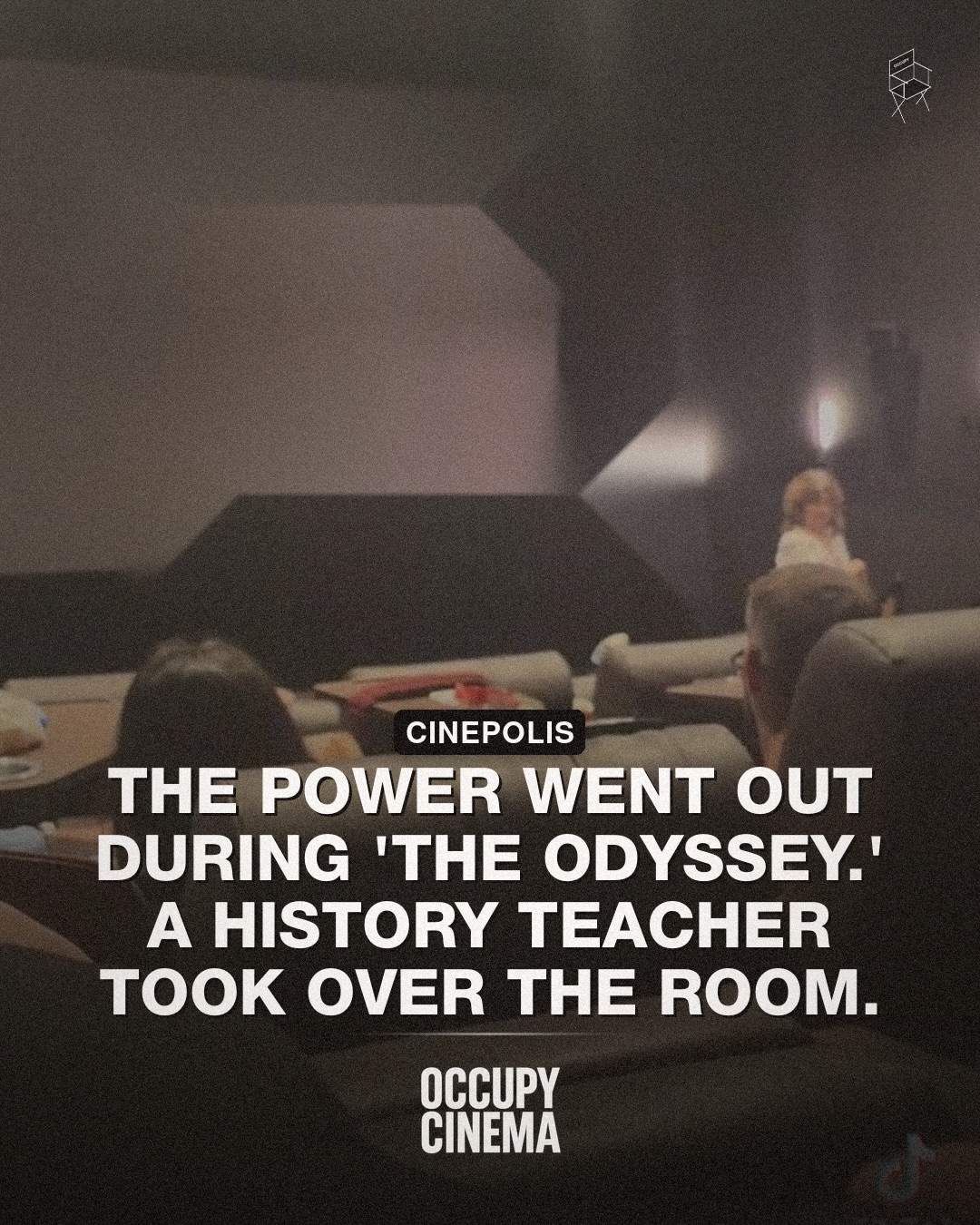
The modern movie theater is built as a fortress against the outside world, a pitch, black sanctuary engineered to isolate the audience in a bath of high, lumen light and immersive audio. When that illusion snaps, the cinematic spell usually dies with it. During a crowded Cinepolis screening of Christopher Nolan’s grand adaptation of The Odyssey, the lights did not dim for dramatic effect; the power completely failed. A packed auditorium was suddenly plunged into absolute darkness, stranded mid, narrative as the digital projectors went quiet and the surround sound speakers hummed into silence.
In any standard theatrical setting, a projection blackout is a recipe for quick frustration. Viewers pull out smartphone screens, whisper discontent, and wait for theater staff to hand out refund vouchers or announce a system reboot. But Christopher Nolan is a director whose entire artistic philosophy centers on the monumental weight of cinema as an event. His films demand scale, precision, and absolute sensory engagement. Losing the visual majesty of his frames mid, film would ordinarily ruin the afternoon, stripping away the intricate visual language that makes modern epic cinema so distinct.
Instead, something far older took over the room. As documented in a viral clip by TikTok user aneilnamedleya, a history teacher sitting in the audience recognized the sheer irony of the moment. With the screen dead and the auditorium shrouded in shadow, the teacher stood up and began narrating the plot of Homer’s classic poem directly to the room. Without high, definition projection, complex visual effects, or thunderous bass, the audience sat in silent attention, listening to a stranger walk them through the perilous journey of Odysseus.
The Ancient Roots of Collective Storytelling
There is a profound, poetic symmetry in this brief technical failure. Long before celluloid, digital hard drives, IMAX platters, or multiplexes, The Odyssey was never meant to be read silently, let alone projected onto a screen. It was an oral epic, composed and performed by wandering bards who memorized thousands of lines of verse. These storytellers relied entirely on cadence, rhythm, and human voice to command the attention of gathered crowds around open fires. In that dark Cinepolis auditorium, the power outage accidentally stripped away three thousand years of technological evolution, returning the story to its original, unfiltered state.
This unexpected performance highlights the fragile yet resilient nature of moviegoing. We live in an era where high, end home theater setups and streaming platforms offer endless convenience, but they lack the organic potential of a crowded theater. The multiplex remains one of the few places in contemporary society where strangers gather in a single room to experience a narrative together. When technology fails, the human desire for story remains intact. The power cut did not destroy the cinematic experience; it merely shifted the medium from digital light to vocal performance.
Why the Shared Experience Still Matters
Exhibitors spend millions on premium large formats, laser projection systems, and recliners to justify the ticket price in an increasingly home, bound entertainment landscape. Yet, as this incident proves, the true heart of theatrical exhibition has always been the collective space itself. The hardware is simply a delivery mechanism for human connection. When the machinery broke down, the audience did not disperse or devolve into chaos; they leaned into the shared space and let an old, fashioned storyteller hold the room.
Ultimately, those moviegoers walked away with something far rarer than a standard screening. They witnessed a spontaneous convergence of ancient mythology, modern movie culture, and live community theater. Christopher Nolan may be cinema’s most vocal champion of physical film craft and grand scale, but for a few unexpected minutes in a darkened Cinepolis, the grandest show in town required nothing more than a teacher, a memory, and an audience willing to sit together in the dark.