Occupy Cinema › Awards
Clooney Sounds Alarm on AI, Likeness Rights at Venice
George Clooney's blunt remarks at the Venice Film Festival underscore the industry's growing anxiety over artificial intelligence and the future of performer rights. The stakes are high, and the conversations are just beginning.
By Occupy Cinema ·
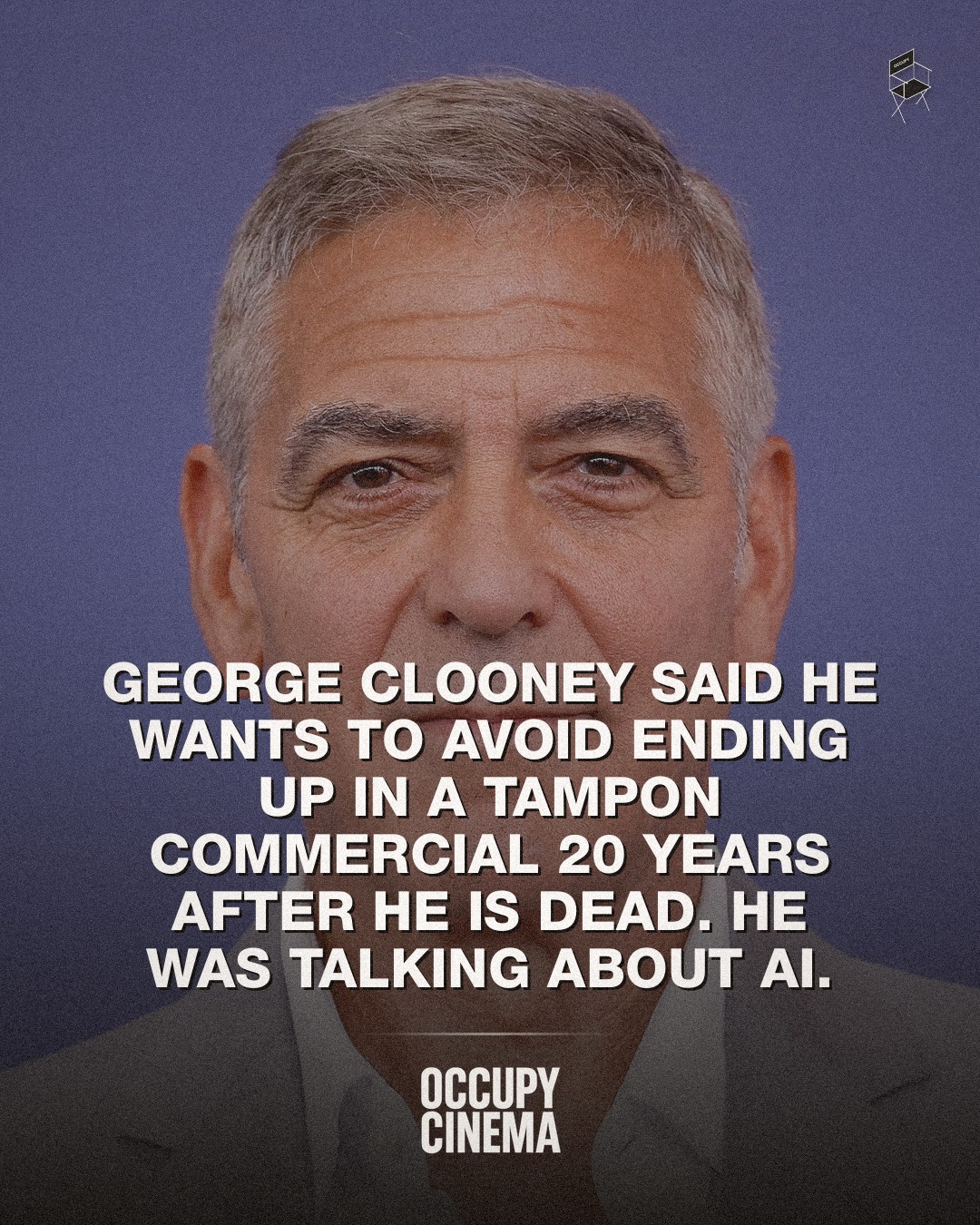
The Clock is Ticking on Digital Immortality
The entertainment industry is grappling with an existential threat, and George Clooney just put a sardonic face on it. At the Venice Film Festival, the veteran actor delivered a cutting assessment of artificial intelligence, stating his desire to avoid being in a tampon commercial two decades post-mortem. This quip, quickly picked up by Reuters, the Associated Press, and IndieWire, highlights a looming crisis: the unchecked replication of human likenesses by AI, and the legal quagmire it creates for performers.
Clooney's remarks were not merely a humorous aside. They were a direct response to questions about likeness rights, a topic rapidly ascending the industry's priority list. His sentiment echoes a widespread fear that digital immortality, rather than being a boon, could become a perpetual exploitation. The ability to generate convincing AI-driven performances, or even entire digital personas, threatens to erode the value of human talent and control over one's own image. This issue moves beyond simple deepfakes, touching on the very essence of identity and intellectual property in a rapidly digitizing world.
The Industry Scrambles for Answers
The urgency of the situation is undeniable. Clooney himself acknowledged, "It's going to get complicated, and it already is." This complication is precisely what drove the recent WGA and SAG-AFTRA strikes in Hollywood. Both unions fought vehemently for protections against AI, recognizing the technology's potential to devalue writers and actors. SAG-AFTRA's tentative agreement included provisions requiring consent and compensation for the digital replication of performers. These clauses represent a crucial, albeit early, attempt to legislate the Wild West of AI in entertainment.
The Venice Film Festival, traditionally a showcase for artistic achievement, has become an unexpected battleground for this technological debate. Clooney's appearance was not isolated. He and Maggie Gyllenhaal were both slated to speak at a CAA forum on creativity and AI during the festival. This high-profile discussion, organized by one of Hollywood's leading talent agencies, underscores how deeply entrenched these concerns are within the industry's power structures. Agencies, studios, and performers are all trying to understand the economic and ethical implications, searching for a path forward that balances innovation with protection.
The legal landscape for likeness rights is still nascent. Existing intellectual property laws, largely designed for static images or traditional performances, struggle to adequately address dynamic, AI-generated content. Questions abound: Who owns an AI-generated performance derived from a human actor's likeness? What constitutes fair compensation? How long can a digital likeness be used, and under what terms? These are not hypothetical future problems but immediate challenges facing contract negotiators and legal teams today. The lack of clear precedent creates an environment ripe for disputes, potentially leading to protracted legal battles that could reshape the industry's economic models.
The intersection of technology and art has always been a complex one. From CGI to motion capture, each advancement has brought new opportunities and new anxieties. However, AI, with its capacity for generative creation, represents a paradigm shift. It doesn't just augment human performance, it can mimic and potentially replace it. Clooney's sardonic humor masks a serious warning: the industry must act decisively to define the boundaries of AI, or risk losing control over its most valuable asset, human creativity itself. The fight for likeness rights is not just about actors getting paid; it is about preserving the human element at the heart of storytelling.
Related reading: Respect for Acting.