Occupy Cinema › Awards
Danny Boyle on AI and the Future of Journalism: A Venice Wake-Up Call
The director's new film, 'Ink,' opens the 83rd Venice Film Festival, sparking a critical industry discussion on media, power, and the looming threat of artificial intelligence.
By Occupy Cinema ·
Boyle's Provocation at the Lido
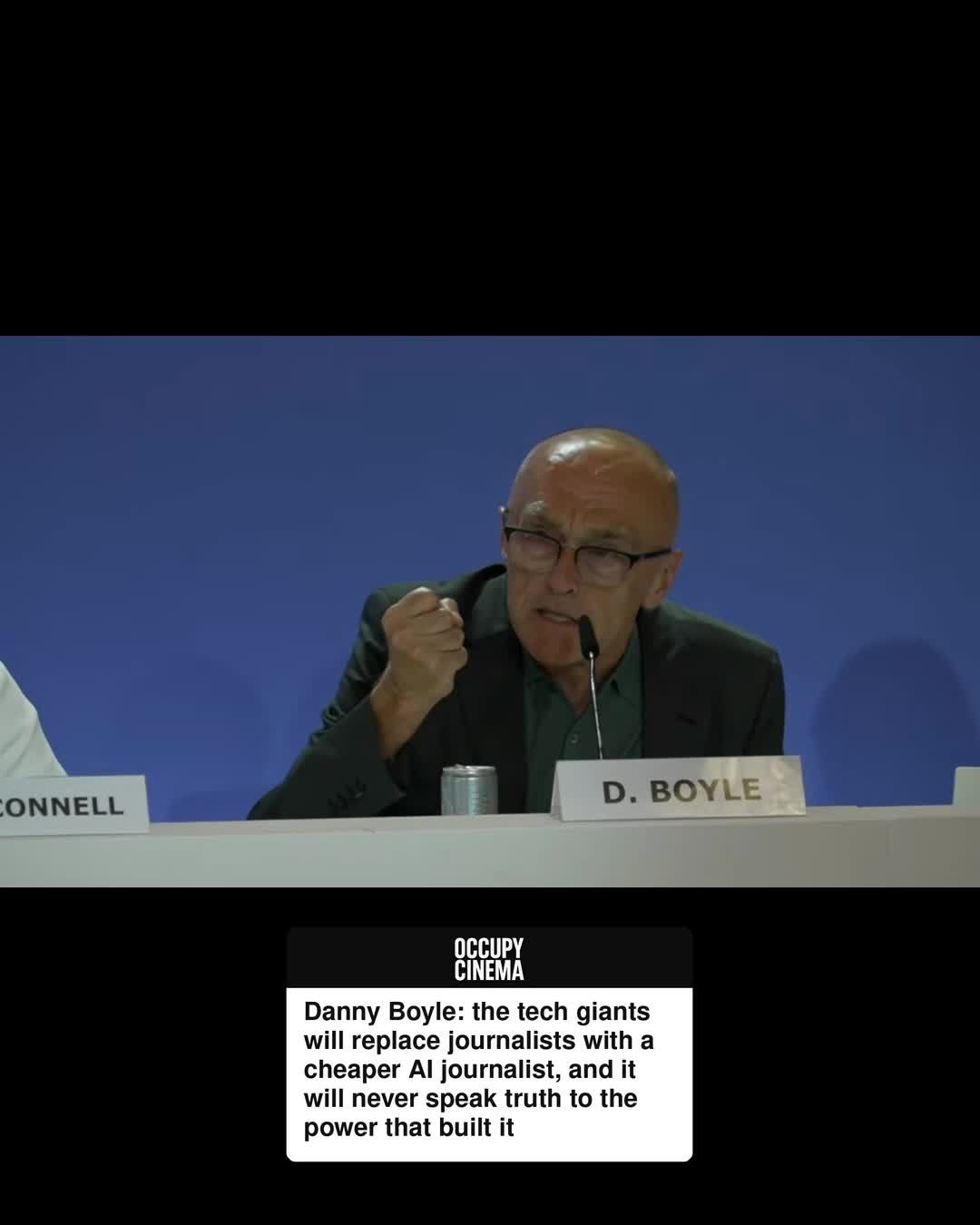
The 83rd Venice Film Festival kicked off with a potent dose of industry introspection, courtesy of Danny Boyle. His latest feature, Ink, took the prestigious opening slot, immediately setting a tone of urgent relevance. Boyle, speaking at the film's press conference, didn't just promote his historical drama. He launched a direct challenge to the assembled media, focusing on the existential threat of artificial intelligence to the very craft they practice. His pointed remarks, delivered with characteristic intensity, framed journalism as a foundational pillar of civilization, endangered by the relentless efficiency drive of tech giants.
Boyle's concern is stark: the potential for AI journalists, cheaper and more scalable, to replace human reporters. The core of his challenge, a question posed to the room, cut deep: will an AI journalist speak truth to the power that created it? This isn't just a philosophical musing. It's a direct address to the economic realities facing media today, where cost-cutting measures increasingly dictate content strategy. The director's choice to open a major international festival with this topic underscores its perceived immediacy and gravity within the creative industries.
Ink itself provides the historical backdrop for this contemporary debate. The film revisits the tumultuous 1969 relaunch of The Sun newspaper under Rupert Murdoch and editor Larry Lamb, transforming it into a tabloid titan. This period marked a significant shift in British journalism, prioritizing mass appeal and sensationalism. Boyle's narrative choice is no accident; it draws a parallel between past disruptions in media practice and the current technological upheaval. The film explores the ethics of influence, the pursuit of readership, and the inherent power dynamics at play when information is crafted for public consumption.
The Tech Shadow Over Storytelling
The conversation around AI in film and media is not new, but Boyle's framing adds a specific urgency. The 2023 WGA and SAG-AFTRA strikes highlighted AI's disruptive potential, particularly concerning intellectual property and fair compensation for human creativity. Boyle's comments extend this concern to the informational bedrock of society. If news gathering and reporting become automated, controlled by algorithms designed for efficiency and possibly allegiance to their creators, the bedrock of independent scrutiny could erode. This scenario raises uncomfortable questions about censorship by algorithm and the potential for a homogenized, commercially optimized narrative to dominate public discourse.
The director's filmography often grapples with contemporary societal shifts, from the hedonism of Trainspotting to the technological utopianism and subsequent disillusionment of Steve Jobs. Ink continues this trend, using a historical moment to interrogate modern dilemmas. The film's production details, while not fully public, likely involved meticulous period recreation and a focus on the craft of print journalism before the digital age. This contrast between the tactile, human-driven process depicted in Ink and the theoretical, automated future Boyle warns against, creates a powerful tension.
The Venice Film Festival, as a premier cinematic showcase, provides an ideal platform for such discussions. It brings together filmmakers, journalists, and industry executives, creating a crucible for ideas that extend beyond the screen. Boyle's intervention ensures that the festival's intellectual current flows not just through artistic merit but also through critical engagement with the future of storytelling itself. His challenge to the media, presented at the very moment his film celebrates the power and peril of the press, is a calculated provocation. It asks whether the industry is prepared to defend its most fundamental values against a technologically driven paradigm shift.
The implications for cinema are also clear. If the truth-tellers of journalism are compromised, the narratives that influence culture become increasingly vulnerable. Boyle's remarks serve as a wake-up call, not just for journalists, but for anyone invested in the integrity of information and the preservation of human insight in an increasingly automated world. The question of AI's allegiance, once confined to science fiction, is now firmly on the table for real-world debate, sparked by a director who understands the power of a well-timed, provocative statement. For more on the intersection of technology and media, visit The Hollywood Reporter's Tech section.