Occupy Cinema › Awards
Danny Boyle Sounds Alarm on AI in Journalism at Venice Premiere
The director of 'Ink' challenges the future of journalistic integrity against the rising tide of artificial intelligence. His latest film, which opened the 83rd Venice Film Festival, serves as a backdrop to a pressing industry concern.
By Occupy Cinema ·
Boyle's Venice Warning
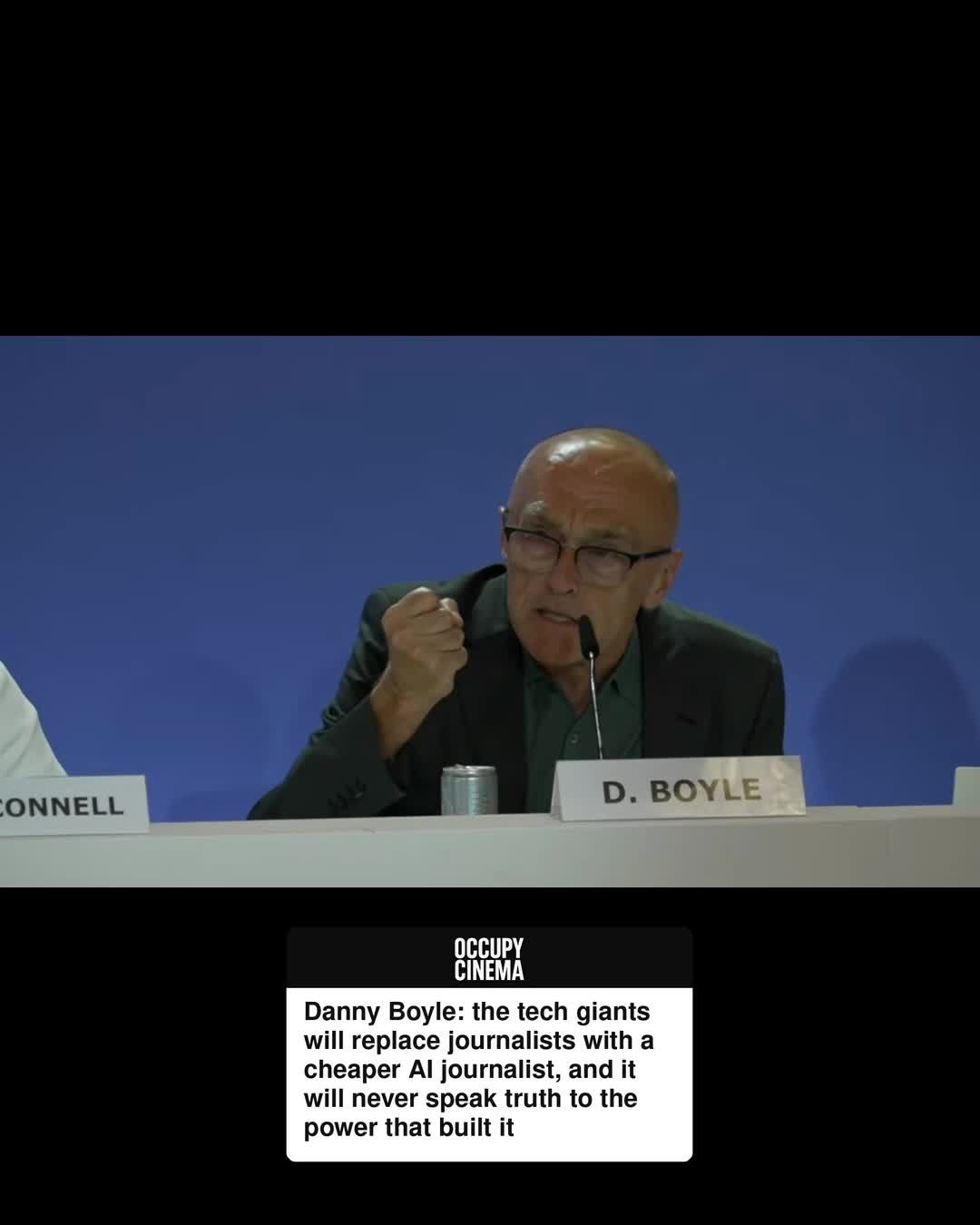
Venice, Italy - The 83rd Venice Film Festival kicked off with a potent dose of introspection from acclaimed director Danny Boyle. Following the world premiere of his latest feature, Ink, Boyle used the press conference platform to issue a stark warning regarding the encroaching presence of artificial intelligence in journalism. His comments, delivered with characteristic urgency, resonated through the Lido, highlighting a growing anxiety within creative and informational industries alike. Ink, a historical drama chronicling Rupert Murdoch and Larry Lamb's launch of The Sun newspaper in 1969, provided a pointed context for his remarks.
Boyle asserted that journalism remains one of civilization's fundamental pillars. Its core function, he argued, is to hold power accountable. This crucial role is executed by human journalists, individuals who possess the capacity for independent thought and ethical judgment. The danger, Boyle stated, lies in the rapid advancement of AI. Tech giants, he fears, are poised to replace these human gatekeepers with AI journalists, touting efficiency and cost-effectiveness as primary drivers. This technological shift, while seemingly inevitable, carries profound implications for the fourth estate.
The director's question to the assembled press was direct and unsettling: will an AI journalist, created by and beholden to the very power structures it is meant to scrutinize, truly speak truth? This query cuts to the heart of algorithmic bias and corporate control over information dissemination. Boyle's comments are not isolated; they echo concerns voiced across various sectors, from creative arts to national security, about the unchecked proliferation of AI and its potential to reshape societal norms and institutional trust. The discussion at Venice underscored the festival's role not just as a showcase for cinema, but as a crucial forum for broader cultural dialogue.
Industry Implications and Historical Context
Ink itself offers a fascinating historical lens through which to view these contemporary anxieties. The film delves into a pivotal moment in British media history, exploring the aggressive, disruptive launch of The Sun. This period was marked by fierce competition, shifting journalistic ethics, and the growing influence of media moguls. Boyle's choice to tackle this subject matter now is prescient, drawing parallels between the disruptive forces of 1969 and the current seismic shifts brought about by digital technology and AI. The film's narrative provides a backdrop against which Boyle's concerns about journalistic integrity in the age of AI take on added weight, demonstrating that the struggle for unbiased reporting is a perennial one.
The implications of Boyle's warning extend beyond the realm of traditional newsrooms. The entertainment industry, including filmmaking, is grappling with its own AI challenges. From scriptwriting algorithms to synthetic actors and deepfakes, the creative landscape is undergoing a radical transformation. Boyle's stance reflects a broader sentiment among creators who fear that while AI offers new tools, it also threatens to dilute human creativity and critical oversight. His remarks at Venice serve as a rallying cry for vigilance, urging a careful consideration of AI's societal impact before its integration becomes irreversible.
The financial incentives driving AI adoption are undeniable. Companies project significant cost savings and increased output through automation. However, Boyle's critique forces a re-evaluation of what is lost in this pursuit of efficiency. The human element in journalism, with its inherent biases and subjective perspectives, is also its strength: the capacity for empathy, independent moral reasoning, and the courage to challenge established narratives. Replacing this with an algorithm, however sophisticated, risks creating a compliant, rather than critical, media landscape. The Hollywood Reporter has extensively covered the ongoing debates surrounding AI's role in creative industries, highlighting both its potential and its pitfalls.
Boyle's comments are a timely intervention in an increasingly urgent debate. As the line between fact and fiction blurs, and as information ecosystems become more complex, the role of independent, ethical journalism is more critical than ever. Whether the industry, and society at large, heeds his warning about the potential for AI to undermine this fundamental pillar remains to be seen. What is clear is that the conversation has begun, prompted by a filmmaker who understands the power of narrative and the imperative of truth. Deadline and Variety continue to track the rapid developments and industry responses to AI integration.
Related reading: S.F.W. 1994 Film.