Occupy Cinema › Streaming
Ava DuVernay Sets '14th' for Netflix and Fall Festival Bow
A decade after '13th' reshaped nonfiction distribution, Ava DuVernay returns to constitutional inquiry with a heavyweight fall platform rollout.
By Occupy Cinema ·
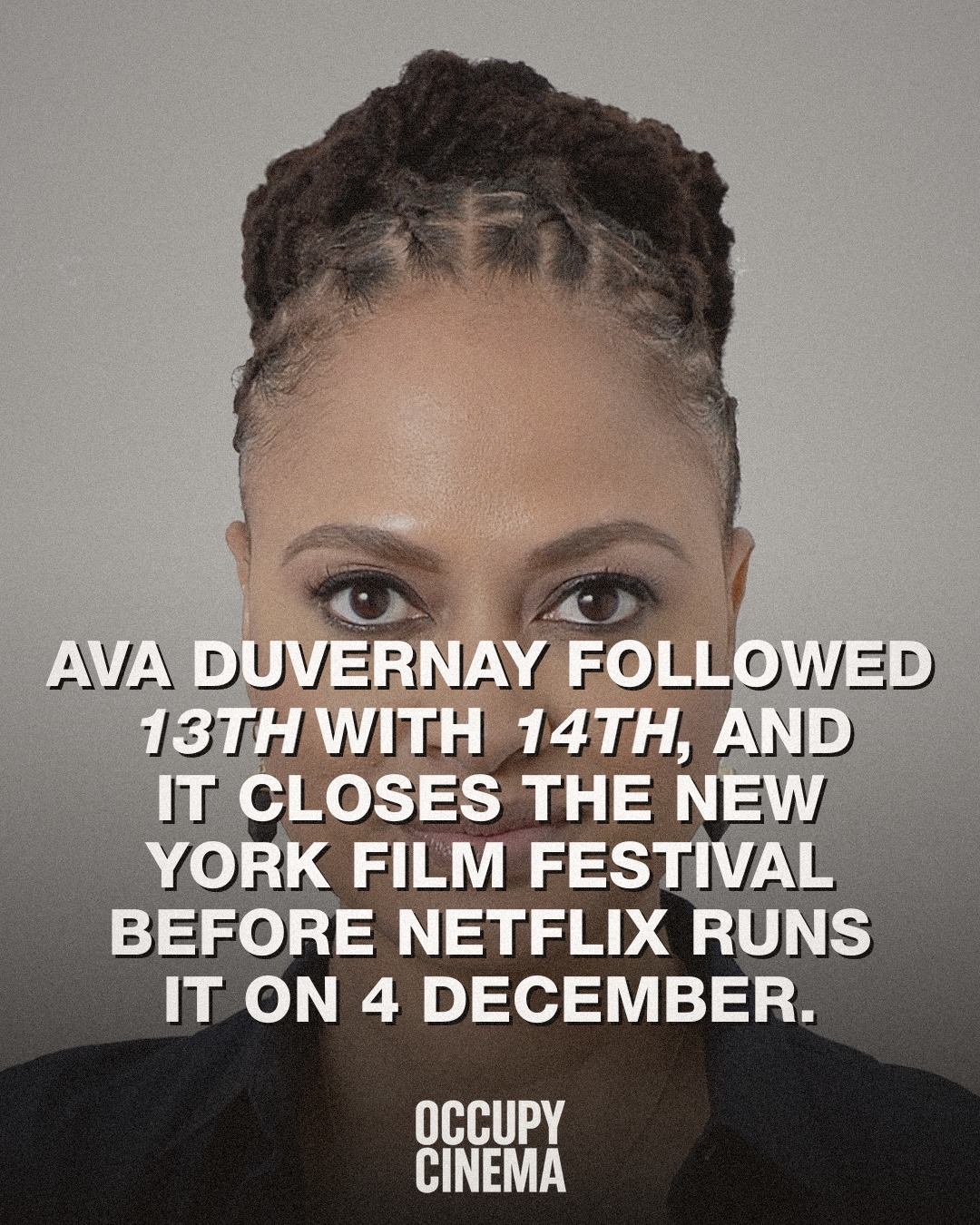
A decade after reshaping how the streaming era handles major political nonfiction, Ava DuVernay is returning to the source of her biggest critical breakthrough. Netflix has dated 14th, her expansive follow-up to the Oscar-nominated 2016 juggernaut 13th, for a global streaming debut on December 4, 2026. Before hitting subscribers' feeds, the feature will receive a traditional theatrical footprint across the United States and the United Kingdom starting November 27, preceded by a prestigious world premiere as the closing night selection of the New York Film Festival on October 9 at Alice Tully Hall.
The festival positioning mirrors the playbook that launched its predecessor into the cultural zeitgeist. Back in 2016, 13th made history as the first nonfiction film ever to open the New York Film Festival. It went on to secure an Academy Award nomination for Best Documentary Feature, sweep the Primetime Emmys, and anchor Netflix's early awards campaign infrastructure. As detailed in industry coverage on Variety, the streamer continues to use high-profile fall festival berths to establish critical consensus for its premium unscripted slate before transitioning to volume distribution.
From Mass Incarceration to Equal Protection
Where the original project analyzed the loophole in the 13th Amendment that fueled mass incarceration, 14th tackles the bedrock of modern American civil rights: the Fourteenth Amendment, citizenship, equal protection, and substantive due process. The scope is noticeably larger this time around. DuVernay and her research unit conducted over 50 on-camera interviews across legal scholars, civil rights practitioners, historians, and political organizers.
The on-screen roster includes constitutional heavyweights such as former NAACP Legal Defense Fund president Sherrilyn Ifill, voting rights advocate Stacey Abrams, Pulitzer Prize-winning historians Eric Foner and David Blight, and constitutional scholar Robert Chang. Much like her narrative work on When They See Us and Origin, DuVernay frames dense legal theory through human architecture, tracing how Reconstruction-era legislative promises repeatedly collide with state-level disenfranchisement efforts.
The Platform Strategy and the Nonfiction Marketplace
The rollout strategy reflects a shifting nonfiction landscape. The theatrical documentary marketplace has tightened significantly since 2016, with independent unscripted titles struggling for screens against studio franchise volume. For Netflix, investing in an auteur-driven essay film with a multi-week theatrical exclusivity window satisfies both industry prestige requirements and talent relations, while delivering high-value cultural conversation to a global subscriber base that surpassed 270 million accounts.
DuVernay's return to direct constitutional analysis comes at a pivotal moment for public discourse surrounding federal oversight and civil liberties. Reporting from The Hollywood Reporter consistently underlines that event documentaries thrive on timeliness and institutional pedigree. By pairing a landmark festival closing night with an aggressive late-autumn theatrical run, Netflix is signaling full-throated awards ambitions for a film designed to spark national debate.
Ultimately, 14th represents a reunion of filmmaker and format that defined early prestige streaming. DuVernay operates best when weaponizing archival precision and urgent intellectual testimony, turning complex constitutional mechanics into compelling, accessible cinema.
Related reading: Canon EOS R5 C.