Occupy Cinema › Box Office
The Architecture of an Unmapped Path: How Sidney Poitier Rewrote Studio Power
Sidney Poitier built a singular legacy without a blueprint, transforming mid-century box office viability into lasting institutional leverage across Hollywood.
By Occupy Cinema ·
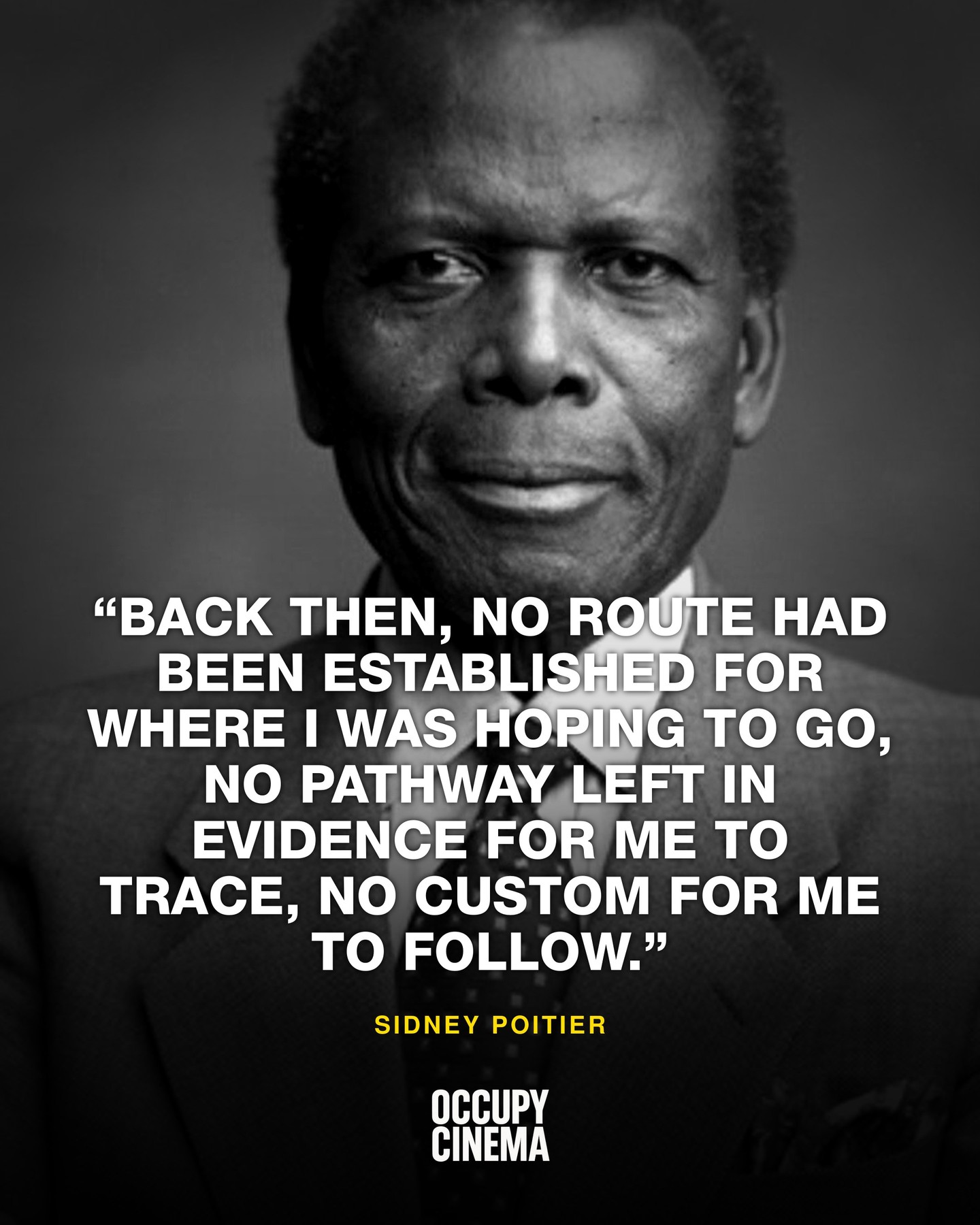
On March 24, 2002, the 74th Academy Awards staged an emotional, historic convergence that the studio system had delayed for nearly four decades. When Sidney Poitier stepped onto the stage at the Kodak Theatre to accept an Honorary Academy Award, he addressed an industry that had long relied on his shoulders while rarely clearing his path. Later that same evening, Denzel Washington took Best Actor for Training Day and Halle Berry took Best Actress for Monster's Ball, marking the first time two Black performers captured the lead categories in a single night. Yet Poitier's remark during his acceptance remained the emotional thesis of the ceremony: back then, no route had been established, and no pathway had been left in evidence to trace.
That absence of infrastructure defined the start of Poitier's breakthrough era. In 1963, director Ralph Nelson brought Lilies of the Field to United Artists on a shoestring budget of roughly $250,000. Filmed in just 14 days in the Arizona desert on monochrome 35mm stock, the production lacked the safety net of major studio resources. Poitier took a drastic pay cut, agreeing to a percentage of the backend gross simply to ensure the film reached completion. His performance as Homer Smith, an itinerant laborer helping German nuns build a chapel, earned him the Academy Award for Best Actor in 1964, making him the first Black performer to win the category.
The Box Office Leverage of 1967
Poitier understood early that critical acclaim without commercial leverage yielded very little authority in Los Angeles. By 1967, he orchestrated one of the most commercially dominant single-year runs in theatrical history. Leading three distinct titles, Stanley Kramer's Guess Who's Coming to Dinner, Norman Jewison's In the Heat of the Night, and the British drama To Sir, with Love, Poitier generated tens of millions of dollars in domestic box office returns. Exhibitors quickly ranked him as the top box office draw in the United States, forcing major studio executives to confront a new reality where a Black lead could reliably anchor mainstream commercial hits.
The craft behind that commercial dominance demanded exceptional precision. On the set of In the Heat of the Night, director of photography Haskell Wexler famously adjusted traditional studio lighting packages, re-evaluating key-to-fill ratios and exposure balances specifically to capture the nuances of darker skin tones on Eastman 35mm stock. Poitier's performance as Detective Virgil Tibbs paired that technical visual calibration with an exacting, restrained screen presence. His refusal to accept submissive postures changed the kinetic language of American drama, establishing a dignified, uncompromising protagonist who commanded respect across every frame.
Institutional Memory and Modern Precedent
The industry dialogue around representation often treats progress as an organic evolution, but the historical record proves it was engineered through personal risk and commercial acumen. Archival retrospectives documented by Variety and analytical coverage from The Hollywood Reporter consistently trace modern executive breakthroughs and diverse greenlight metrics back to Poitier's financial self-reliance. When studio doors remained narrow, Poitier pivoted to directing in the 1970s, delivering commercial crowd-pleasers like Uptown Saturday Night and proving his command over both sides of the camera.
Poitier's 2002 reflections serve as an essential reminder for an industry still navigating structural inequities. His legacy was never about waiting for a formal system to extend an invitation. By leveraging his box office pull, demanding narrative agency, and executing his craft with absolute precision, Poitier manufactured his own pathway. In doing so, he left behind a permanent blueprint for generations of filmmakers and performers who followed.
Related reading: The Measure of a Man.