Occupy Cinema › Film News
Christian Bale's Ambitious $22 Million Foster Care Initiative
Christian Bale, known for his transformative roles, has spearheaded a $22 million project in Palmdale, California, aimed at revolutionizing foster care with a focus on sibling unity and long-term support.
By Occupy Cinema ·
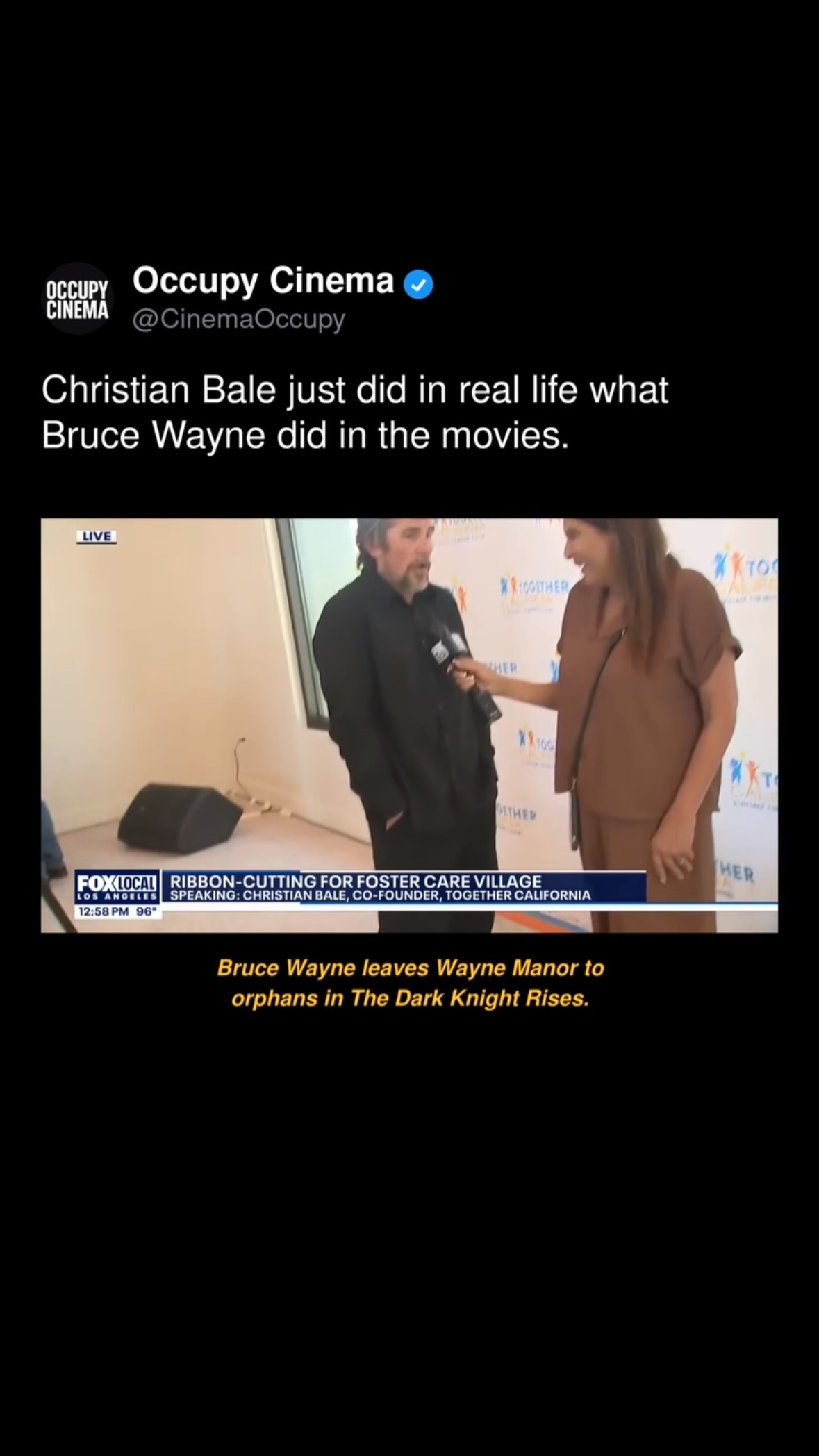
Bale's Personal Mission Drives Palmdale Project
Christian Bale, an actor recognized for his intense commitment to roles, has channeled that same focus into a monumental philanthropic endeavor: a $22 million foster care village in Palmdale, California. This project, named Together California, represents a significant investment in a new model for child welfare. The genesis of the idea traces back nearly two decades for Bale, sparked by a profound realization while observing his own children. He noted the stark reality of sibling separation within the foster care system, a statistic experts place as high as 75 percent. The village’s core mission is to make that number zero for the children it serves.
The timeline of this personal mission underscores its depth. Bale’s daughter was three years old when he began exploring this concept, and she is now 21. This long-term commitment highlights a sustained effort beyond typical celebrity endorsements. Together California aims to be a comprehensive support system, a “mothership” as Bale describes it, guiding children from intake through aging out of the system. It offers continuous support, including efforts to reunite children with biological parents when feasible, and ongoing assistance post-residency. The stated goals are ambitious: zero incarceration, zero homelessness, and a 100 percent high school graduation rate for its residents.
Beyond the Box Office: A Different Kind of Impact
Bale, despite his A-list status, characterizes himself as an unlikely fundraiser, admitting he is not a natural networker and that calls often go unreturned. Yet, the compelling nature of Together California's mission proved undeniable. The project’s ethos, centered on protecting vulnerable children and preserving family units, resonated broadly. This approach allowed the initiative to transcend typical industry networking hurdles, demonstrating that some ideas carry their own weight, regardless of their proponent's social capital. The Palmdale village marks the first model of its kind in California, setting a precedent for holistic, long-term foster care solutions.
The ironic parallel to Bale’s most iconic role, Bruce Wayne, who in Christopher Nolan’s Christopher Nolan Batman trilogy endows an orphanage, was not lost on the public. Bale himself notes he didn’t connect the two until years into his project, and only after online commentators drew the comparison. This inadvertent alignment between his fictional persona’s philanthropy and his real-world efforts adds an unexpected layer to the story, highlighting the power of art to echo reality, or vice-versa. The village broke ground in 2020 and is now nearing completion, poised to welcome its first residents.
The financial backing for Together California has been substantial, culminating in the reported $22 million investment for the Palmdale site. This funding originates from a blend of private donations and philanthropic efforts, indicative of the broad appeal of the project’s mission. The long-term vision extends beyond this initial facility. Bale has articulated a desire for the project to become self-sustaining, independent of its founders. The goal is for public awareness and support to sustain the initiative, rather than relying on a handful of original donors. This strategy aims to ensure the longevity and scalability of the model, allowing it to serve more children beyond the initial Palmdale site. Reports from organizations like The Hollywood Reporter have tracked the project's progress, noting the unique challenges and successes of bringing such a vision to fruition.
The impact of Together California could extend far beyond Palmdale. By pioneering a comprehensive, family-focused model for foster care, the project offers a blueprint for systemic change. Its success could provide critical data and best practices for states struggling with their own child welfare systems. The focus on preventing homelessness and incarceration for former foster youth addresses two of the most persistent and costly societal challenges. This initiative, championed by Bale, represents a significant pivot from traditional short-term foster placements to a paradigm of sustained community and support.
The ambition of Together California lies not just in its financial scale, but in its audacious goals: to fundamentally alter the trajectory for children in foster care. Bale's involvement lends a high-profile platform, but the true measure of success will be in the lives changed, the families kept together, and the system redefined. This project is a powerful statement on the potential for focused, long-term philanthropy to address deeply entrenched social issues, demonstrating that a commitment to an idea can yield transformative results.