Occupy Cinema › Exhibition
The 4-Second Paradox of Christopher Nolan's 'The Odyssey'
Shot entirely on 15-perf 70mm IMAX, Christopher Nolan's epic opened July 17. Yet its biggest social media moment is a blurry four-second bootleg of Robert Pattinson.
By Occupy Cinema ·
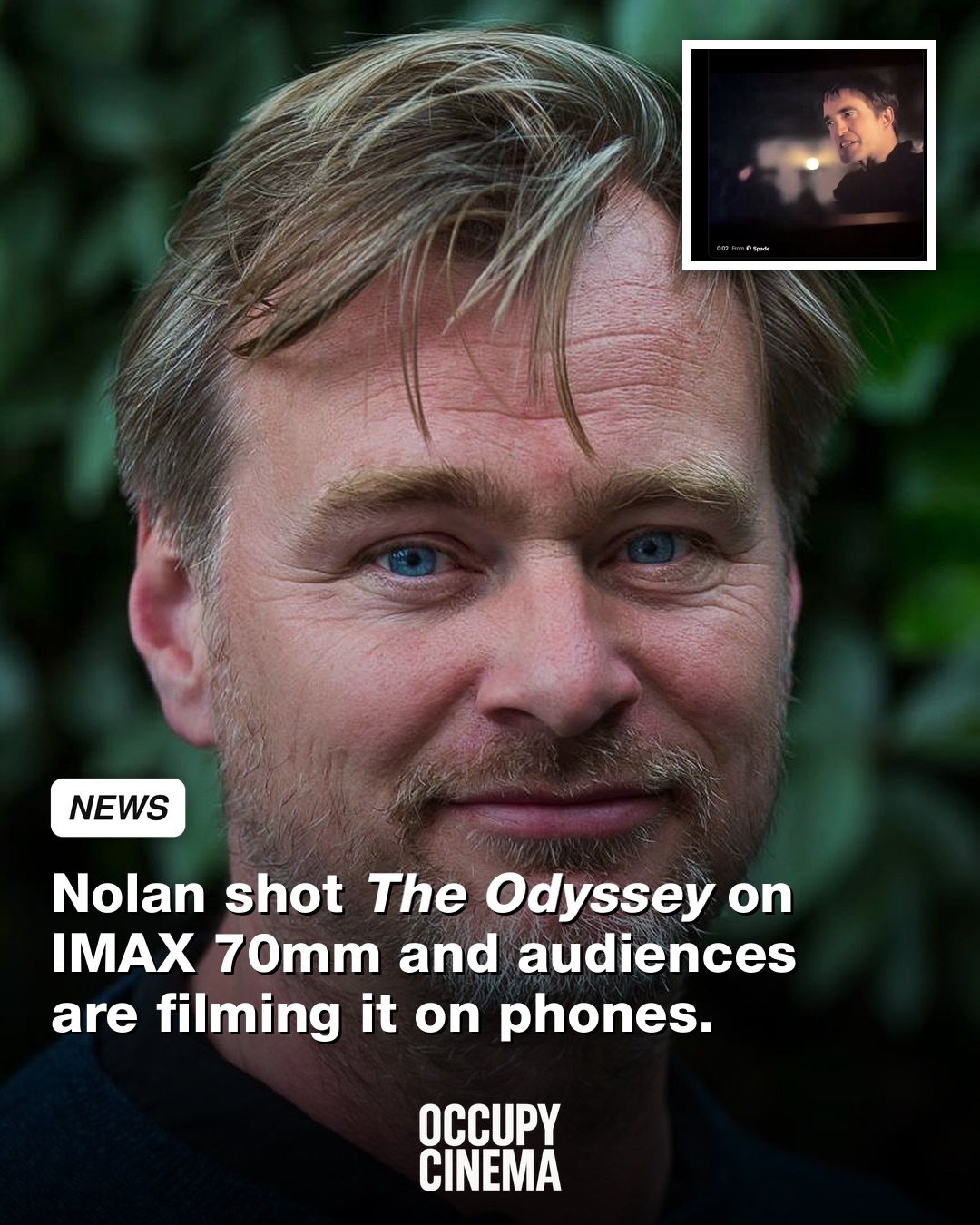
July 17 marked the global theatrical arrival of The Odyssey, the latest cinematic event from visionary director Christopher Nolan. Built on an unprecedented scale, the production stands as the first narrative feature shot entirely on 15-perf 70mm IMAX film cameras. The release promised to push analogue filmmaking to its absolute technical peak, filling premium large-format screens worldwide. Yet by July 20, the internet seized upon a four-second clip filmed secretly off a theater screen and posted directly to social media platform X.
Nolan remains one of the few directors in Hollywood capable of commanding massive budgets for uncompromising celluloid-driven projects. Studios invest heavily in his vision because IMAX auditoriums drive outsized box office returns through premium ticket surcharges. Industry coverage from The Hollywood Reporter consistently notes that specialized large-format engagements regularly generate a huge percentage of opening weekend grosses for his epics. Nolan uses that financial leverage to preserve physical film infrastructure, funding specialized film stock manufacturing, chemical laboratory processing, and mechanical camera engineering across the industry.
Resolution Meets Compression
The viral moment focuses on actor Robert Pattinson, who portrays Antinous, the most arrogant and vocal suitor vying for power in the palace of Ithaca. In the scene, Antinous barks a curt, dismissive command to expel the disguised king from the hall. The moment lasts barely four seconds on screen. The bootleg upload was grainy, shaky, and recorded on a mobile phone, yet it captured online culture immediately. When studio representatives issued takedown notices and cleaner high-definition clips emerged later, users actively rejected the polished footage in favor of the shaky original leak.
The technical contrast between production and distribution is stark. A 15-perforation 70mm IMAX frame offers an estimated visual equivalent of 18,000 horizontal pixels, delivering unmatched detail, dynamic range, and color depth. Operating those heavy, incredibly loud cameras requires custom sound blimps, precision optical housing, and master technicians on set. It represents the pinnacle of physical cinema craft. Yet millions of modern viewers consumed this peak visual achievement through heavily compressed mobile streams running at low resolutions on small smartphone screens.
The Uncontrollable Projection Booth
This viral phenomenon illustrates a fundamental shift in how cinema culture moves through the modern entertainment landscape. Analysis from IndieWire regularly highlights how unofficial theatrical bootlegs can create organic audience engagement that traditional studio marketing campaigns struggle to replicate. Theater chains strictly enforce rules against recording inside auditoriums to protect copyright, yet the unauthorized recording generated massive unpaid awareness across social feeds within seventy-two hours of release.
Exhibition dynamics continue to evolve under audience pressure. Studios build elaborate, multi-million dollar marketing strategies around polished trailers and high-bitrate digital spots, but audiences increasingly validate cinema through raw, shared experiences captured in real time. The physical movie theater serves as the premier venue for pristine image quality, but social media operates as the primary engine for cultural longevity. The low-fidelity clip converted a high-art technical triumph into an accessible internet sensation overnight.
Nolan has spent decades advocating for the sanctity of the theatrical window and the unmatched beauty of photochemical film. His devotion to large-format cameras ensures that the theatrical experience remains distinct from home viewing. However, the viral popularity of a four-second phone recording reveals that modern moviegoers value raw narrative punch and performance as much as pure technical perfection. Nolan provides the grand architectural canvas, but the internet decides which four seconds define the culture.
Related reading: The Prestige [4K Ultra HD + Blu-ray].