Occupy Cinema › Film News
The Maverick Production Behind Wong Kar-wai's 'Chungking Express'
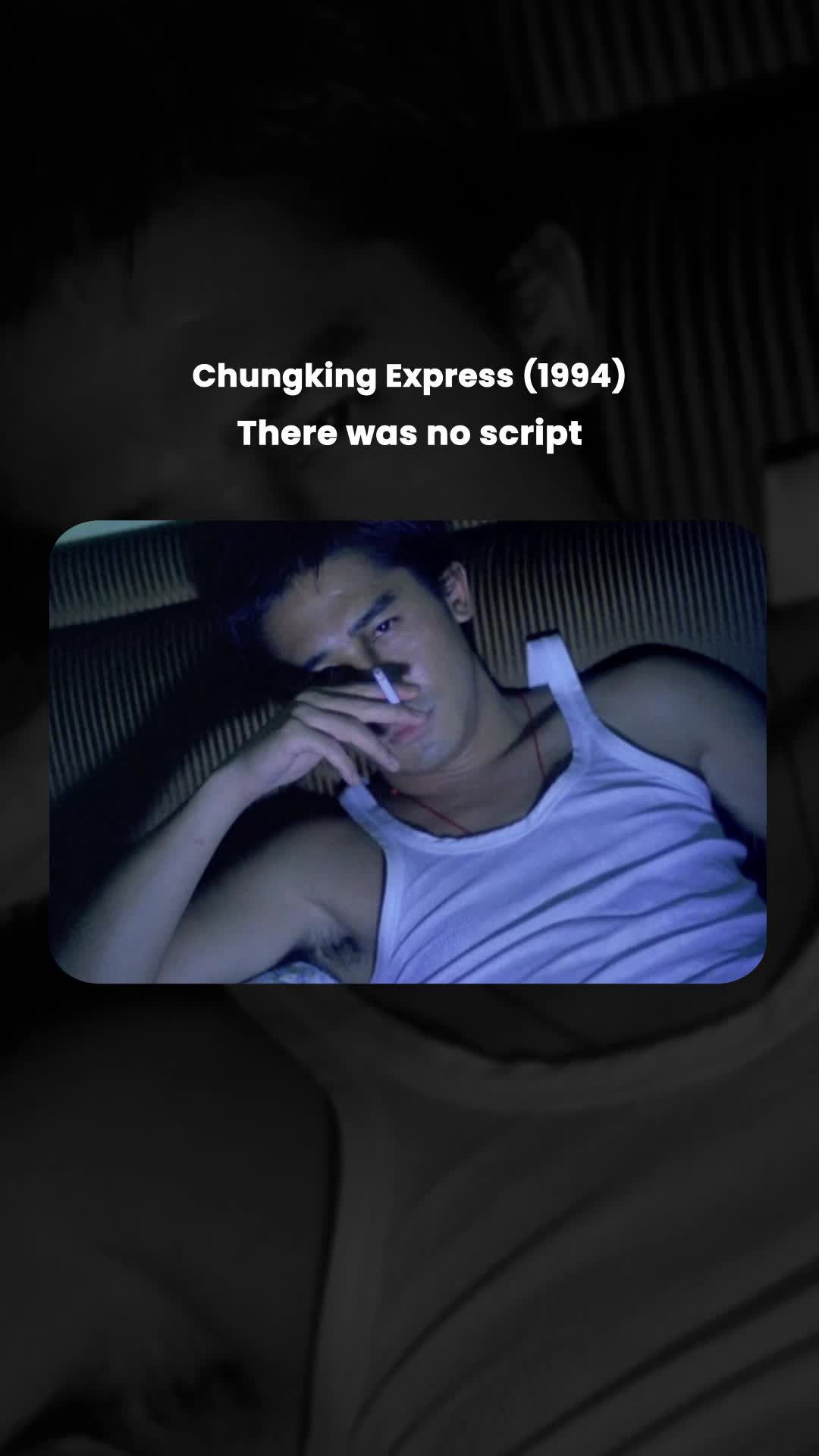
Twenty-three days. No script. Under $1 million. The legend of 'Chungking Express' is not just in its neon-drenched frames, but in its audacious, guerilla filmmaking spirit that continues to resonate three decades later.
By Occupy Cinema ·
Speed, Style, and Scarcity: The Genesis of a Cult Classic
In 1994, amidst the frantic pace of Hong Kong's burgeoning film industry, Wong Kar-wai embarked on a project that defied conventional filmmaking. Chungking Express was conceived and executed in a staggering 23 days, born from a creative impulse between the demanding productions of Ashes of Time and Fallen Angels. This wasn't merely a quick turnaround, it was an exercise in pure, unadulterated cinematic improvisation. The director famously penned scenes the night before, or even the morning of, shooting. This spontaneous approach, far from being a liability, became the film's signature, imbuing it with an electric, unpredictable energy that captured the very essence of Hong Kong itself.
The financial backdrop was equally lean. Produced for under $1 million USD, Chungking Express proved that artistic vision could thrive without Hollywood budgets. This economic constraint forced a reliance on ingenuity and efficiency, shaping the film's aesthetic. The crew utilized existing locations, most notably the labyrinthine Chungking Mansions and a bustling snack bar in Lan Kwai Fong, embracing their inherent chaos rather than constructing elaborate sets. This guerilla filmmaking ethos is not just a footnote in its production history, it is foundational to the film's authenticity and its enduring appeal as a piece of raw, urban poetry.
The Unrehearsed Lens: Doyle's Daring Cinematography
A significant portion of the film's distinct visual language falls to the legendary cinematographer Christopher Doyle. His approach was as unconventional as Wong Kar-wai's direction. Doyle shot handheld, often without rehearsal, making real-time adjustments to exposure while the camera rolled. He pushed film stock to its limits, exploiting available practical lights to craft the film's signature saturated, gritty look. This method was not born of negligence, but a deliberate attempt to capture the fleeting moments of urban life with an almost documentary-like immediacy. The visual texture of Chungking Express feels lived-in, not staged.
One of the film's most iconic stylistic elements, the step-printed blur, was achieved in-camera through frame repetition. Wong Kar-wai articulated this technique as a means to "slow down" Hong Kong, to make its relentless speed comprehensible, visible. This manipulation of time on screen became a metaphor for the city's ceaseless motion and the individual’s struggle to connect within it. The craft behind these choices, from Doyle’s responsive camerawork to the in-camera effects, cemented Chungking Express as a masterclass in resourceful filmmaking, inspiring countless independent filmmakers globally. The film’s influence on visual storytelling is undeniable, demonstrating how technical limitations can catalyze creative breakthroughs rather than hinder them.
The film's cast also embraced this fluid production style. Faye Wong, a pop star with no prior formal acting experience, learned Cantonese pop songs between takes, embodying the spontaneous spirit of the set. Her naturalistic performance, alongside Takeshi Kaneshiro, Tony Leung, and Brigitte Lin, contributed to the film's understated emotional depth. This blend of improvisation and raw talent, under Wong Kar-wai’s guiding hand, created performances that felt incredibly authentic, further blurring the lines between fiction and reality.
Upon its limited release in Hong Kong, the film garnered critical acclaim, particularly for its innovative aesthetic and narrative structure. Its international breakthrough was significantly aided by Quentin Tarantino, whose distribution company, Rolling Thunder Pictures, brought Chungking Express to American audiences. This endorsement from a prominent Western filmmaker catapulted Wong Kar-wai and Hong Kong cinema onto a global stage, solidifying its status as a cult classic and a touchstone for independent cinema. The film's journey from a frenetic, low-budget production to an internationally revered work underscores the power of singular artistic vision, proving that the most memorable cinema can often emerge from the most unexpected circumstances.
More than two decades on, Chungking Express remains a vibrant testament to the power of creative constraint. Its production story is as compelling as the film itself, a legend whispered among filmmakers about what is truly possible when vision trumps budget and spontaneity trumps planning. It continues to be studied, referenced, and adored, a timeless artifact of Hong Kong’s cinematic golden age and a perpetual reminder that the best stories are often told on the fly. Its success wasn't an accident, it was a masterclass in controlled chaos, a lightning strike in a bottle that few have ever replicated. Its legacy endures, not just as a film, but as a blueprint for artistic defiance. The Criterion Collection has since given it the reverence it deserves, further cementing its place in cinematic history.
Related reading: Respect for Acting.