Occupy Cinema › Craft
Danny Boyle's 'Ink' Captures End of an Era as Printing Press Closes Its Doors
A poignant irony unfolds for Danny Boyle's latest, 'Ink.' The film, chronicling Rupert Murdoch's 1969 relaunch of The Sun, shot on location at a Watford printing press that has since ceased operations, underscoring the very industry shifts it dramatizes.
By Occupy Cinema ·
Fleet Street's Fading Echoes
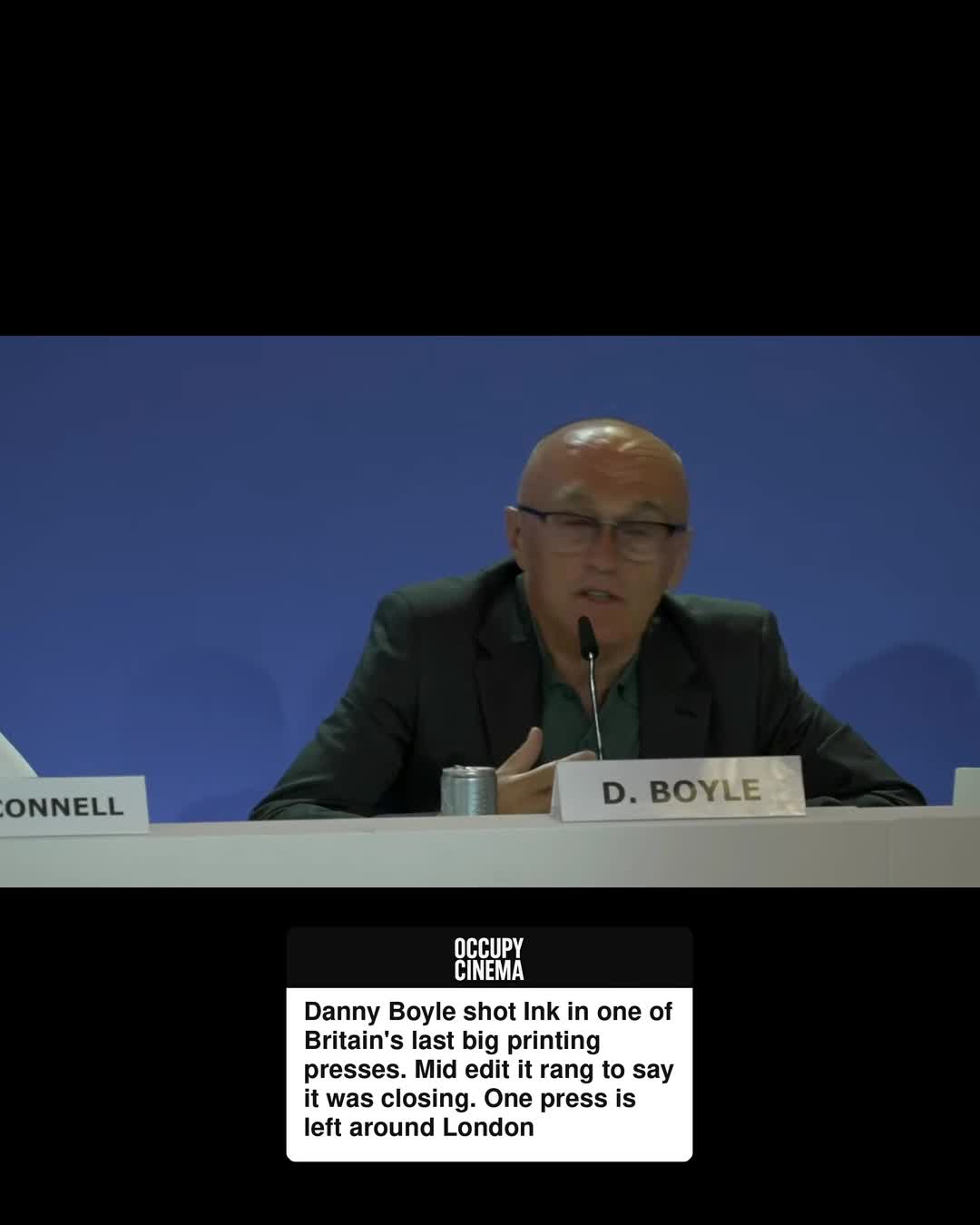
Danny Boyle's new film, Ink, made its global debut opening the 83rd Venice Film Festival, immediately drawing attention for its ambitious subject matter: Rupert Murdoch's seismic 1969 relaunch of The Sun newspaper. But beyond the period drama and the high-stakes media maneuvering, a compelling, almost meta-narrative has emerged concerning the film's production. Boyle and his crew utilized a working printing press in Watford as a primary filming location, only for the facility to announce its permanent closure shortly after principal photography wrapped. The irony is stark, and it adds an unexpected layer of commentary to a film already steeped in the history of journalism's transformation.
The production, led by Danny Boyle, had initially chosen the Watford site for its authentic, operational machinery and its historical significance as one of the last remaining large-scale printing works in the area. This decision allowed the filmmakers to capture the visceral, mechanical heart of newspaper production, a world that is rapidly receding into memory. The crew completed their initial shoot, returning for pickups without incident. Then, during the crucial editing phase, the news broke: the printing press, once a vibrant hub of industrial activity, was shutting down due to a lack of work. This real-world development provides an eerie parallel to the film's narrative, which explores a pivotal moment when the newspaper industry itself was on the cusp of profound change, driven by new ownership and evolving media landscapes.
The Shifting Sands of Print Media
The closure of the Watford printing press is not an isolated incident but a microcosm of a global trend. The decline of traditional print media, exacerbated by the digital revolution, has led to numerous presses falling silent. This shift impacts not only the dissemination of news but also the physical infrastructure and the skilled labor that once underpinned it. Boyle's choice to film in an active press now feels less like a production convenience and more like a deliberate act of historical preservation, capturing a dying art form on celluloid. The film’s narrative, focusing on Murdoch’s aggressive modernization and cost-cutting measures at The Sun, inadvertently resonates with the very economic pressures that led to the Watford press’s demise decades later.
Industry observers note that the economics of newspaper production have become increasingly challenging. Advertising revenues have migrated online, circulation figures have dwindled, and the cost of paper and distribution continues to rise. The digital transformation has been relentless, forcing publications to adapt or perish. The story of Ink, therefore, transcends a mere historical account of Fleet Street; it becomes a meditation on the cyclical nature of industrial change and the relentless march of technological progress. The film’s setting is no longer just a backdrop; it is a character, a symbol of a bygone era that continues to fade even as its story is told.
The decision to open the Venice Film Festival with Ink highlights its perceived cultural and historical weight. The festival's programming often reflects contemporary concerns, and a film examining the genesis of modern media empires and the physical act of news production carries significant resonance in an age of digital disinformation and media consolidation. Boyle, known for his dynamic storytelling and visual flair, is expected to bring a kinetic energy to this period piece, making the whirring machinery and the frantic pace of newspaper production feel immediate and vital, despite their increasingly anachronistic nature.
Ultimately, Ink promises more than just a historical drama. It offers a poignant, almost elegiac reflection on an industry in flux, made all the more powerful by the real-world events surrounding its creation. The film stands as a testament to the tactile, industrial past of news delivery, a past that continues to vanish even as its stories are etched into our collective memory. This narrative, now intertwined with the physical space of its making, ensures that Boyle’s latest will be discussed not just for its content, but for its accidental, yet profound, commentary on the very medium it portrays. For more on the evolution of news media and cinema, visit The Hollywood Reporter's media section and Deadline's industry coverage.