Occupy Cinema › Box Office
The $8,000 Reality Behind 'Anora': Ivy Wolk and the Hidden Math of Indie Hits
Ivy Wolk revealed she earned $8,000 for playing Crystal in Sean Baker's Anora, opening a raw debate over actor compensation in festival hits that gross tens of millions.
By Occupy Cinema ·
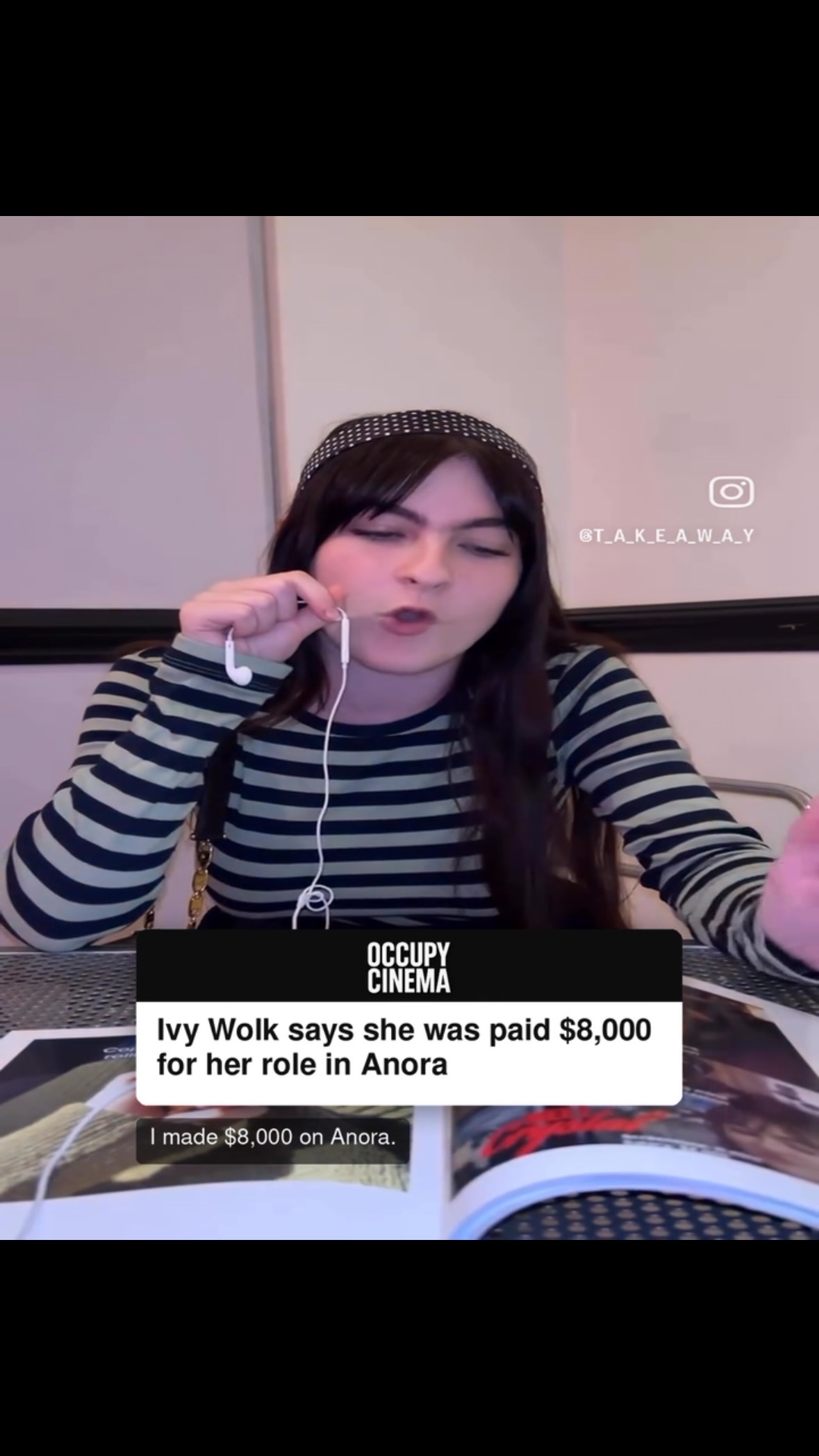
Ivy Wolk made exactly $8,000 for playing Crystal in Sean Baker's acclaimed feature Anora. The payout came to light during an unscripted moment in an online video where Wolk casually revealed her fee while showcasing a new photo book. The disclosure immediately ignited fresh industry discussion regarding actor compensation in breakout independent features. Anora achieved tremendous critical success on the festival circuit, winning top honors at Cannes before mounting a high profile awards campaign and grossing tens of millions of dollars worldwide against a modest $6 million budget. Yet the stark contrast between global box office profitability and non lead performer pay highlights a persistent financial reality across the independent cinema landscape.
Wolk brought up her payout in direct response to ongoing industry conversations surrounding compensation on major projects like The Odyssey and Obsession. Her role as Crystal required multiple shooting days, physical rehearsals, and full commitment on set during principal photography. Her scene work provided crucial comedic texture and grounded narrative tension within the wider ensemble. However, her contract was drafted under standard union minimums established for low budget theatrical productions under SAG-AFTRA guidelines. When principal photography began in New York, the film was an unfinanced risk without guaranteed theatrical distribution. Her fee was agreed upon long before distribution powerhouses like Neon stepped in to orchestrate a multi-platform strategy that transformed the picture into a global commercial hit.
Independent filmmaking operates on razor thin financial margins until a project defies expectations. Scale rates under SAG-AFTRA Low Budget Theatrical Agreements exist to enable filmmakers to complete challenging, auteur driven projects without traditional studio backing. For a film produced on a budget of roughly $6 million, scale payouts for day players and supporting roles represent standard operating procedure rather than executive malice. Nevertheless, when an independent project breaks through to earn nearly ten times its physical production budget, the structural gap between equity investor dividends and fixed actor compensation becomes impossible to ignore. Industry reporting from outlets like IndieWire has consistently highlighted how modern theatrical distribution models alter profit participation across different tiers of talent.
Sean Baker has built a legendary career by pushing low budget naturalism to its artistic limits. From Tangerine, which was shot entirely on modified mobile devices, to The Florida Project and Red Rocket, Baker relies on compact production crews, authentic locations, and lean operational budgets. His signature directing methodology grants actors immense creative latitude, yielding unvarnished, emotionally visceral performances that routinely captivate festival audiences. Yet that lean framework inherently depends on union baseline scales during initial principal photography. In Anora, Baker employed 35mm film stock and kinetic editing alongside a vibrant sound design to capture the chaotic narrative of a Brooklyn sex worker and the son of a Russian oligarch. The cinematic artistry elevated the raw material, but the underlying production accounting remained tied to traditional low budget constraints.
The Disconnect Between Festival Glory and Scale Paychecks
The financial rewards generated by independent distribution milestones rarely trickle down to non lead cast members. When boutique distributors purchase theatrical rights following major festival debuts, acquisition funds primarily cover production debt, initial equity investors, and international sales agency fees. Furthermore, publicity and promotional campaigns designed for awards season can easily equal or exceed the original physical cost of making the film. By the time a project completes its global rollout, millions of dollars have passed through trade advertising, festival travel, and theatrical print fees, while the supporting actors who delivered essential moments remain tied to their initial scale earnings.
The broader debate concerning talent pay in independent cinema stretches far beyond any single feature. According to trade coverage on Deadline, SAG-AFTRA baseline scales have faced ongoing scrutiny as streaming ecosystems and traditional theatrical distributors reevaluate back-end profit participation. Standard SAG-AFTRA contracts do not automatically incorporate escalation clauses for non lead performers if an independent film becomes a box office phenomenon. Unless an actor possesses substantial market power during initial contract negotiations, their earnings remain locked at the contracted daily or weekly scale regardless of total global theatrical earnings.
This dynamic is not unprecedented in modern American film history. Decades of indie breakthroughs demonstrate similar patterns, from celebrated 1990s Sundance debuts to contemporary festival winners. Supporting cast members on historic low budget hits like The Blair Witch Project or Little Miss Sunshine famously received modest baseline fees during initial photography while distribution entities generated tens of millions in gross theatrical revenues. The key evolution in today's landscape is transparency. Performers now speak directly to fans on digital channels, rapidly dismantling the myth that critical praise and festival red carpets translate into immediate personal wealth.
Transparency and the Future of Independent Film Contracts
Wolk's decision to discuss her $8,000 salary publicly reflects an ongoing cultural shift among working actors. Compensation discussions were once treated as taboo inside talent agencies, casting offices, and union halls. Today, younger actors routinely utilize public platforms to demystify industry economics and educate audiences on the financial hurdles facing working professionals. The glamor of festival photo calls often hides the reality of working actors who must balance multiple day jobs or rely on scale paychecks simply to meet annual SAG-AFTRA health insurance eligibility thresholds.
For independent production companies and boutique distribution outfits, increased public awareness regarding actor pay could encourage new approach models for backend profit sharing. Performance bonus structures that allocate a micro percentage of net theatrical revenues to supporting cast members could become a meaningful incentive for forward thinking production labels. While structuring backend bonus pools increases administrative complexity during initial equity financing, it provides a practical defense against public relations scrutiny when a low budget film achieves massive global success.
Anora remains one of the defining creative triumphs of contemporary independent cinema, proving that bold, character driven storytelling can resonate on a massive global scale. However, Ivy Wolk's $8,000 fee stands as a compelling case study in the economics of modern indie filmmaking. As long as independent features depend on low budget SAG-AFTRA agreements to achieve financial viability, the industry will face tough questions about how to fairly compensate the talent responsible for bringing those stories to life.