Occupy Cinema › Business
The Math Behind Hollywood's Consolidation Lie
Studio buyers always promise higher output to soothe theater owners. The historical record shows that fewer studios inevitably means fewer movies.
By Occupy Cinema ·
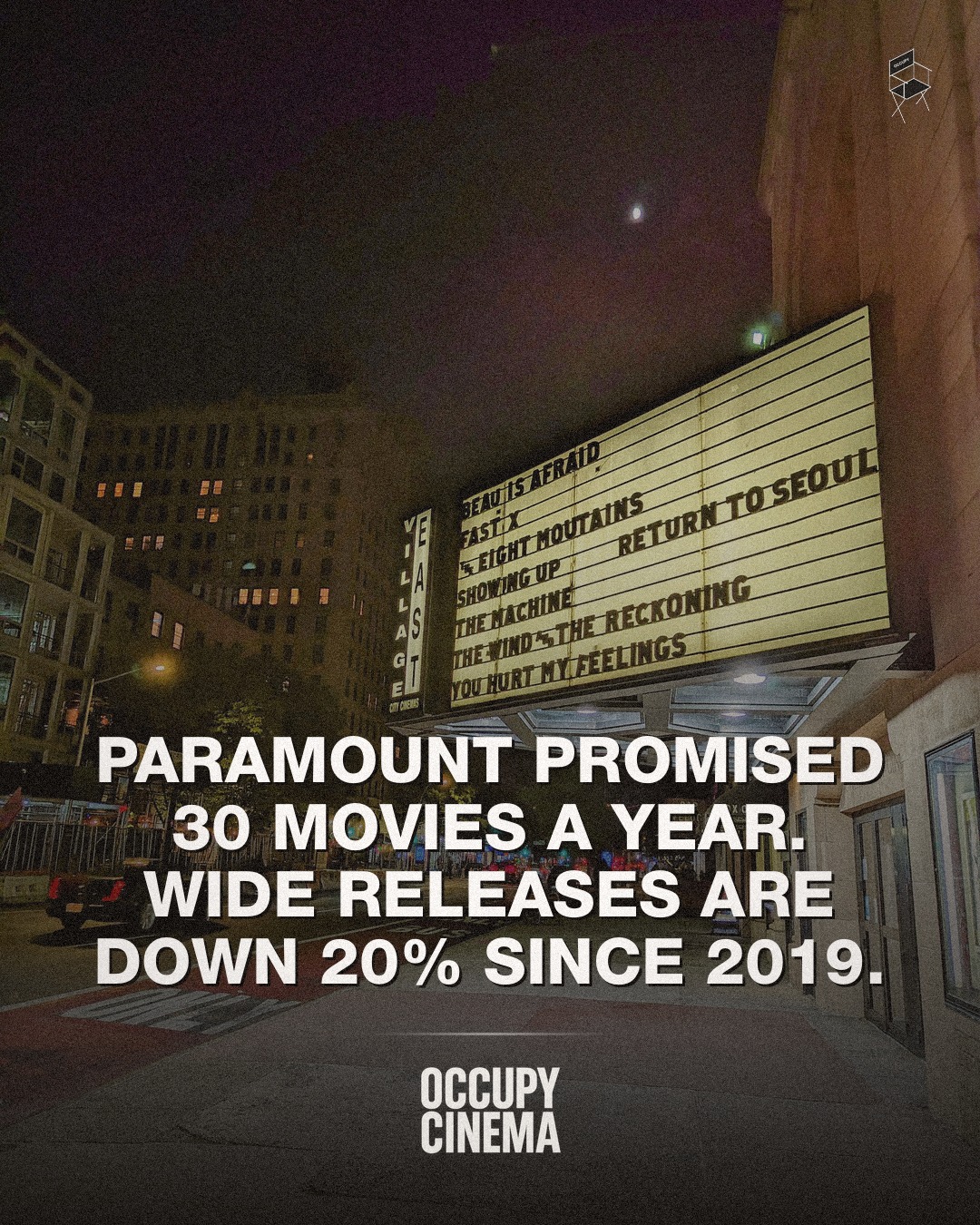
Studio mergers are always pitched with the same reassuring promise: greater scale will lead to more product. When David Ellison took the stage at CinemaCon to outline his vision for a combined Skydance and Paramount Global, he dangled an eye-catching volume target of thirty theatrical releases per year, split evenly at fifteen titles per banner. It was music to exhibition's ears, but anyone tracking theatrical volume over the last two decades knows the math rarely survives closing day.
The Shrinking Slate Reality
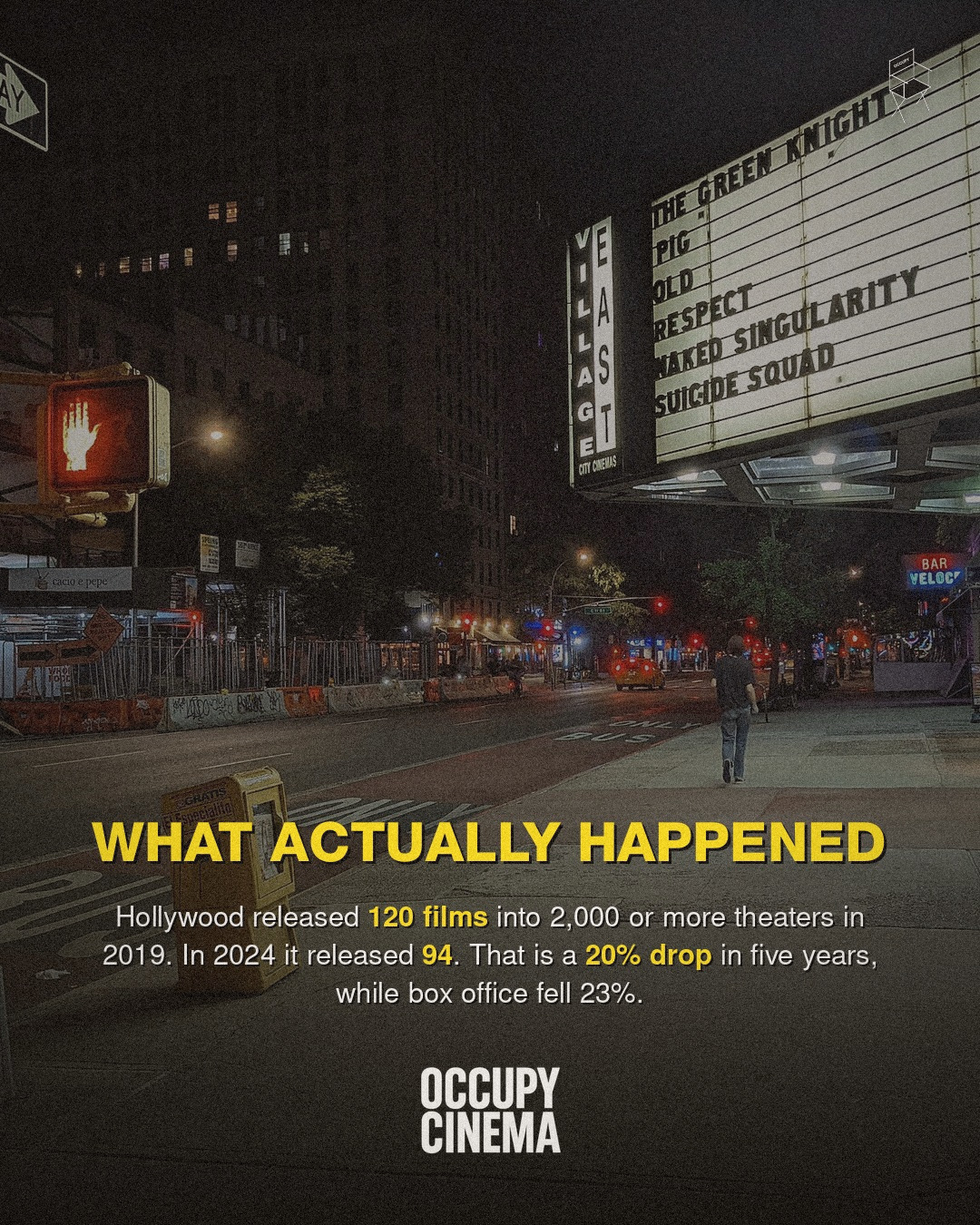
The historical record on corporate media consolidation is unambiguous. Major studios simply do not scale output linearly when they swallow competitors. Modern legacy distributors typically manage ten to fifteen wide releases annually at full operational capacity. In 2019, the domestic theatrical marketplace supported 120 titles playing in 2,000 or more locations. By 2024, that number slipped to 94 wide releases, representing a steep 20 percent drop in total titles and a corresponding 23 percent contraction in total domestic box office revenue, according to reporting across industry box office trackers.
When Disney absorbed 20th Century Fox in 2019, the narrative was similarly optimistic about preserving production pipelines. Instead, the legacy Fox slate was rationalized, mid-budget projects were migrated to streaming tiers, and the aggregate number of wide studio releases contracted permanently. When a single boardroom controls two major distribution engines, overhead cuts and slate streamlining are the first levers pulled to satisfy debt obligations and equity partners.
Exhibitors Break Ranks Under Pressure
Theater chains understand this vulnerability better than anyone, yet their collective leverage continues to erode. Trade groups and independent cinema coalitions initially raised alarms that Ellison's acquisition would further dry up release calendars. But economic pressures have fractured exhibitor unity. Giants like AMC Theatres and Regal parent Cineworld, struggling under debt burdens and erratic release schedules, pivoted to endorse the transaction, trading long-term slate security for immediate operational continuity and capital injections.
This divide leaves regional circuits and independent operators stranded. Without a steady weekly supply of fresh mid-budget titles, multiplexes cannot sustain concession revenues on tentpoles alone. While tentpole filmmakers like Christopher Nolan and Denis Villeneuve deliver massive cultural events that sell out premium large-format screens, six-week gaps between major studio titles force exhibitors into defensive survival strategies.
Wall Street coverage from outlets like leading trade analysts consistently underscores that capital efficiency targets release volume reduction, not expansion. Pledging thirty wide releases annually requires sustaining multiple production pipelines through development, marketing spend, and distribution logistics that run counter to modern corporate synergy models. Until a newly consolidated entity actually delivers thirty finished theatrical prints in a single calendar year, exhibition is betting its future on promises that history has consistently broken.



Related reading: The Big Picture: The Fight for the Future of Movies.