Occupy Cinema › FEATURED
Ethan Hawke Tackles Backcountry Betrayal in Frontier Thriller 'The Weight'
Shot across the rugged forests of Bavaria standing in for the Pacific Northwest, the survival drama pairs star equity with disciplined international co-financing.
By Occupy Cinema ·
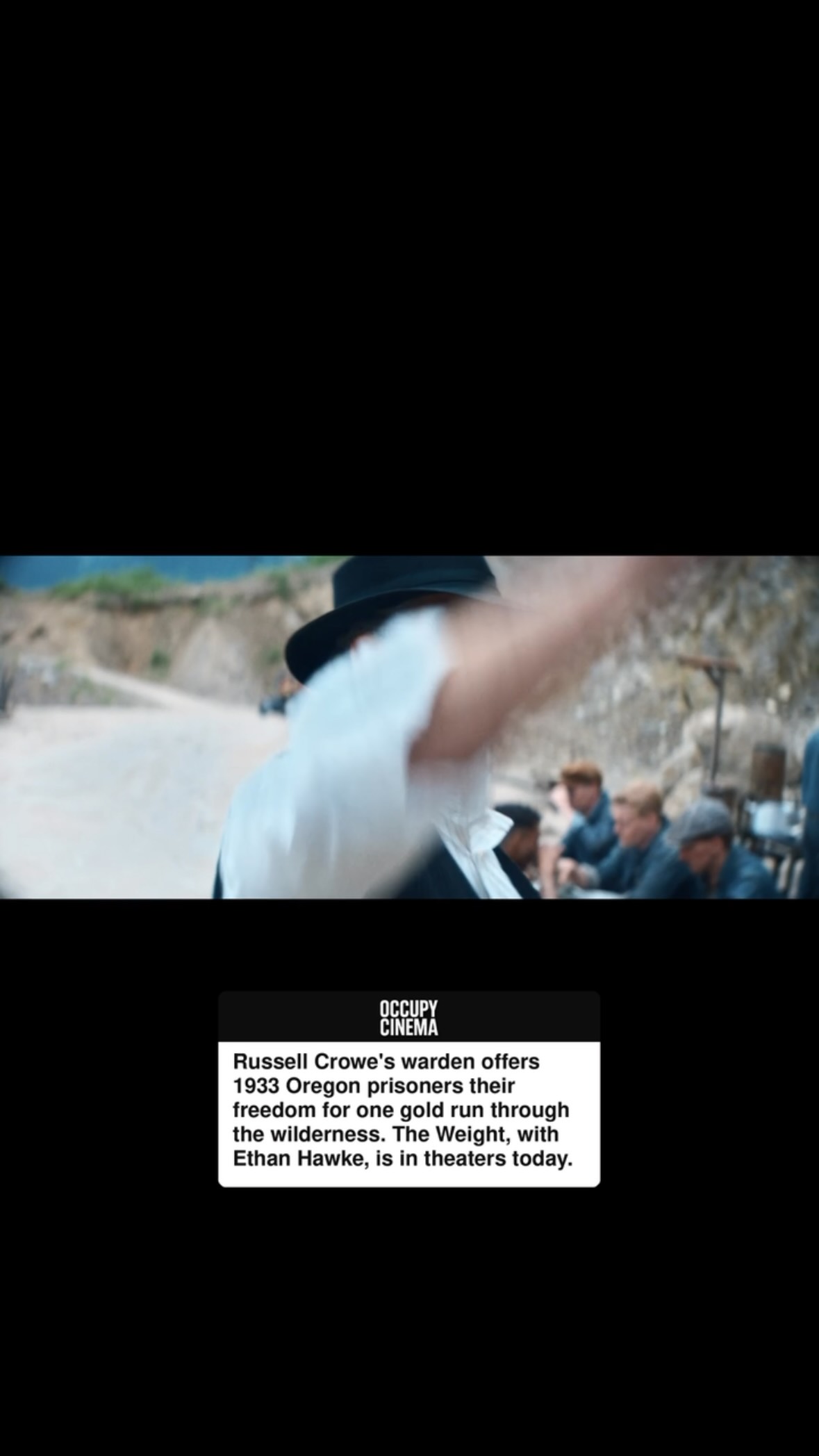
Survival cinema lives or dies on friction. The physical friction of terrain, and the psychological friction between desperate people. The Weight arrives in domestic theaters with both elements locked in a vice grip. Built around a lean, classical setup, the period frontier thriller follows a crew of desperate convicts pushing four days deep into untamed backcountry. They are hauling a corrupt warden's stolen gold across brutal terrain while watching each other for the first mistake. The gamble is simple. Deliver the bullion, survive the wilderness, and claim a clean slate. Fail, and the forest becomes a mass grave. It is a high concept, low margin proposition that relies on immediate dramatic tension, strong star equity, and strict physical execution.
At the center of the story is an unlikely quartet bound by desperation. Ethan Hawke leads the unit as a seasoned convict whose calculated exterior masks a volatile survival instinct. Austin Amelio and Avi Nash play fellow prisoners betting their remaining sentences on a high stakes run through hostile territory. The precarious dynamic fractures further when they cross paths with Anna, played by Julia Jones, a runaway who integrates into the group out of necessity rather than trust. What begins as an organized escape quickly degenerates into paranoia. Gold is heavy, but distrust weighs far more when supplies run low and the elements close in.
While the narrative places these characters in the rugged wilderness of nineteenth century Oregon, the physical production took a far more international path. Principal photography for the independent production ran through July 2025 in and around Viechtach, Germany. Bavarian state incentives, combined with Central European production infrastructure, led the filmmakers to substitute the dense forests of eastern Bavaria for the American Pacific Northwest. It is an established industry strategy. Securing vast tracts of untouched forest with robust regional tax credits allows mid budget genre films to maximize production value without sacrificing scale.
Bavaria Stands In for the Pacific Northwest
Translating the Bavarian woods into convincing American frontier required visual discipline. Cinematographer Matteo Cocco framed the landscape with oppressive weight, utilizing dense canopy coverage and natural light to emphasize the physical tax on the cast. Cocco relied heavily on wide angle lenses kept close to the actors, capturing both the vastness of the environment and the claustrophobic tension within the group. Practical locations replaced soundstages entirely. Heavy fog, variable weather, and steep topography forced the crew to move agilely, using portable camera rigs and minimal artificial lighting. The result is a tactile, dirt under the fingernails aesthetic reported on extensively by trade outlets like IndieWire during autumn festival previews.
For Ethan Hawke, the project represents another strategic entry in an exceptionally focused late career phase. Hawke has consistently balanced prestige auteur work with grounded genre cinema, bringing immediate credibility to independent market packages. His presence provides crucial leverage for international presales and domestic theatrical buyers who still value star driven adult dramas. Working alongside Amelio, Nash, and Jones, Hawke grounds the ensemble with a weary, pragmatic performance that avoids romanticizing the frontier. Jones gives Anna a sharp, defensive edge, ensuring her character serves as a catalyst for narrative tension rather than a passive observer.
Genre precedents abound in this sub-segment of survival storytelling. Audiences can trace the lineage of The Weight back through tough-minded frontier titles ranging from classical westerns to modern survival dramas like Alejandro González Iñárritu's The Revenant or Quentin Tarantino's The Hateful Eight. Yet where those larger studio efforts relied on massive digital backdrops or astronomical budgets, The Weight operates in the leaner, meaner tradition of mid-century pulp paperbacks. It prioritizes practical ensemble staging over digital spectacle. Industry trackers at Deadline note that audience demand for tactile, non-franchise thrillers remains consistent when backed by recognized talent and focused theatrical windowing.
The Business of Frontier Noir
Navigating the modern box office requires precision for films situated in the ten to twenty million dollar production budget bracket. Traditional studio mid budget slates have largely migrated to streaming platforms, leaving independent distributors to capture theatrical upside for adult-targeted thrillers. By combining German regional production funds with targeted domestic distribution, the producers of The Weight mitigated risk before the first frame was shot. The theatrical release strategy relies heavily on word-of-mouth momentum among genre enthusiasts and specialty moviegoers who favor atmospheric storytelling over CGI-heavy tentpoles.
The technical execution extends far beyond visual coverage. Sound design plays a crucial role in establishing environmental hazard. The constant crunch of gravel, heavy breathing, and rustling branches create a sonic landscape where every ambient noise signals potential danger or pursuit. The editing pacing holds long takes on physical labor, emphasizing the sheer mechanical difficulty of hauling heavy iron and gold through thick mud. That insistence on physical realism elevates the narrative above standard chase tropes, forcing the audience to feel the literal burden carried by the protagonists.
The inclusion of specialized regional settings like Viechtach also highlights the evolving geography of international film production. German crew depth and specialized logistics teams enabled the production to maintain rigorous safety standards while operating deep in remote forest reserves. European co-production models continue to offer competitive advantages for North American indie projects looking for cinematic scale without North American location overheads. Coverage in The Hollywood Reporter frequently highlights how such cross-border financial structuring keeps independent theatrical cinema viable in a shifting economic landscape.
Ultimately, The Weight succeeds by committing fully to its core conceit. It does not attempt to reinvent the frontier thriller, but rather polishes its essential mechanics through strong craft, disciplined location work, and committed ensemble acting. As adult audiences look for theatrical experiences rooted in tension, character, and practical craft, films like The Weight offer a compelling reminder of what focused genre filmmaking can achieve when the money is spent where it shows on screen.