Occupy Cinema › FEATURED
The Cost of Madness: How Francis Ford Coppola Won the Cannes Gamble on Apocalypse Now
When Apocalypse Now shared the Palme d'Or at Cannes in 1979, Francis Ford Coppola proved that extreme self-financing and sheer directorial obsession could conquer the studio system.
By Occupy Cinema ·
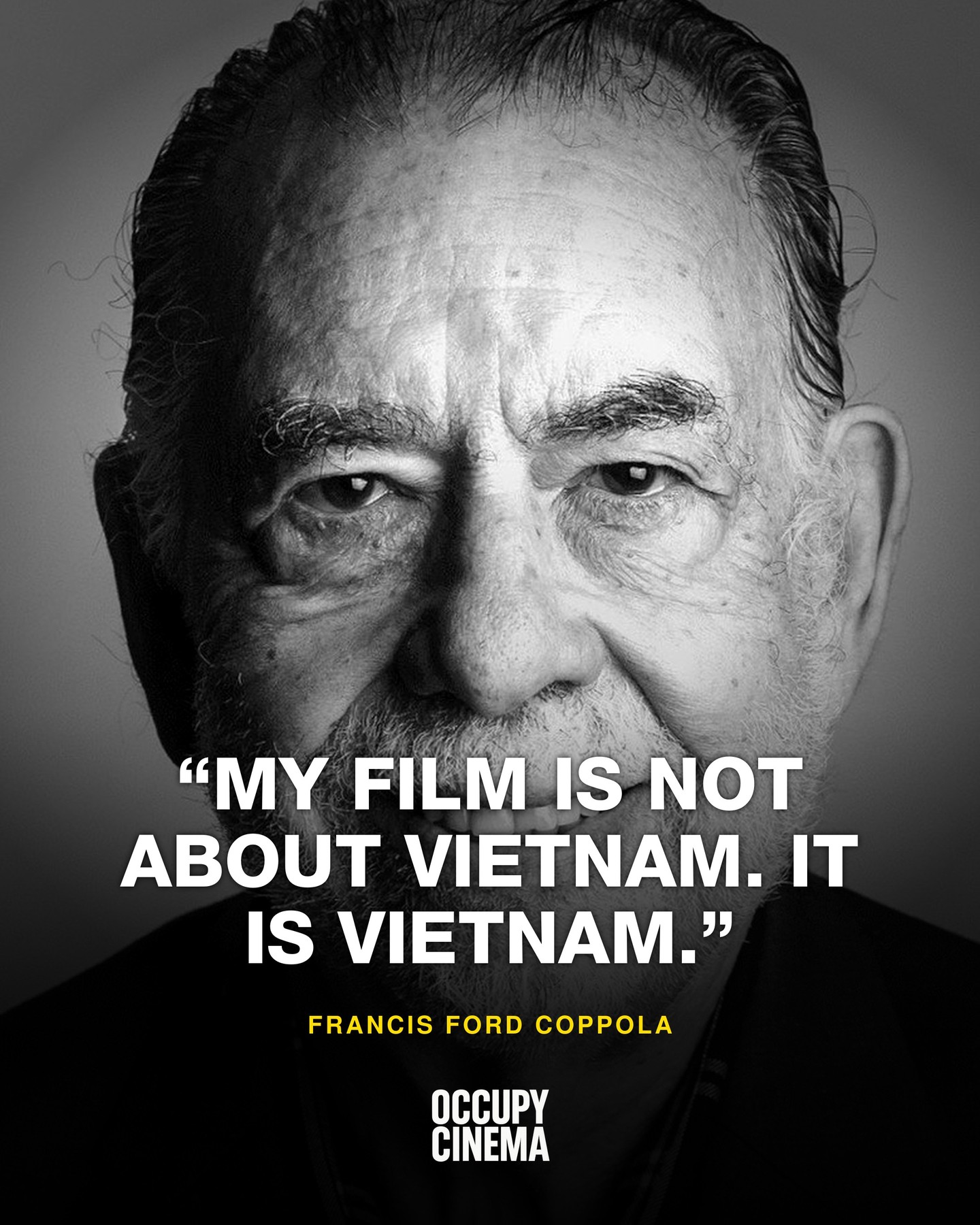
In May 1979, Francis Ford Coppola stepped up to the microphones at the Cannes Film Festival and delivered one of the most famous declarations in cinema history: "My film is not about Vietnam; it was Vietnam. We were in the jungle, there were too many of us, we had access to too much money, too much equipment, and little by little we went insane." Screened in an unfinished cut with a temporary audio mix, Apocalypse Now arrived on the Croisette surrounded by rumors of catastrophic failure. Instead, the jury awarded it the Palme d'Or in a tie with Volker Schlöndorff's The Tin Drum, instantly rewriting Hollywood lore.
The financial stakes behind that screening were staggering. United Artists initially budgeted the production at roughly $12 million, but the runaway schedule in the Philippines pushed the final ledger past $31 million. To keep the cameras rolling, Coppola took out personal loans, mortgaged his home, and leveraged his Napa Valley winery. If the picture collapsed at the box office, it would have wiped out his personal fortune entirely. At a time when New Hollywood auteurs were pushing the limits of studio patience, Coppola bet his entire career on a hallucinatory adaptation of Joseph Conrad's Heart of Darkness.
The Jungle That Swallowed a Production
Principal photography began in March 1976 and was scheduled for five months. It stretched into a grueling 238 days of shooting spread across more than a year. Typhoon Olga tore through the sets in Pagsanjan, wiping out weeks of constructed infrastructure and grounding the production for months. Martin Sheen suffered a near-fatal heart attack during filming, requiring quiet recovery periods while his brother filled in for wide double shots. Meanwhile, Marlon Brando arrived on set dramatically overweight and unfamiliar with the script, forcing Coppola to improvise dialogue and stage scenes in deep shadow.
Behind the lens, cinematographer Vittorio Storaro captured the madness using Technovision anamorphic lenses, balancing harsh tropical sunlight with flares, colored smoke grenades, and deep theatrical blacks. The logistical nightmare only intensified once the footage returned to California. The production amassed over 1.1 million feet of exposed celluloid. Sound designer and editor Walter Murch spent years assembling the cut, pioneering modern 5.1 surround sound mixing techniques to bring the disorienting rotor blades and synthesized score into visceral spatial reality. Detailed retrospectives from Sight and Sound frequently cite this post-production marathon as the birth of contemporary cinematic sound design.
Vindication on the Croisette and at the Box Office
Industry insiders and trade reporters had spent years writing obituaries for the project, predicting an unmitigated disaster for United Artists. Yet the gamble paid off immediately. Following the shared Palme d'Or victory in France, the film opened theatrically in August 1979, grossing over $150 million globally on its initial run and securing eight Academy Award nominations, including Best Picture, Best Director, and wins for Best Cinematography and Best Sound. Contemporary analysis from The Guardian underscores how completely the film shifted the economic paradigm for director-owned independent productions.
The legacy of Apocalypse Now is not merely its hallucinatory imagery or its devastating critique of imperial hubris. It remains the absolute high-water mark of director-driven risk. Coppola bypassed the standard protections of studio backing, absorbed the financial and physical trauma directly, and delivered a permanent masterpiece. Decades before he would self-finance Megalopolis, Coppola proved that true artistic sovereignty in Hollywood requires putting your own skin into the game, even when the cost borders on ruin.