Occupy Cinema › FEATURED
Gloria Steinem's Enduring Legacy: Hierarchy, Hollywood, and Human Connection
The passing of Gloria Steinem marks the end of an era, but her foundational arguments against systemic inequality resonate more than ever, particularly within the entertainment industry's ongoing battles for representation and justice.
By Occupy Cinema ·
A Voice Silenced, An Argument Amplified
Gloria Steinem, the iconic feminist leader and journalist, passed away on September 2, 2026, at the age of 92. Her death brings into sharp relief a career spanning six decades, defined by an unwavering commitment to dismantling patriarchal structures. The conversation she sparked, particularly around issues of bodily autonomy and fabricated social hierarchies, remains profoundly relevant, echoing through today's cultural and political discourse. Her impact extended beyond activism, influencing media, film, and television, shaping how stories are told and who gets to tell them. Steinem’s work consistently challenged the status quo, pushing for a world where humanity is linked, not ranked.
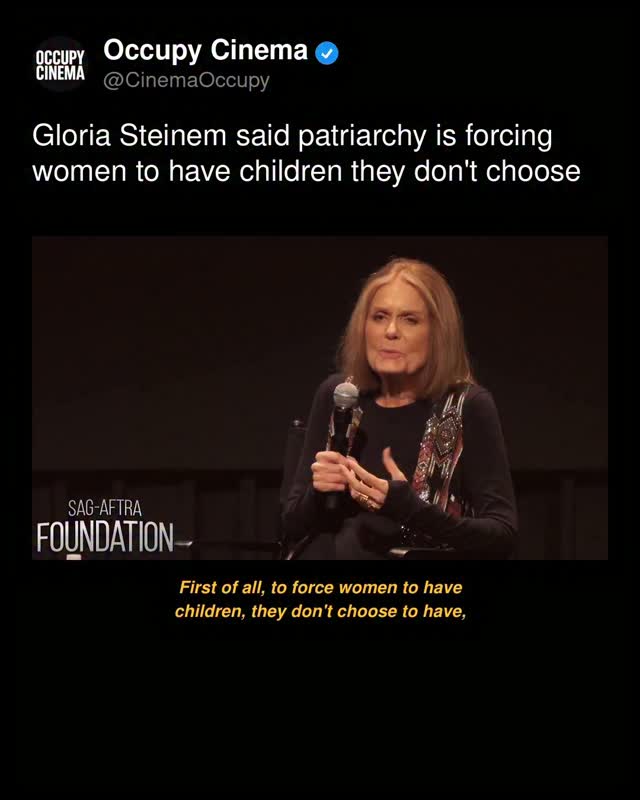
Steinem's intellectual bedrock, articulated succinctly in a 2016 SAG-AFTRA Foundation conversation with Olivia Wilde, centered on the premise that control over women's bodies is the genesis of all hierarchy. This wasn't merely a philosophical stance; it was a blueprint for social change. She contended that categories like gender and race are societal constructs, invented and therefore capable of being uninvented. This perspective has profound implications for the film industry, which historically has been a powerful, if often unwitting, architect of these very hierarchies. From casting decisions to narrative arcs, the industry has long reflected and reinforced societal norms, often to women's detriment.
Steinem's Influence on Media and Storytelling
Her work with Ms. magazine, co-founded in 1972, revolutionized women's media. It provided a platform for voices often marginalized by mainstream publications, showcasing a commitment to diverse storytelling and challenging prevailing narratives about womanhood. This editorial ethos predated the current industry push for diversity and inclusion by decades, laying groundwork for future generations of content creators. Steinem's engagement with media was always strategic, understanding its power to shape public perception and drive social change. Her appearance at the SAG-AFTRA Foundation, a union representing media professionals, underscored her direct connection to the entertainment world and its potential as a vehicle for her message.
The docuseries Woman with Gloria Steinem, produced by Viceland and featuring Olivia Wilde, exemplified Steinem's continued relevance and willingness to engage new platforms and audiences. This series, released in 2016, explored global issues affecting women, from violence to political disenfranchisement, through Steinem’s lens. It was a testament to her enduring journalistic spirit, traveling to conflict zones and marginalized communities to report on the systemic issues she had spent a lifetime dissecting. The show’s reception highlighted a persistent appetite for critical examination of gender inequality, reinforcing the idea that these conversations are far from over.
Steinem's advocacy for labor rights and fair representation was also evident through her SAG-AFTRA membership. This affiliation was more than nominal; it demonstrated her belief in collective action and the importance of professional solidarity, even for those working in creative fields. Her presence within the union system lent weight to its efforts to combat workplace discrimination and advocate for equitable treatment, issues that continue to plague Hollywood's upper echelons and behind-the-scenes roles. The fight for equal pay, for example, remains a critical battleground within the industry, directly aligning with Steinem's lifelong pursuit of gender parity.
The cultural impact of Steinem’s ideas is undeniable. Her insistence on questioning the origins of power dynamics has informed countless documentaries, fictional narratives, and public campaigns. Her phrase, “We are linked, we are not ranked,” has become a rallying cry for movements advocating for intersectional justice, pushing beyond single-issue activism to embrace a more holistic understanding of oppression. This perspective challenges filmmakers and studios to craft narratives that reflect a complex, interconnected world, moving away from simplistic portrayals and towards more nuanced explorations of identity and power. The industry's current reckoning with its own historical biases owes a significant debt to the groundwork laid by Steinem and her contemporaries.
Gloria Steinem’s passing marks the end of an era, but her core arguments about the constructed nature of hierarchy and the imperative of bodily autonomy continue to resonate powerfully. Her intellectual legacy provides a robust framework for understanding and dismantling systemic inequalities, an ongoing project for both society at large and the entertainment industry in particular. The challenge now is to not merely commemorate her wisdom but to actively apply it, ensuring that the next generation of storytellers builds a world where linking triumphs over ranking, both on screen and off. Her work demands continued action, not just remembrance.