Occupy Cinema › Film News
How Anthony Bourdain and His Crew Shot the Six-Dollar Presidential Meal That Made TV History
Inside the high-wire logistics and minimalist camera craft behind the iconic Hanoi episode of Anthony Bourdain: Parts Unknown with Barack Obama.
By Occupy Cinema ·
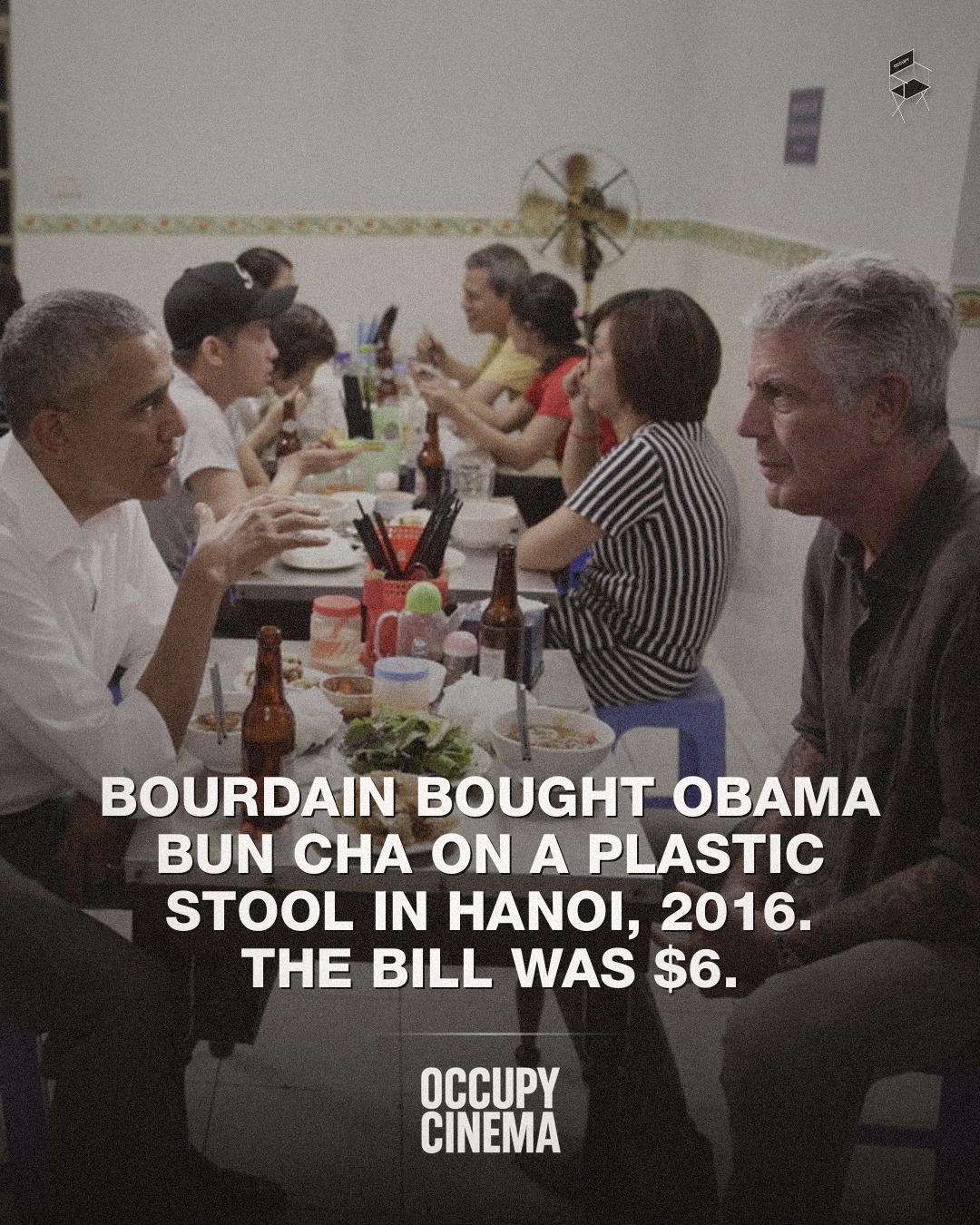
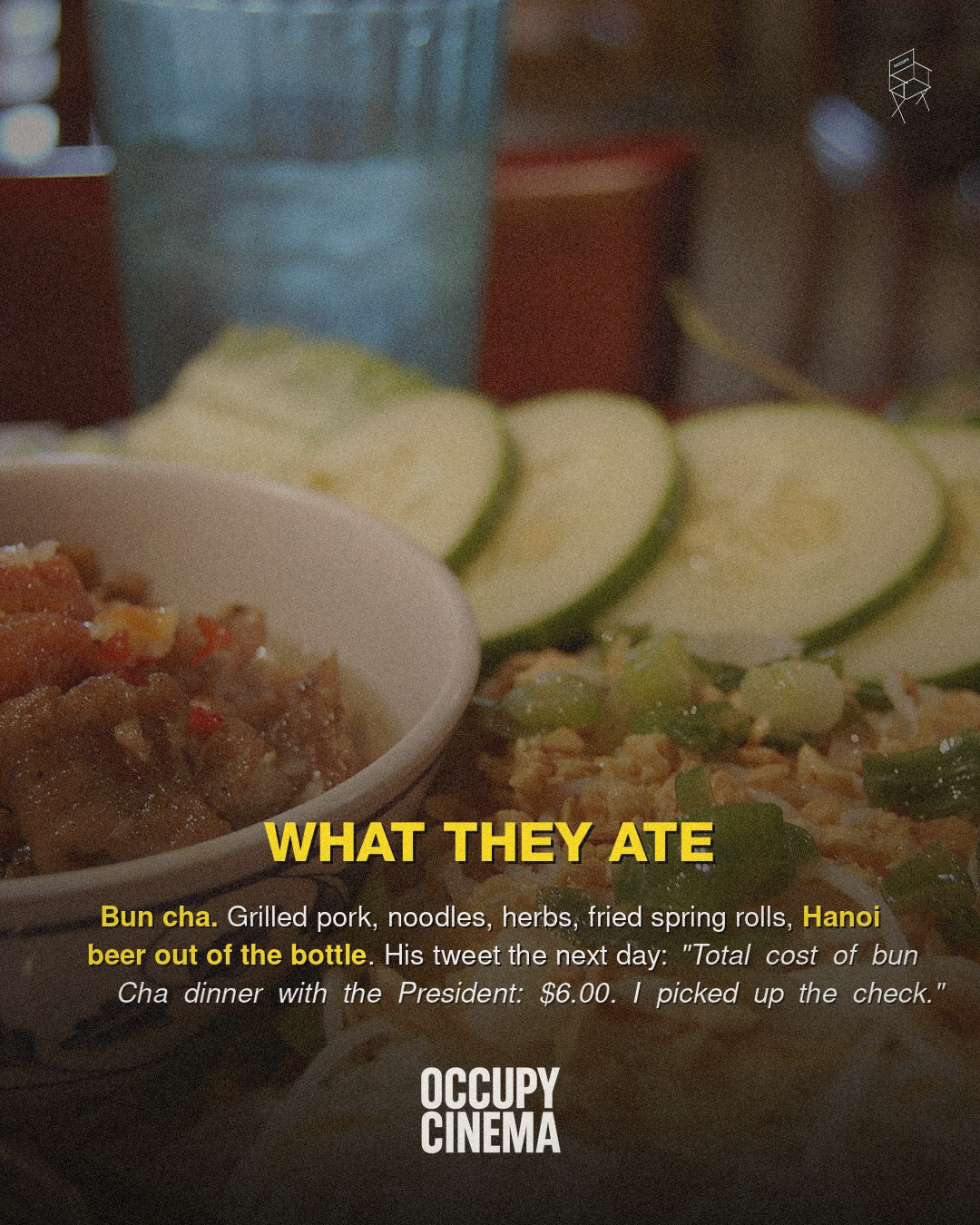
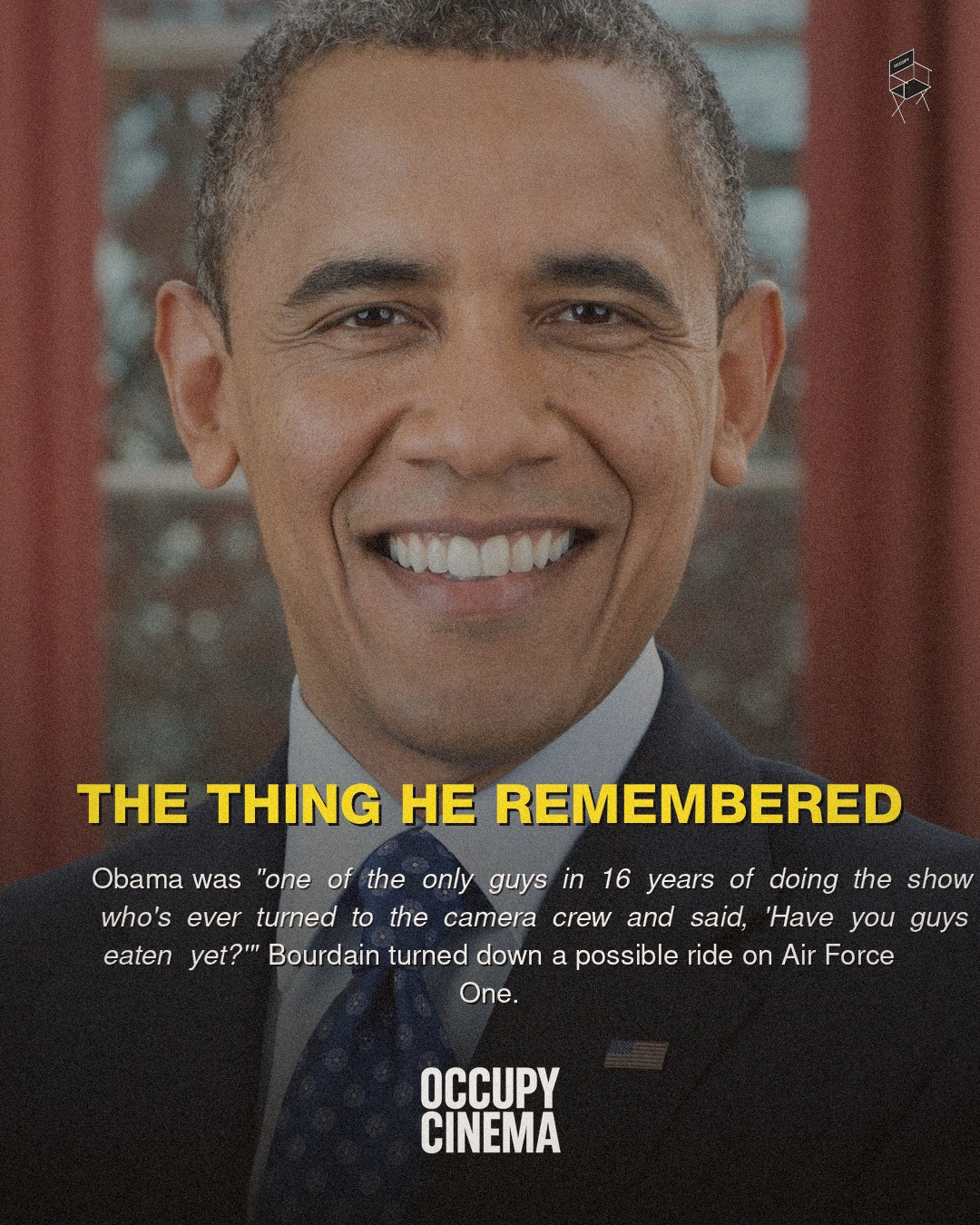
A sitting American president sits on a cheap blue plastic stool in a narrow Hanoi noodle shop, sipping a cold local beer while eating grilled pork patties in broth. The bill came to six dollars, and Anthony Bourdain picked up the tab. That single sequence from the eighth season of Anthony Bourdain: Parts Unknown remains one of the most remarkable achievements in modern non-scripted television. It did not require a massive studio footprint, a booming orchestra, or an artificial narrative hook. It required absolute production secrecy, three camera operators, and an unwavering commitment to atmospheric storytelling.
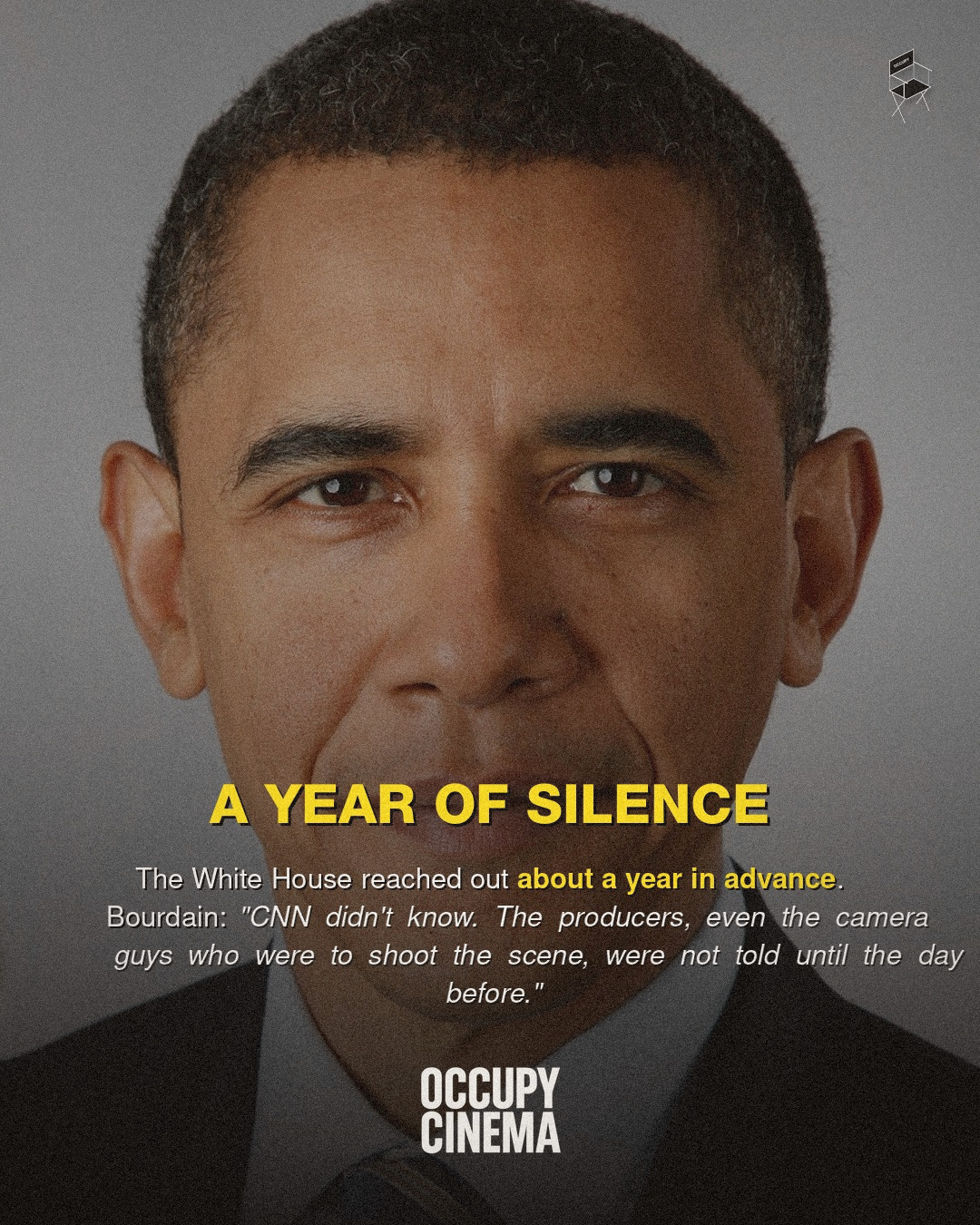
The logistics behind the May 23, 2016 shoot inside Bún Chả Hương Liên were stripped down by design. While the White House communications team had initiated initial conversations with Bourdain and production company Zero Point Zero roughly a year prior, the actual crew working on the ground in Vietnam was intentionally kept in the dark until the final moment. Bourdain informed his core crew just a day or two before the presidential motorcade arrived. In an entertainment industry where presidential appearances typically mandate massive press pools and oppressive lighting setups, the production team opted for radical, guerrilla-style simplicity.
Minimalist Rigging and Cinematic Precision
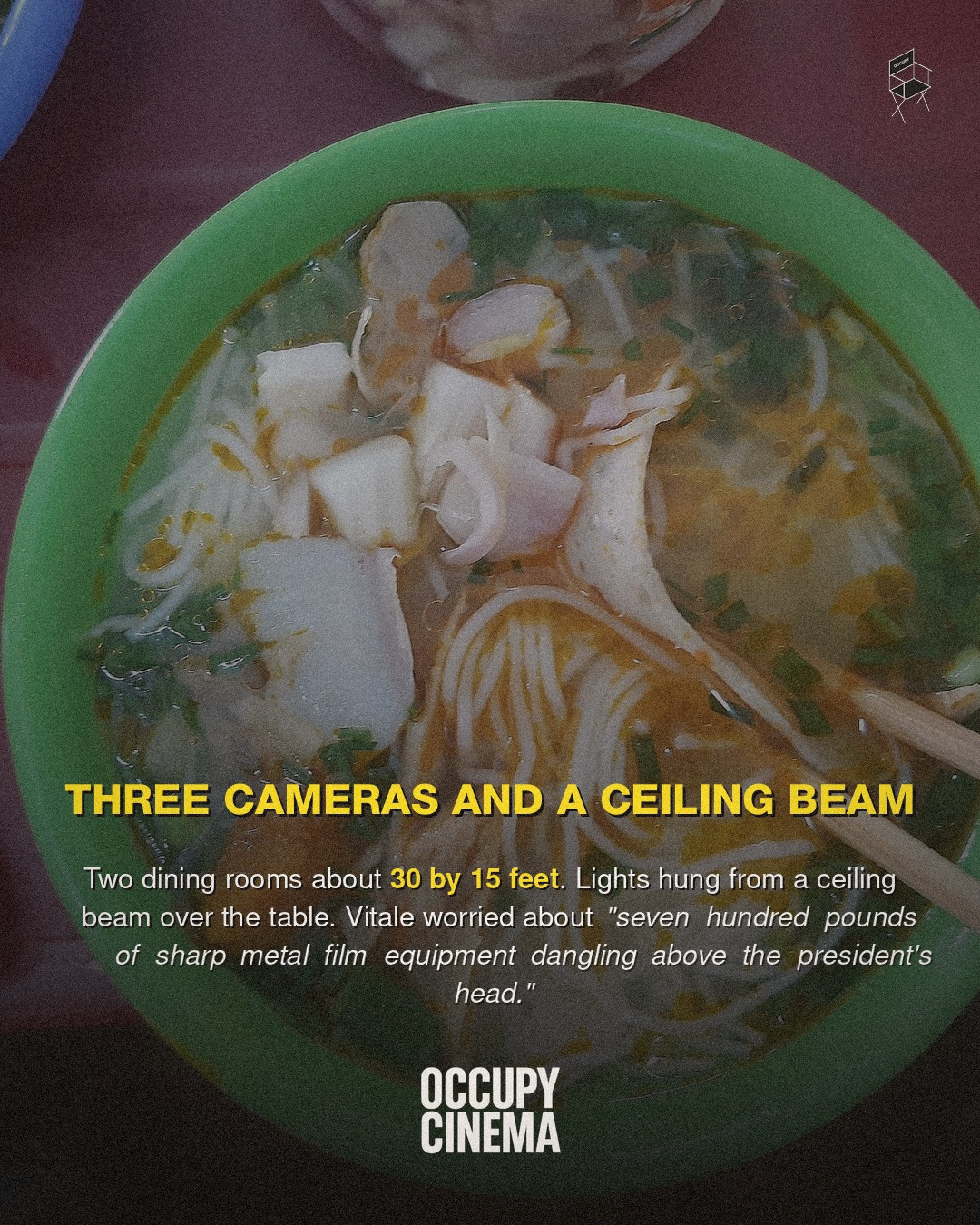
Operating inside the cramped dining room on the first floor, the production crew mounted lightweight lights directly onto overhead ceiling beams to preserve the authentic ambient warmth of the venue. Directed and shot by longtime series collaborator Morgan Fallon, the sequence relied on a nimble three-camera configuration. One lens maintained a tight frame on President Obama, another covered Bourdain, and a third wide camera captured the unscripted energy of local diners who were asked simply to enjoy their dinner without staring at the foreign crew. The resulting imagery traded flat television news lighting for rich shadow depth, shallow field control, and intimate audio mixing.
When the episode aired on CNN, it dominated executive conversations and garnered wide acclaim across media trade outlets including IndieWire and The Hollywood Reporter. Over its twelve-season run, Parts Unknown earned twelve Primetime Emmy Awards, largely because Zero Point Zero treated non-fiction travelogues with the visual seriousness of feature filmmaking. Bourdain refused to ask rehearsed political queries during the meal. Instead, he spoke with the chief executive about the mechanics of cheap street food, the nostalgia of youth, and the necessity of cross-cultural empathy.
A Glass Case in Hanoi
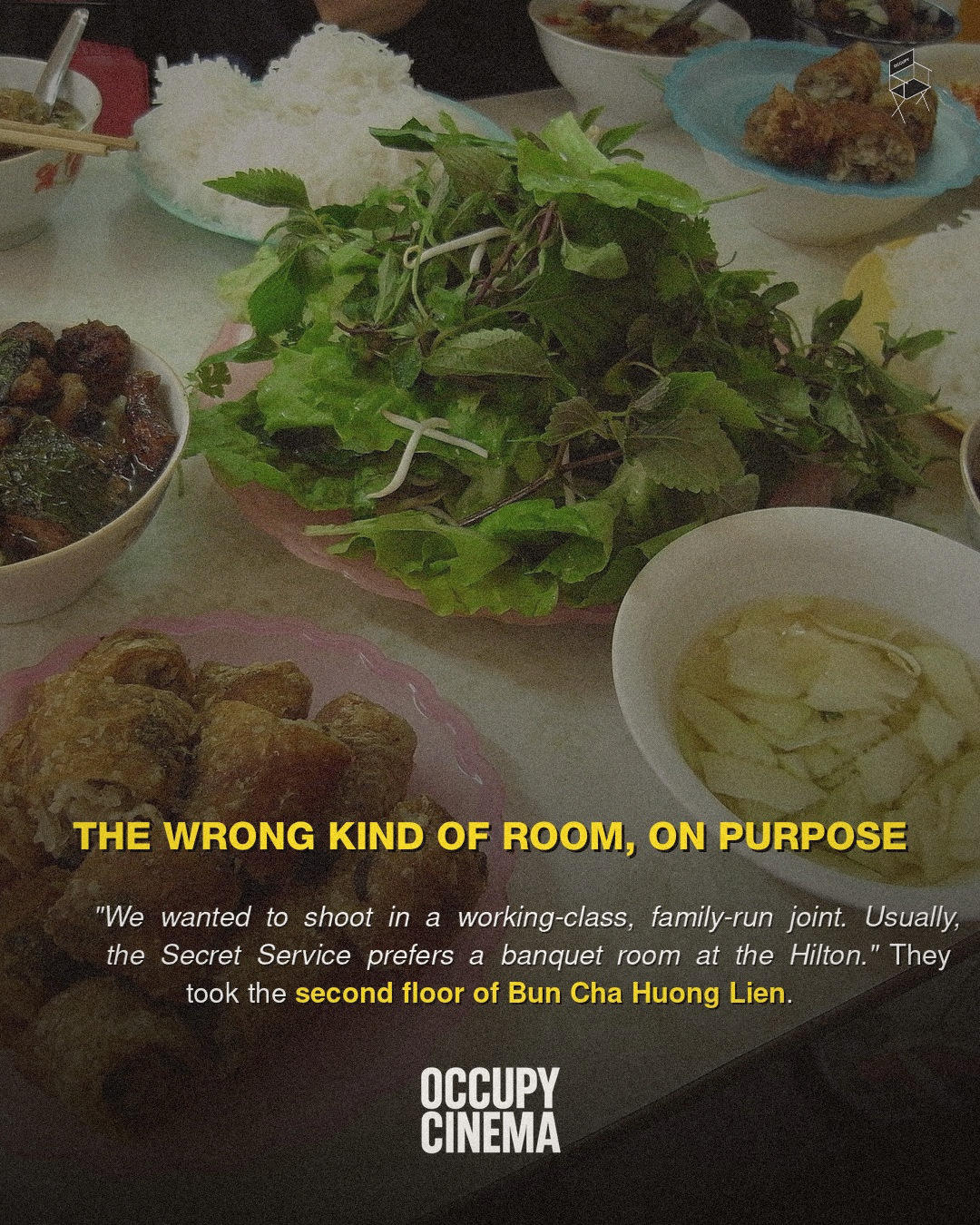
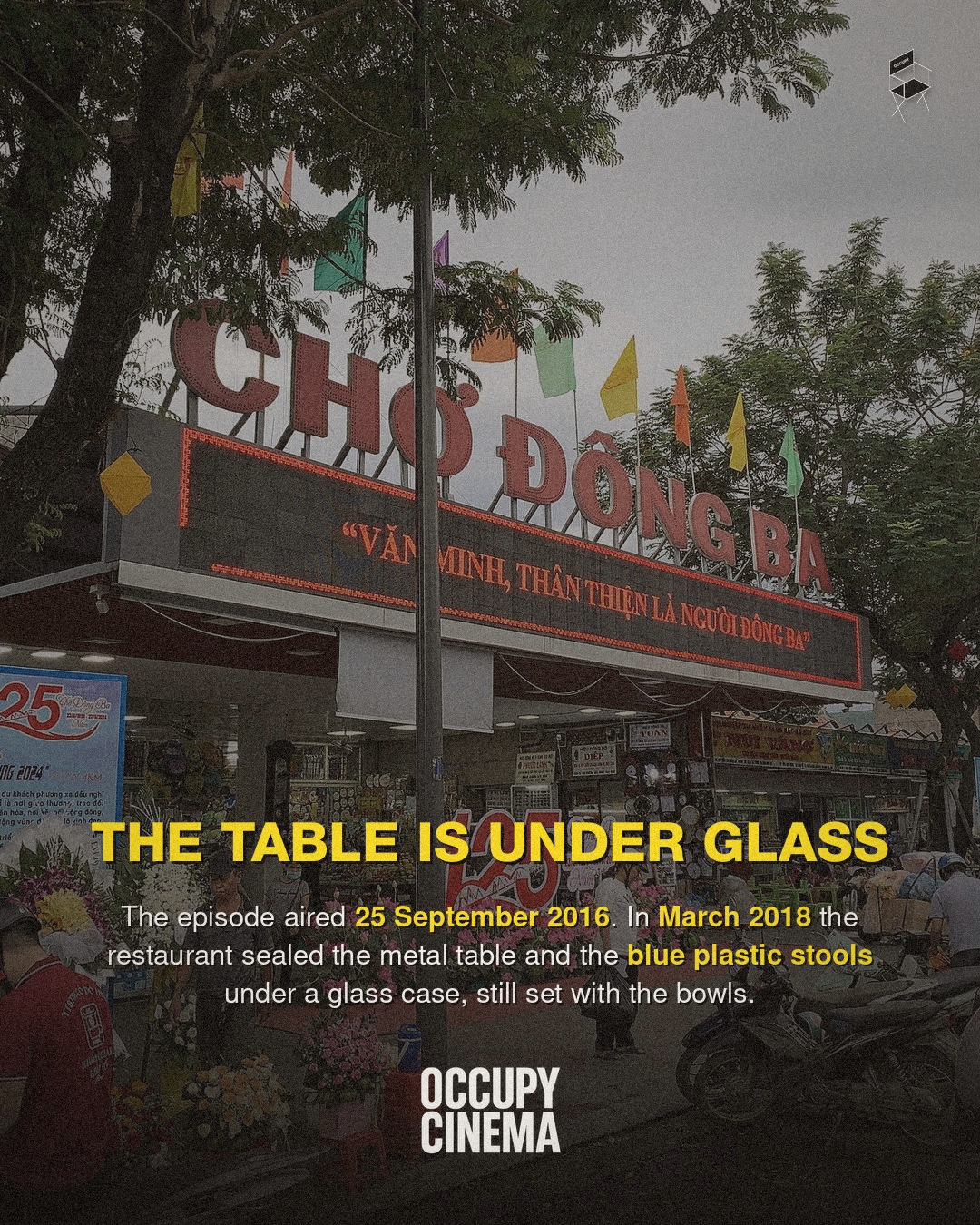
The cultural footprint of those twenty minutes on screen extended far beyond standard television ratings. In 2018, the family owners of Bún Chả Hương Liên took the unprecedented step of enclosing the exact dining setup inside a sealed glass display case. The blue plastic stools, the ceramic dishware, the metallic chopstick holders, and the empty Hanoi beer bottles remain frozen in place on the restaurant floor, turning a modest neighborhood joint into a permanent shrine to broadcast history.
In a media landscape increasingly flooded with over-processed reality content and loud digital gimmicks, Bourdain's Hanoi scene stands as a stark reminder of what deliberate documentary craft can accomplish. It proved that minimal gear, precise framing, and genuine intellectual respect can elevate a casual six-dollar dinner into an iconic cultural artifact. The scene remains immortal not because it was lavish, but because it was real.
Related reading: The Filmmaker's Eye.