Occupy Cinema › Business
The $950 Million Window: How Christopher Nolan Reset Studio Distribution
When Warner Bros. collapsed the theatrical window in 2020, Christopher Nolan walked. His historic deal with Universal proved that exclusive cinema runs build real box office juggernauts.
By Occupy Cinema ·
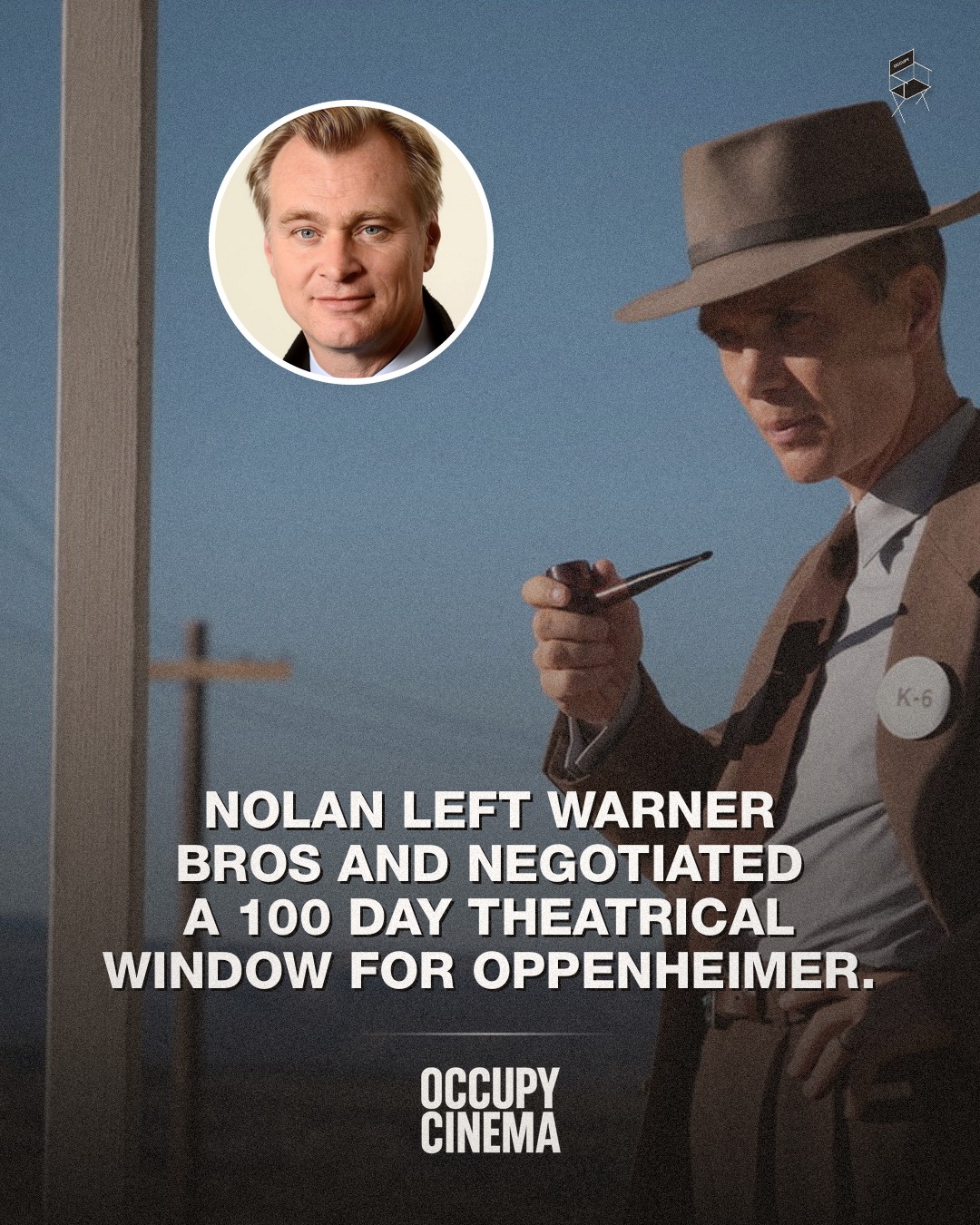
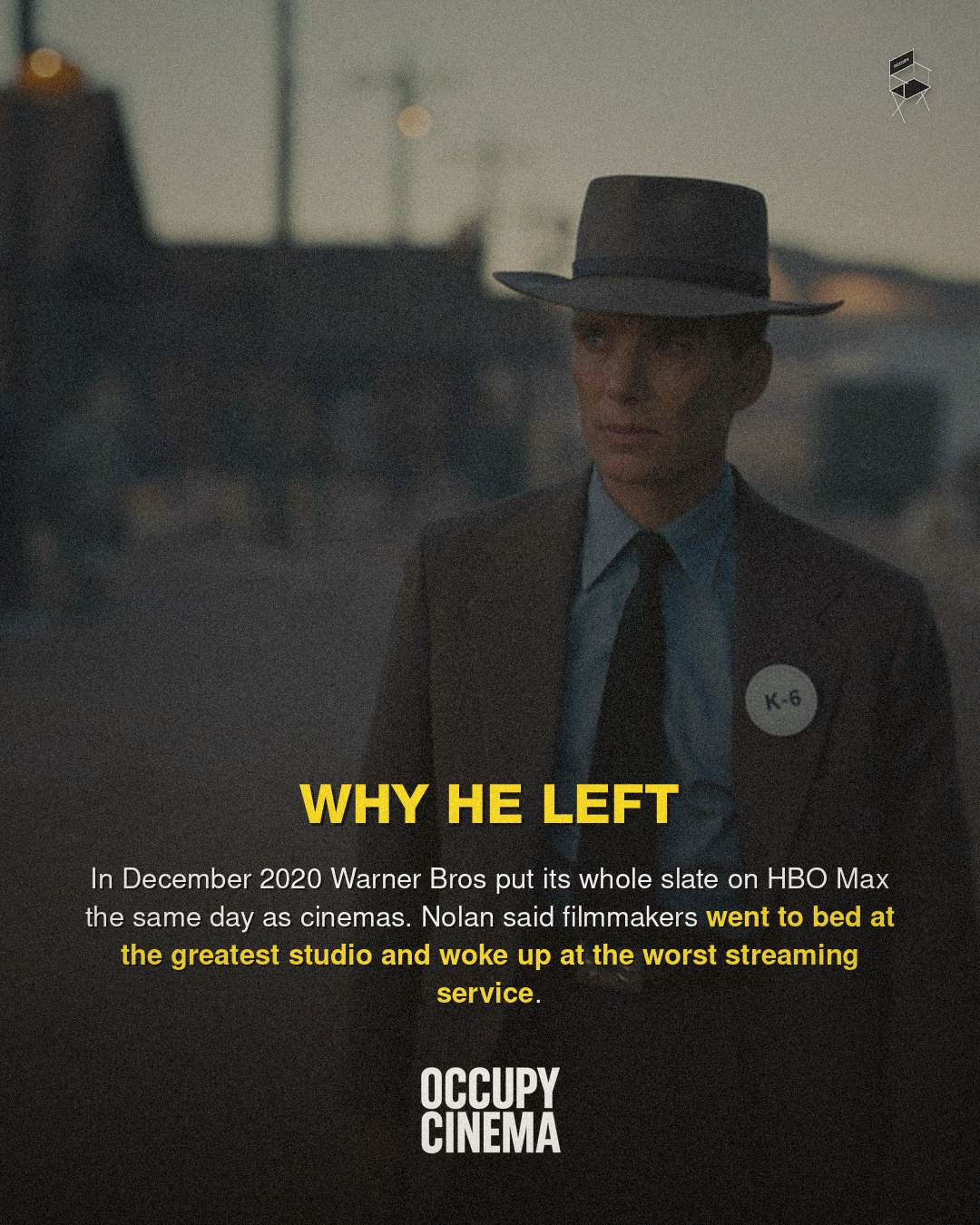
Christopher Nolan does not trade in direct-to-streaming compromises. When Warner Bros. leadership announced Project Popcorn in December 2020, sending its entire 2021 film slate to HBO Max on the exact same day as its theatrical release, the director made a swift and permanent exit. He ended a lucrative nineteen-year partnership that had yielded over $5 billion in global revenue across eleven films. While other filmmakers voiced frustration in press releases, Nolan took his talent to the open market. He placed his leverage on a single structural demand rather than cash upfront: an absolute, non-negotiable theatrical window.
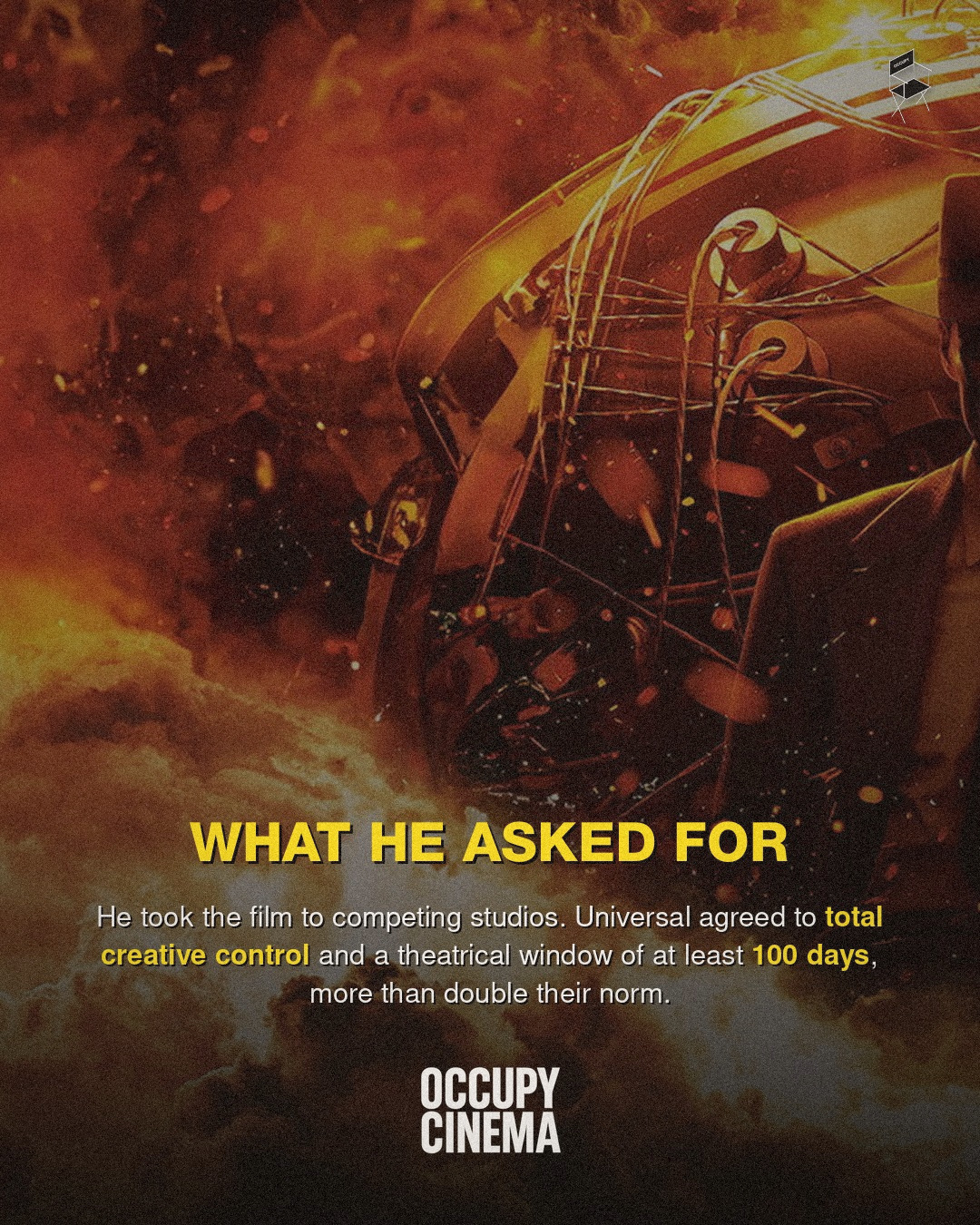
That gamble paid off in cold hard numbers. According to reporting from The Hollywood Reporter, Nolan shopped Oppenheimer with terms that shocked traditional executives. He demanded a $100 million production budget, an equivalent marketing spend, total creative control, a three-week blackout window on either side of the release where the studio could release no other projects, and a mandatory 100-day exclusive theatrical window. Universal Pictures chairperson Donna Langley agreed to every line item, winning the rights to one of the most sought-after packages in modern Hollywood history.
The Math Behind the 100-Day Exclusivity Window
At the time of the deal, major legacy studios were aggressively shrinking theatrical windows down to 45 days, or even 17 days for mid-budget titles before shunting them to video on demand services. Universal took a massive calculated risk by locking up its distribution calendar for nearly four months for an R-rated, three-hour historical drama about atomic physics. The decision paid massive dividends. Oppenheimer grossed over $957 million worldwide, becoming the highest-grossing biographical film in cinematic history and sweeping the Academy Awards with seven wins, including Best Picture and Best Director.
The financial success was heavily anchored in Premium Large Format (PLF) infrastructure. Nolan and cinematographer Hoyte van Hoytema shot the film using a combination of IMAX 65mm and 65mm large-format film, even convincing Kodak to manufacture a custom black-and-white IMAX film stock for the production. Audiences did not simply buy tickets to see a story; they bought tickets for a physical visual event that could only be experienced inside specialized theaters. The 100-day window meant IMAX screens remained locked and loaded for months, driving repeat viewings and creating unprecedented demand for 70mm physical prints.
A New Playbook for Studio Executive Leverage
Industry coverage from Deadline highlighted how Nolan shifted the leverage back toward traditional exhibition. By securing 20 percent of first-dollar gross alongside extended theatrical exclusivity, Nolan demonstrated that urgency is created by scarcity. Streaming platforms offer frictionless instant access, but immediate digital availability dilutes cultural impact and truncates long-term box office tails. Oppenheimer proved that moviegoers will attend in historical numbers when a release is positioned as an unmissable theatrical event rather than disposable content.
The broader takeaway for the studio system is impossible to ignore. Exclusivity windows are not outdated relics of a pre-digital industry; they are the engine that creates sustainable cinematic value. Warner Bros. attempted to prioritize short-term streaming subscriber growth over theatrical box office revenue, a strategy that alienated world-class talent and damaged exhibitor relationships. By demanding time over immediate digital reach, Nolan protected the theatrical ecosystem and established a fresh blueprint for event filmmaking in an era obsessed with quick home distribution.
Related reading: The Prestige [4K Ultra HD + Blu-ray].