Occupy Cinema › FEATURED
Silence on Set: How Alejandro González Iñárritu Learned to Tame the Auteur Ego
The two-time Oscar winner turned a personal retreat into a blueprint for creative survival, proving that even top-tier directors wrestle with the voice inside their heads.
By Occupy Cinema ·
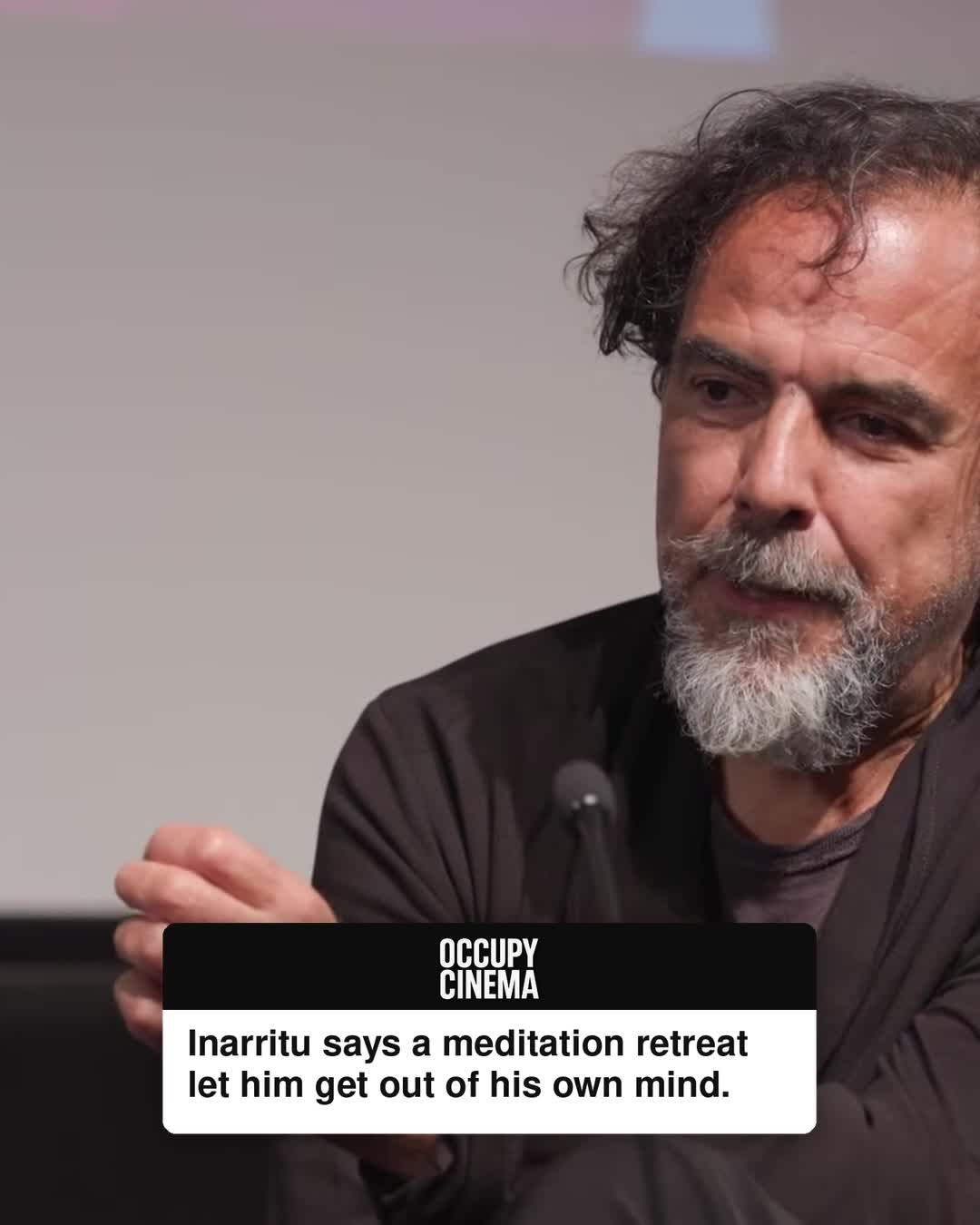
High-stakes cinema is a relentless meat grinder for the human ego. Director Alejandro González Iñárritu reached the absolute summit of modern Hollywood success, winning back-to-back Academy Awards for Best Director with Birdman or (The Unexpected Virtue of Ignorance) in 2015 and The Revenant in 2016. Yet, reaching the top of the industry hierarchy did not silence the internal noise. The Mexican filmmaker recently reflected on how a prolonged meditation retreat allowed him to step outside his own mind, dismantle his personal defense mechanisms, and laugh at the endless internal monologue that haunts artists and workers alike.
The financial and critical stakes surrounding Iñárritu's filmography explain why that pressure builds so quickly. Birdman grossed $103 million worldwide against a lean $18 million production budget, eventually collecting four Academy Awards including Best Picture. Just twelve months later, The Revenant pushed cinematic endurance to its limits, generating $532 million globally on a massive $135 million budget. The brutal wilderness drama earned Leonardo DiCaprio his long-awaited Best Actor Oscar and secured Iñárritu's status as one of only three directors in history to win back-to-back directing Oscars. Few contemporary filmmakers command that exact combination of box office clout and Oscar dominance.
Yet, according to Iñárritu, professional validation does nothing to quiet the voice in a director's head. The internal critic operates with complete disregard for box office returns or awards season silverware. It is the running commentary telling the individual that their achievements are never enough, that disaster is always around the corner, and that their worth depends entirely on their next performance. Whether an individual is directing a studio tentpole, fixing teeth, or driving a taxi, that persistent internal noise remains identical. For Iñárritu, stepping away from the film set and into quiet meditation offered a vital realization: the ego is an illusion that can be observed and ultimately dismissed with a bit of humor.
This ongoing confrontation with ego is directly encoded into the director's cinematic output. Birdman was quite literally an exploration of an actor tormented by the physical, booming voice of his former blockbuster alter ego. Shot by cinematographer Emmanuel Lubezki to resemble a single continuous take, the film mirrored the frantic, uninterrupted stream of consciousness that plagues the human brain under extreme professional scrutiny. The movie treated its protagonist's self-importance as both a tragedy and a dark farce, capturing the absurdity of high-culture ambitions.
The Autobiographical Reflection in Bardo
Years later, Iñárritu pushed that self-examination even further with his 2022 Netflix feature, Bardo, False Chronicle of a Handful of Truths. As documented extensively by IndieWire during its premiere at the Venice International Film Festival, the $25 million production saw the filmmaker turn the camera directly onto his own life, anxieties, and artistic vanity. Shot on 65mm format by cinematographer Darius Khondji, the surrealist epic followed a celebrated Mexican journalist and documentary filmmaker living in Los Angeles who grapples with national identity, family grief, and professional insecurity.
In Bardo, Iñárritu refused to present himself as an untouchable master. Instead, he staged dreamlike sequences where his surrogate self was mocked by former colleagues, confronted by historical figures, and reduced to a fragile child in giant rooms. The movie served as a public purging of artistic vanity. By exposing his own fears of irrelevance and self-doubt on a grand visual canvas, Iñárritu was already putting his newfound mental distance into practice. The film divided critics, but for the director, it represented a crucial exercise in creative honesty and humility.
Deconstructing Hollywood's Auteur Myth
The film industry has long elevated the myth of the tortured, uncompromising auteur. Multi-million-dollar budgets, tight production schedules, and intense studio oversight create an environment where directors often use paranoia and perfectionism as armor. According to industry reporting from Deadline, major studios frequently tolerate extreme directorial friction if the resulting feature delivers prestige and global revenue. However, that high-pressure dynamic often leaves filmmakers trapped in a permanent state of fight-or-flight, convinced that relaxing their grip will lead to creative failure.
Breaking that cycle requires a deliberate choice to step away from the machinery. For Iñárritu, retreat and meditation served as a recalibration tool rather than an escape from cinema. In an industry where directors are expected to project total authority at all times, admitting self-doubt is a rare act of transparency. Learning to step outside one's head alters the director's relationship with their craft. It replaces defensive perfectionism with a fluid openness to collaboration, allowing room for unexpected discoveries on set.
The Next Phase: High Stakes and New Canvas
This mental clarity comes at an important juncture in the director's career. Iñárritu is currently preparing for his next major cinematic effort, partnering with Warner Bros. Pictures and Legendary Entertainment for an untitled event project starring Tom Cruise. As reported by The Hollywood Reporter, the high-profile package marks Cruise's first project following his strategic talent agreement with Warner Bros. Bringing together two of the industry's most intense perfectionists on a massive commercial scale will require absolute focus and ego management.
Filmmaking will always remain an exercise in managing chaos. Financial pressures, box office benchmarks, and distribution shifts are external realities that no studio contract can erase. However, as Iñárritu's journey demonstrates, the hardest battle in cinema takes place inside the director's own mind. By recognizing the universal nature of the internal critic, filmmakers can strip away vanity, focus on pure storytelling, and navigate the Hollywood machine without losing their perspective.