Occupy Cinema › Business
The Micro-Budget Math Problem: Why Indie Film Crews Never See the Upside
Low-budget features rely on overworked crews taking flat day rates. When a festival breakout turns a profit, distribution profits rarely flow back to those who built the film.
By Occupy Cinema ·
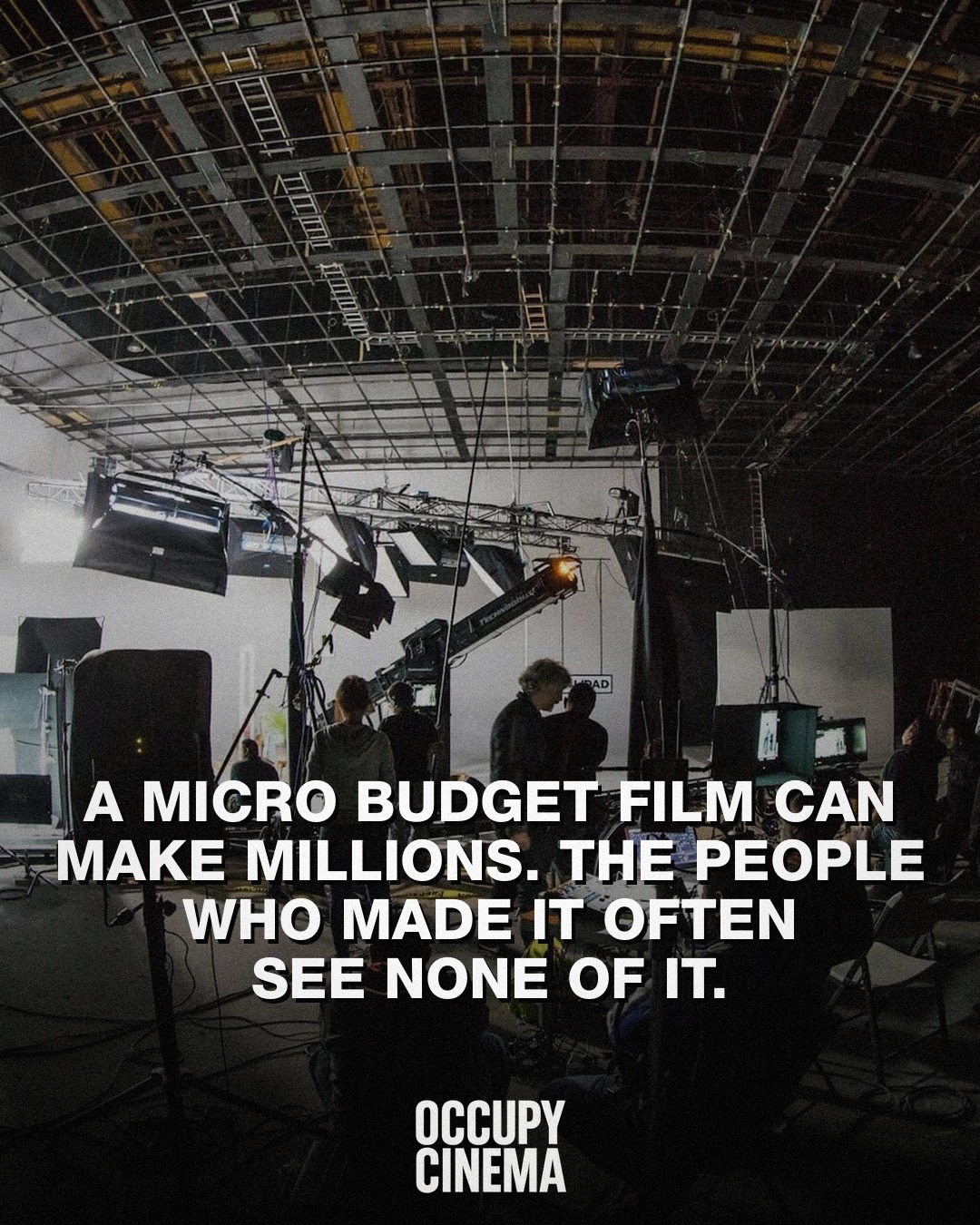
In the independent film ecosystem, leverage is everything. When a feature budgeted at $250,000 lands a premiere at Sundance or SXSW, the narrative centers on guerrilla ingenuity and creative risk. What stays out of the press releases is the financial architecture holding the production together. A crew of twelve people worked fourteen-hour days for flat hundred-dollar daily stipends. Sound recordists doubled as boom operators. Gaffers brought their own personal gear packages without rental fees. The film sold to a major distributor for $2 million. Yet, once the theatrical run and VOD release wrap, none of that commercial success touches the people who physically assembled the movie.
This dynamic is not an anomaly; it is the default business model of micro-budget cinema. High-stakes financial risk falls on equity investors, while sweat equity falls entirely on below-the-line technicians. When distribution deals hit seven figures, sales agents collect their ten to fifteen percent fees, investors recoup their principal plus an industry standard premium, and producers take their backend cut. The camera assistants, grips, and costume designers receive nothing beyond their initial day rates.
The Structural Trap of Below-the-Line Equity
Contracts in low-budget film production are structured to isolate labor from equity. Under standard union and non-union agreements, crew members sign work-for-hire contracts that explicitly waive all intellectual property and profit participation rights. Early career directors like Sean Baker famously proved that extraordinary cinema can be executed with consumer-grade gear and minimal crews. Yet, as detailed in industry coverage by IndieWire, the economic model surrounding these micro-budget triumphs rarely translates into long-term financial stability for the crew members involved.
Investors protect their capital through waterfall structures that prioritize debt payback, distributor overhead, and preferred returns before a single dollar reaches general backend pools. In this hierarchy, crew members sit completely outside the waterfall. Even when department heads negotiate backend points on paper, those points are routinely rendered worthless by net-profit definitions that calculate earnings only after marketing expenses, distribution fees, and interest charges are fully deducted.
Reimagining the Indie Profit Waterfall
The sustainability of the independent film sector depends on fixing this compensation gap. Industry analysts reporting for Variety have noted that talented below-the-line workers are increasingly leaving independent cinema for commercial work, television, or entirely different industries due to unlivable wage structures. If independent film wants to retain elite technicians, producers must begin building formal profit-sharing mechanisms into production budgets from day one.
Progressive production outfits are beginning to test alternative equity models. These include reserving dedicated equity pools, typically five to ten percent of net receipts, specifically designated for below-the-line crew. Other models introduce scaled bonuses triggered by acquisition sales or specific box office milestones. Integrating these terms into financing packages requires proactive producer alignment, but it protects crews from being locked out of financial windfalls created by their labor.
Independent cinema cannot praise guerrilla craft while exploiting the workers who make it possible. Sweat equity is capital, and crew members take genuine economic risks when accepting sub-market day rates to bring a vision to life. Until backend compensation models evolve to reflect that risk, the financial successes of indie cinema will remain a zero-sum game for the people behind the camera.
Related reading: Cinema Treasures: A New Look at Classic Movie Theaters.