Occupy Cinema › FEATURED
Peak Cinema: Apple Bet Big on 'Tenzing' and the Early Reviews Prove Why
Jennifer Peedom's Everest drama landed at Telluride and TIFF with a perfect critical score, recalibrating a 70-year-old climbing myth.
By Occupy Cinema ·

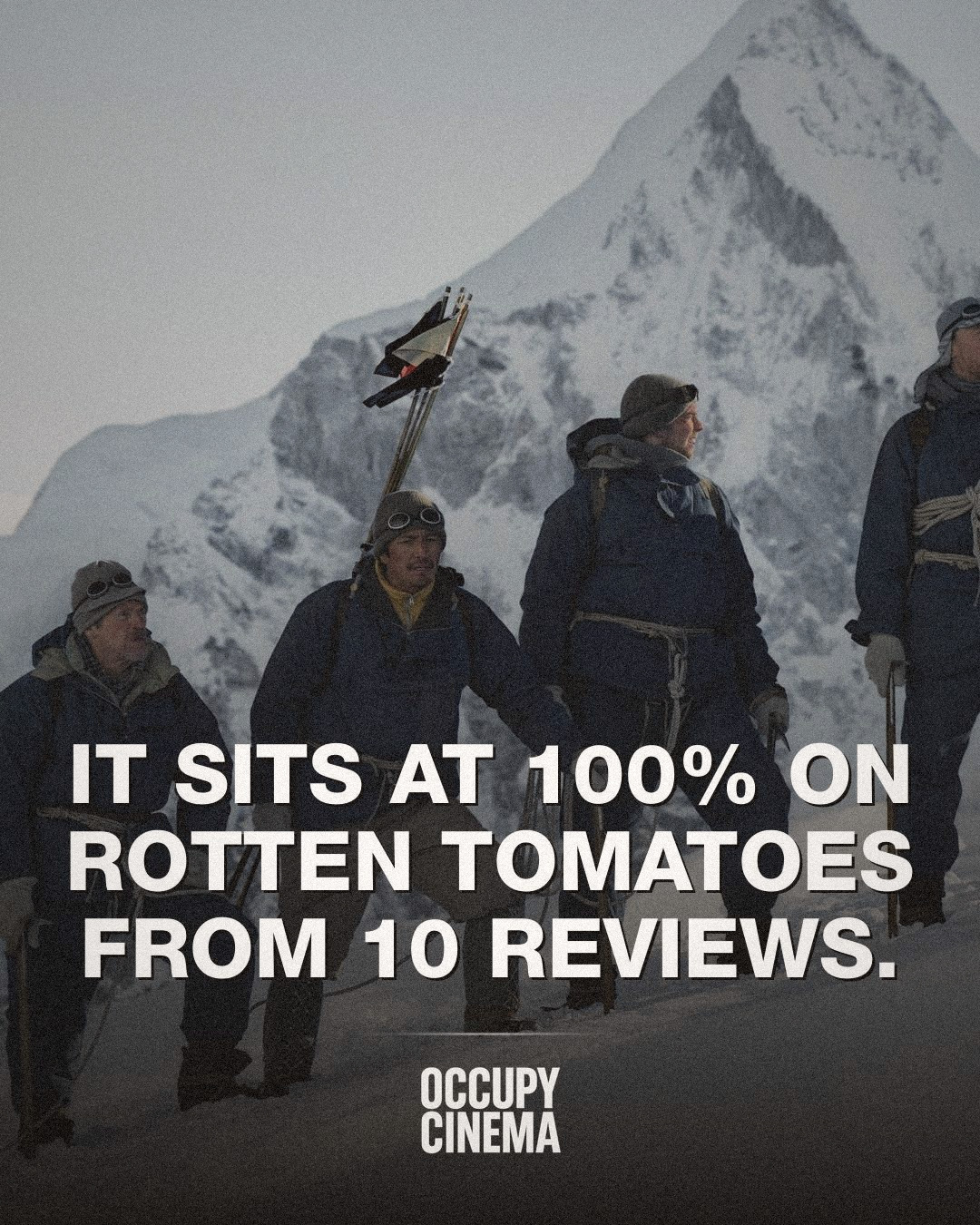
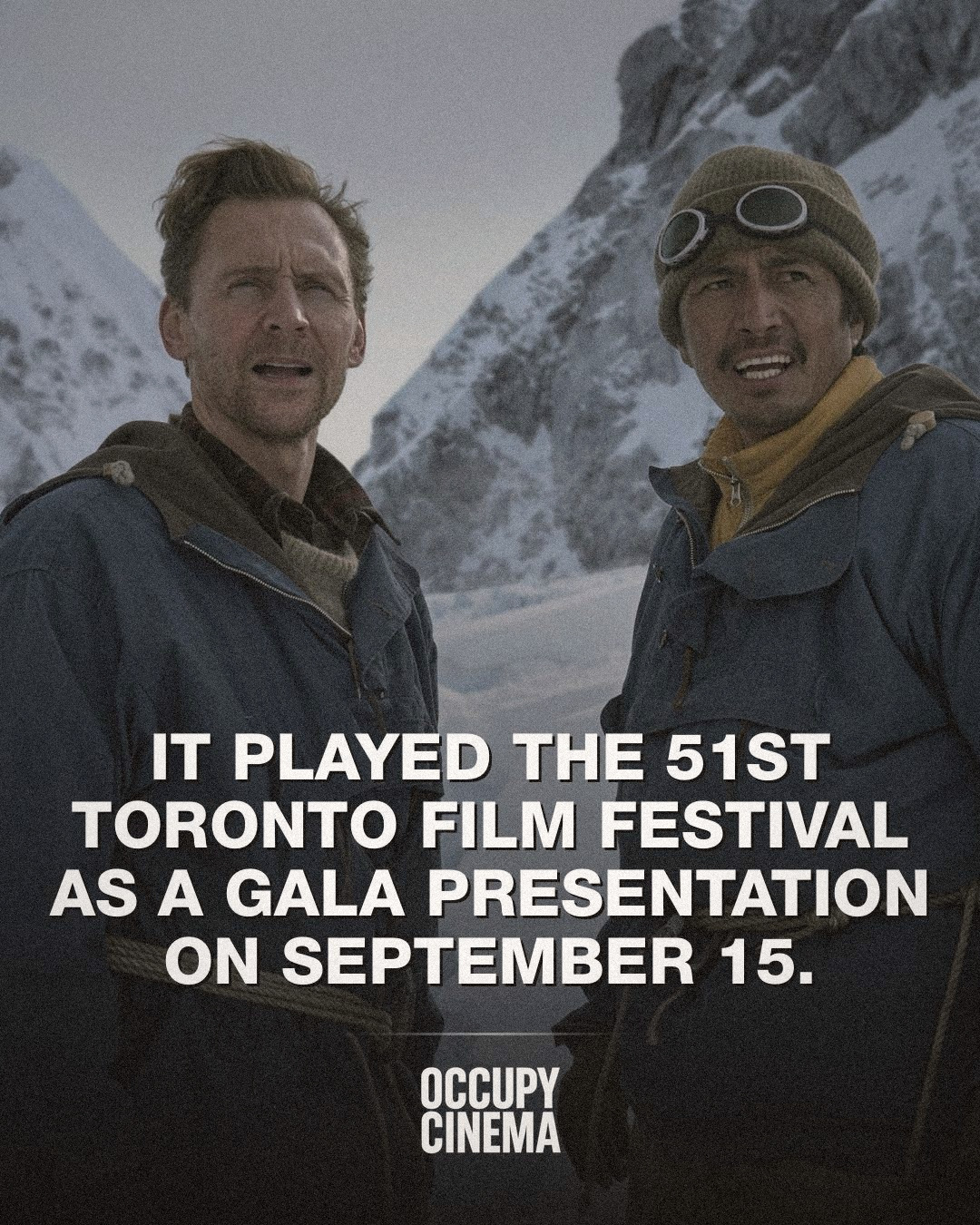
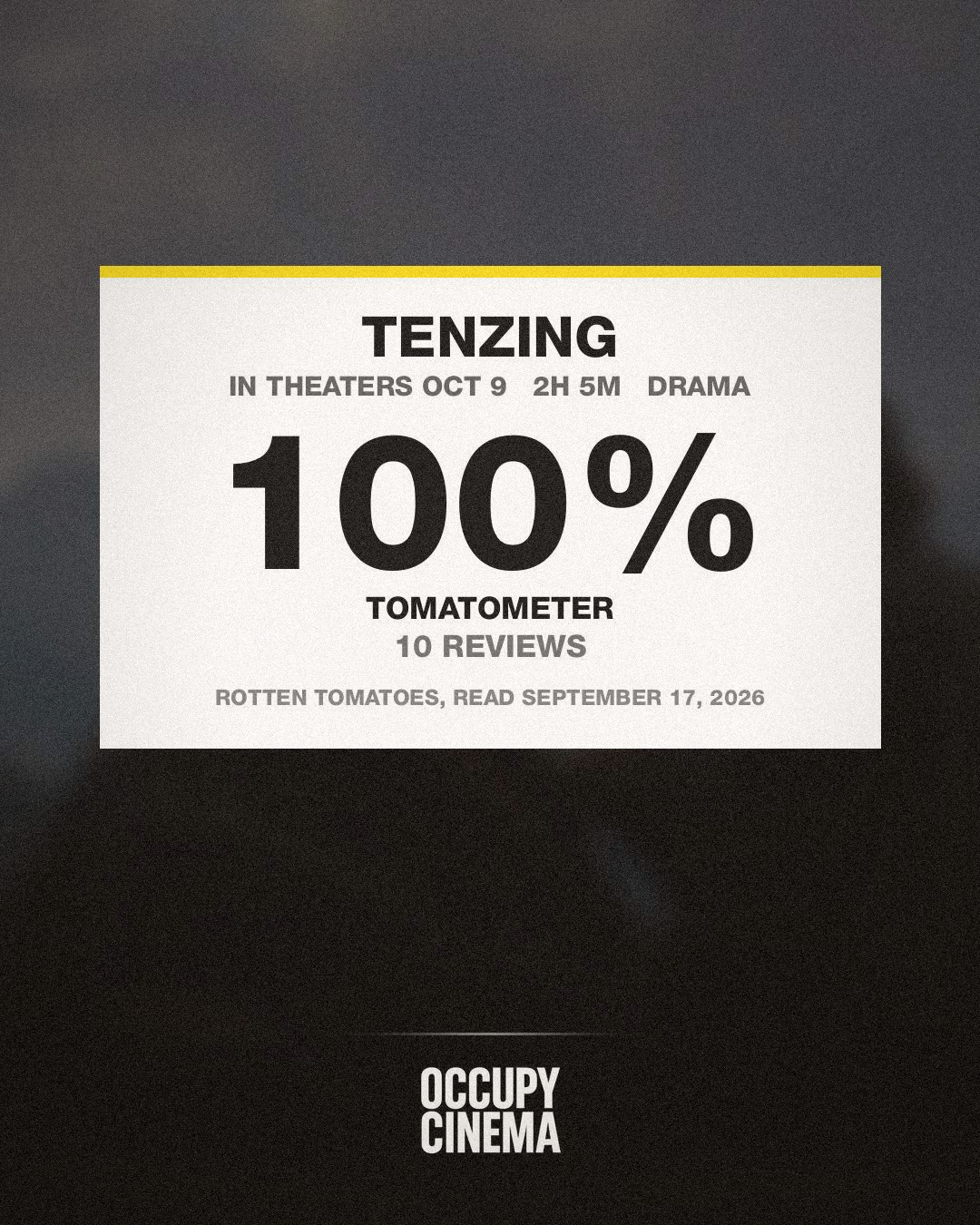
Ten reviews, zero splatters. As of September 17, director Jennifer Peedom's survival drama Tenzing holds a pristine 100 percent rating on Rotten Tomatoes following its world premiere at the Telluride Film Festival and a high-profile Gala Presentation at the 51st Toronto International Film Festival on September 15. The numbers offer early validation for Apple Original Films, which acquired the project to anchor its autumn theatrical strategy before setting a wide release for October 9.
For seven decades, the narrative of the first successful summit of Mount Everest on May 29, 1953, was written through a strictly Western lens. New Zealander Edmund Hillary was elevated to global hero status, while his Sherpa partner Tenzing Norgay was often relegated to the background of newsreels and history books. Peedom's narrative feature systematically dismantle that imbalance. By placing Tibetan actor Genden Phuntsok in the lead role of Norgay alongside Tom Hiddleston as Hillary, the film recalibrates the historical account, giving equal weight and long-overdue perspective to the man who carried the expedition on his back.
Peedom is uniquely equipped to tell this story. The Australian filmmaker spent nearly two decades filming in the Himalayas, building a reputation with high-altitude documentary masterworks like 2015's Sherpa and 2017's Mountain. Sherpa originally set out to capture the 2014 climbing season from the perspective of the indigenous guides, but it unexpectedly documented the tragic avalanche that killed 16 Sherpas, sparking an unprecedented labor strike on the mountain. That film earned a BAFTA nomination and established Peedom as a filmmaker deeply invested in the labor ethics and indigenous heritage of extreme mountaineering. With Tenzing, she transitions those years of documentary access and technical mastery into a sweeping narrative epic.
The physical scope of the production reflects Peedom's refusal to rely heavily on green screens or soundstage approximations. Shot on location in Nepal and challenging mountain terrains across Europe, the production faced grueling environmental conditions, thin air, unpredictable weather, and complex rigging requirements for large format cameras. Cinematography choices prioritize scale without sacrificing human intimacy, capturing the sheer, terrifying verticality of the Khumbu Icefall alongside closeups of frostbitten endurance. The sound design and musical score work in tandem to evoke both the spiritual sanctity of the peak for the local Sherpa community and the oppressive physical tax exacted by the death zone.
Reclaiming the Narrative at High Altitude
Critical consensus out of Toronto has focused primarily on the film's refusal to fall back on standard Hollywood heroic tropes. Writing for The AU Review, critic Peter Gray emphasized that the movie finally places Norgay at the center of his own Everest story, highlighting the personal, financial, and cultural pressures that weighed on the climber long before he set foot on the upper ice. Early reviews aggregated across industry outlets like IndieWire underline how the script examines Norgay's complex position as a man navigating British colonial expectations, political pressure from India and Nepal, and his own spiritual obligation to the mountain locals call Sagarmatha.
The central casting dynamic proves crucial to this balance. Phuntsok, making a major feature debut, anchors the film with a grounded, quietly intense performance that conveys both technical genius and quiet resolve. Opposite him, Hiddleston delivers a deliberately unselfish supporting turn as Hillary. Rather than playing the heroic protagonist of classic British cinema, Hiddleston portrays Hillary as a pragmatic, relentless climber who recognized Norgay not as a hired guide, but as an indispensable partner without whom the summit was impossible. Their onscreen rapport reflects a pragmatic working relationship forged in extreme danger rather than immediate, sentimental brotherhood.
This structural recalibration marks a sharp departure from previous Everest cinema. Universal Pictures' 2015 commercial hit Everest grossed over $203 million worldwide, but its narrative focus remained firmly fixed on Western commercial clients and expedition leaders. Classic mid-century documentaries and docudramas similarly treated Sherpa workers as background laborers. Tenzing explicitly counters that history. The narrative details how Norgay had attempted Everest six times prior to 1953, acquiring more high-altitude experience than almost any living person, making his inclusion on the John Hunt-led expedition the deciding factor in its ultimate success.
Apple's Fall Awards Math
For Apple Original Films, the October 9 theatrical rollout represents another deliberate move in its theatrical strategy. Following industry reporting from Deadline regarding tech streamer theatrical windows, Apple continues to partner with traditional distributors to secure wide multiplex runs before moving titles to its subscription service. By launching Tenzing in early October, the studio positions the film at the front edge of the autumn awards corridor, taking advantage of strong word-of-mouth generated from its Telluride and TIFF runs.
The specialty box office landscape has shown a clear appetite for visually immersive, true-life survival cinema when backed by major critical momentum. While non-English dialogue and culturally specific narratives were once viewed by studio executives as commercial liabilities, recent box office trends prove international audiences demand authenticity over sanitized homogenization. Industry analysts covered by The Hollywood Reporter point out that prestige theatrical audiences respond strongly to authentic location photography and multi-language scripts, particularly when framed by IMAX or premium large format presentations.
Ultimately, Tenzing succeeds because it understands that reaching the top of the world was never just a athletic achievement. It was a collision of empire, labor, ambition, and identity. By combining Jennifer Peedom's technical precision with a narrative framework that restores Tenzing Norgay to his rightful place in history, the film offers both high-altitude spectacle and an overdue historical correction. When Apple pushes the film into theaters this October, it won't just be selling a survival drama, it will be offering a long-delayed look at history as it actually happened.