Occupy Cinema › FEATURED
Haynes and Moore: The Two-Decade Partnership That Rewrote Melodrama
Julianne Moore's iconic turn in Todd Haynes's *Far From Heaven* was no accident, but the culmination of a deep artistic bond forged years prior. Their collaborative history redefined the modern melodrama, impacting both critical discourse and awards season.
By Occupy Cinema ·
A Partnership Forged in Fire
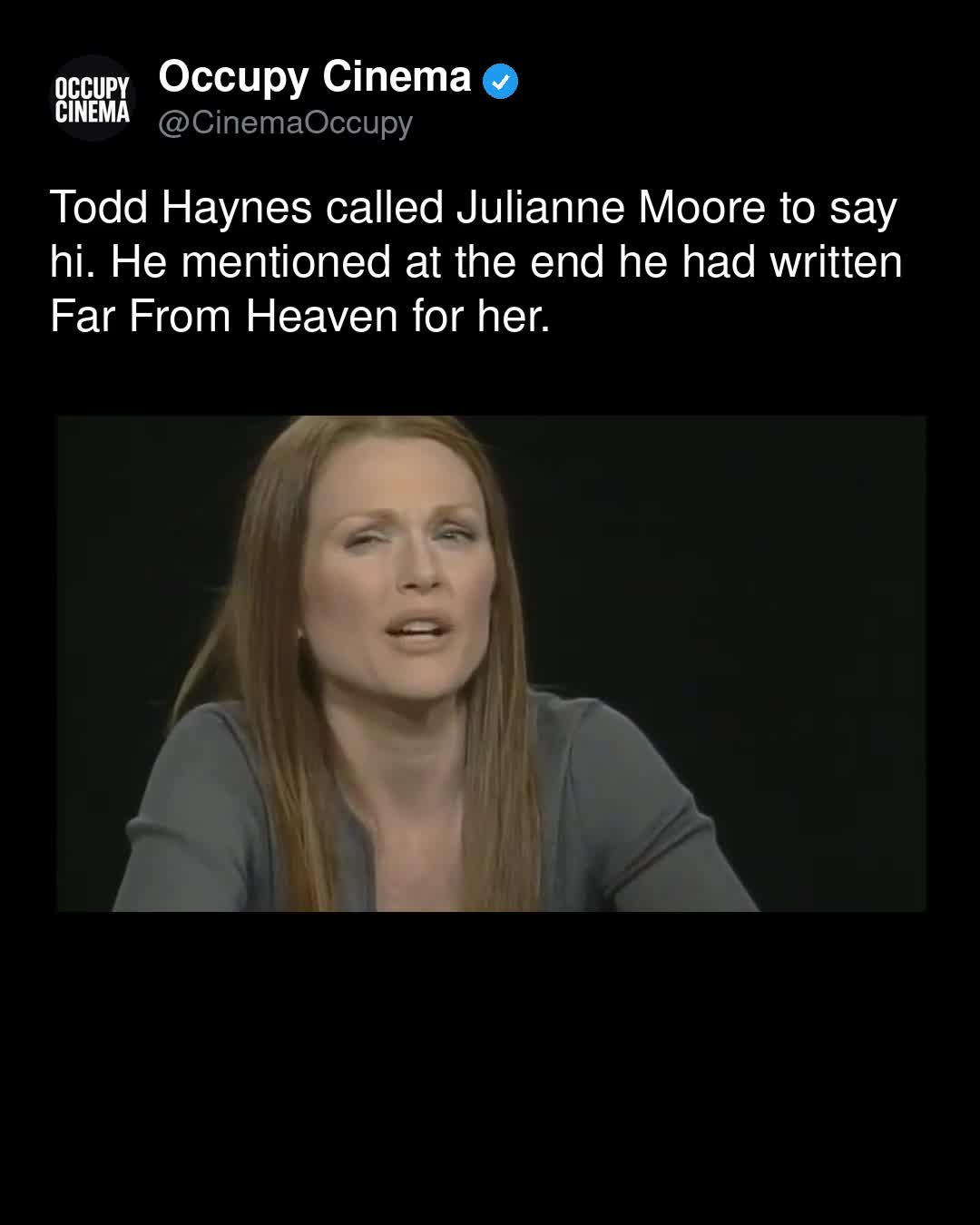
The story of Julianne Moore and Todd Haynes is one of cinema's most enduring and artistically significant director-actor partnerships. It began with the chilling independent film Safe in 1995, a project that cemented Moore's status as a formidable talent capable of profound emotional depth. This initial collaboration, however, was not just a one-off success; it laid the groundwork for a creative symbiosis that would, seven years later, produce Far From Heaven, a film that not only paid homage to 1950s melodrama but redefined its contemporary relevance. Moore's recollection of Haynes sending her the script, and her immediate, enthusiastic acceptance, underscores the mutual trust and understanding that characterized their working relationship long before the cameras rolled.
Moore's portrayal of Carol White in Far From Heaven garnered her the Best Actress Volpi Cup at the Venice Film Festival and an Academy Award nomination, alongside numerous other accolades. The film itself became a critical darling, praised for its meticulous recreation of Sirkian aesthetics and its incisive exploration of societal repression. Its success was a testament not only to Haynes's directorial vision and Moore's performance but to the established creative shorthand they had developed since their first venture. This kind of sustained collaboration is rare in an industry often driven by transient project-based alliances, making their bond particularly noteworthy.
The genesis of Far From Heaven was deeply rooted in Haynes's admiration for Douglas Sirk, particularly films like All That Heaven Allows and Written on the Wind. Sirk's melodramas, often dismissed in their time as mere women's pictures, were later re-evaluated by critics for their subversive critiques of American consumerism and gender roles, cloaked beneath lavish Technicolor surfaces. Haynes sought to replicate this aesthetic and thematic depth, but with a distinctly modern sensibility. His screenplay for Far From Heaven transplanted Sirk's visual language and narrative tropes into a contemporary examination of race, sexuality, and class in 1950s suburbia, making the implicit explicit.
The production itself was a masterclass in period recreation. Cinematographer Edward Lachman, a frequent Haynes collaborator, painstakingly emulated the vibrant, saturated look of Technicolor, using specific lighting techniques and color palettes to evoke the era. The art direction and costume design were equally meticulous, crafting a world that felt both authentic to its time and deliberately heightened, mirroring the emotional intensity of the narrative. This commitment to detail was crucial for the film's success, allowing it to function both as an homage and a fresh interpretation, drawing viewers into its stylized reality.
Moore’s performance was central to this delicate balance. As Carol White, a suburban housewife whose seemingly perfect life unravels amidst her husband’s infidelity and her own forbidden affections, Moore navigated a complex emotional landscape. She channeled the constrained anguish and quiet dignity characteristic of Sirk's leading ladies, such as Jane Wyman or Lana Turner, while imbuing Carol with a contemporary psychological realism. Her ability to convey profound inner turmoil beneath a facade of composure was precisely what Haynes needed to make the film resonate, distinguishing it from mere pastiche.
The Impact and Legacy
Far From Heaven premiered at the Venice Film Festival in 2002, where it immediately captivated critics. Its release later that year through Focus Features was met with widespread acclaim. The film went on to gross over $16 million worldwide on a modest budget of $13 million, a respectable showing for an arthouse drama with a deliberately retro aesthetic. Its box office success, while not blockbuster-level, solidified its status as a critical and commercial triumph within its niche, demonstrating that intelligent, artfully crafted cinema could still find an audience. For context, films like arthouse dramas often struggle to break even, making Far From Heaven's performance noteworthy.
The film's influence extended beyond its immediate theatrical run. It reignited scholarly interest in classic melodrama and encouraged filmmakers to explore genre conventions with fresh eyes. Haynes himself continued to push cinematic boundaries, often with Moore by his side. Their subsequent collaborations, including the Bob Dylan biopic I'm Not There (2007) and the HBO miniseries Mildred Pierce (2011), further showcased their shared artistic ambition and their ability to tackle diverse material with intellectual rigor and emotional depth. Each project saw Moore taking on roles that challenged her, often requiring immense vulnerability and nuanced performance.
The enduring power of Far From Heaven lies not just in its stunning visuals or its powerful performances, but in its ability to spark conversation about enduring social issues. By framing issues of racial prejudice and homophobia within the seemingly idyllic backdrop of 1950s suburbia, Haynes revealed the insidious nature of systemic oppression and the personal costs of societal conformity. The film resonated particularly in the early 2000s, a period marked by ongoing debates about LGBTQ+ rights and racial equality, making its historical lens feel acutely contemporary.
Beyond the critical praise and awards, the film cemented the professional and personal bond between Moore and Haynes. Their working relationship became a benchmark for successful director-actor pairings, characterized by trust, mutual respect, and a shared artistic vision. For Moore, it provided some of her most memorable and critically lauded roles, further establishing her as one of her generation's most versatile and fearless actresses. For Haynes, it solidified his reputation as a master stylist and a director deeply invested in exploring the complexities of human experience through unique cinematic forms. This is a pairing that continues to define significant moments in independent American cinema, proving that some creative partnerships are truly meant to be.